![[?]](https://media.bsd.cafe/bsdmmedia01/accounts/avatars/113/868/426/056/234/966/original/61754e85d107bf2b.png)
OpenBSD 7.9 will be deployed on the hosts as soon as possible!
We want to wait for the first errata to appear.
21 new VMs were added and 61 VMs were renewed.
We donated €1125 to the #OpenBSD Foundation, €66755 since we started.
Thank you, our users, and OpenBSD developers for an awesome OS!
Stay safe, healthy & sane!
#RUNBSD in 2026
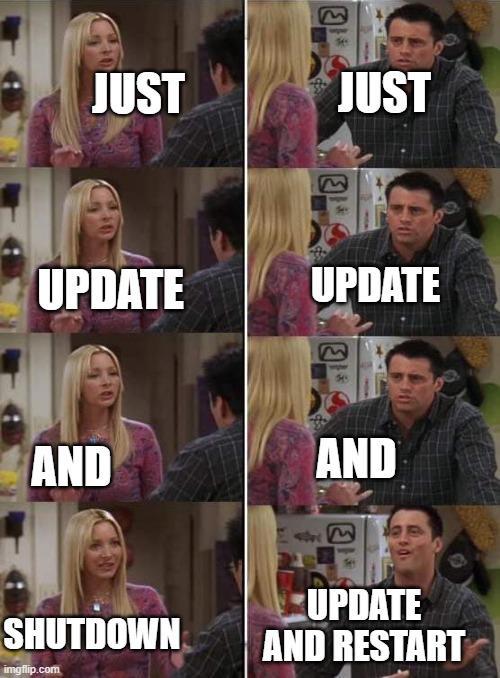
Alt...
Phoebe Teaching Joey refers to a scene from the Friends television series in which character Phoebe Buffay attempts to teach character Joey Tribbiani French by making him repeat words after her. In March 2020, the scene gained popularity in memes online, with Phoebe attempting to explain various concepts to Joey but ultimately failing.
This one has the following exchange:
Phoebe: Just
Joey: Just
Phoebe: Update
Joey: Update
Phoebe: And
Joey: And
Phoebe: Shutdown
Joey: Update And Restart
![[?]](https://assets.merveilles.town/accounts/avatars/000/000/248/original/f47cd5114fbe09bc.png)
Illustrated tear-downs and break-downs of everyday products, like mechanical pencils, lighters and pez dispensers, that you may have taken for granted. Drawn by Bryan Macomber, a mechanical engineer and artist.
A really neat idea.
...
![[?]](https://assets.merveilles.town/accounts/avatars/113/312/488/071/885/175/original/c9859e8093ffca0a.png)
![[?]](https://id.geff.re/fileserver/01KSR7D7ZETKA70EFVJ1CJQ659/attachment/original/01KH16N4HJV727QCCN06PDE7FE.jpeg)
Is it me or does Apple Music feel like a alpha product? Hickups, frame skips, weird crashes … what is going on?
![[?]](https://romanzolotarev.com/logo.png)
![[?]](https://files.mastodon.online/accounts/avatars/108/193/255/012/911/209/original/b69a659eb0e8fdfe.png)
![[?]](https://files.mastodon.social/accounts/avatars/000/035/156/original/edc5ed144e346235.png)
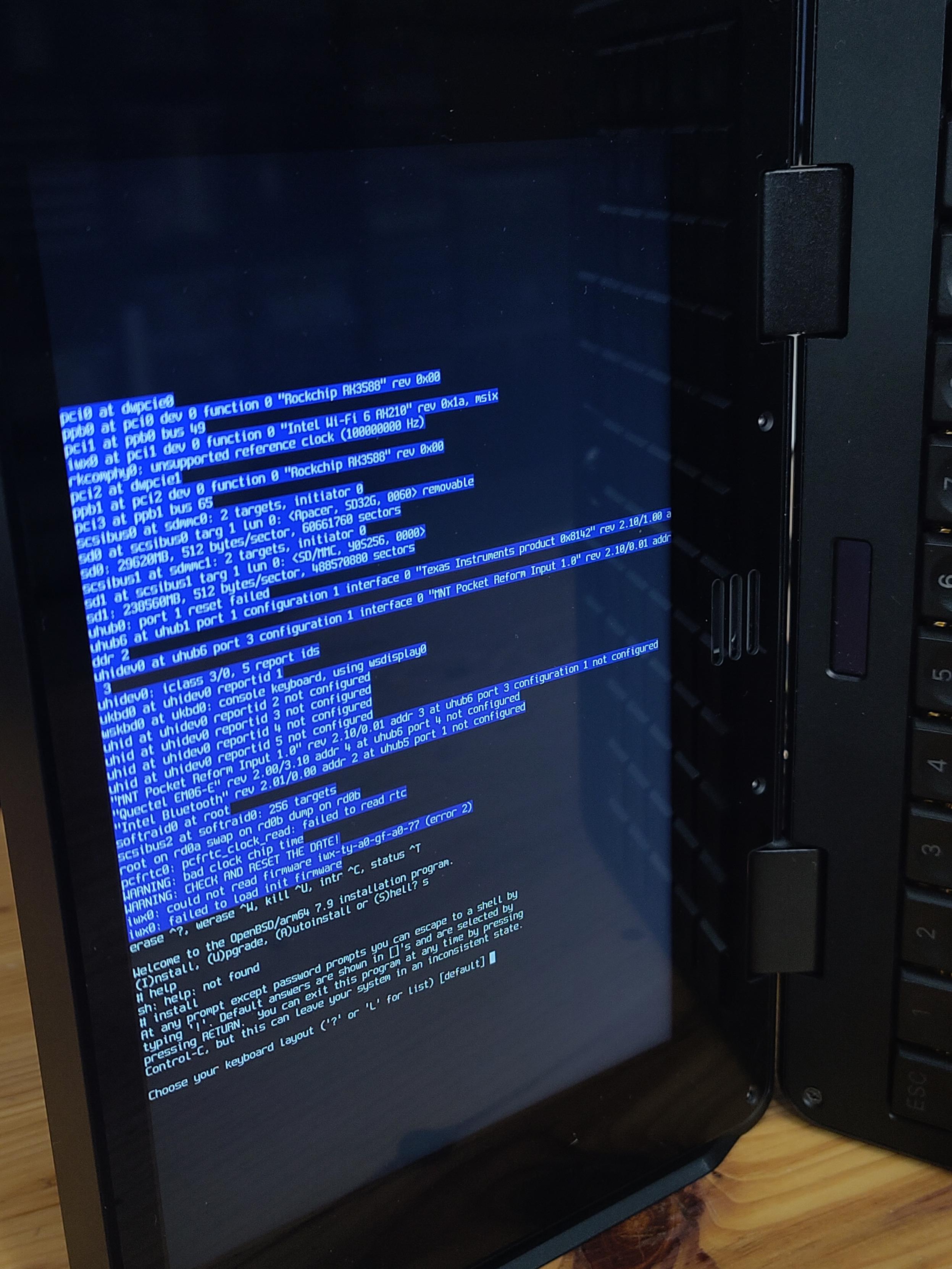
OpenBSD on MNT Pocket Reform (with RK3588)! next question: can it rotate the framebuffer console?
Alt...
it's OpenBSD installer on MNT Pocket Reform's display! but it is rotated into portrait mode
...
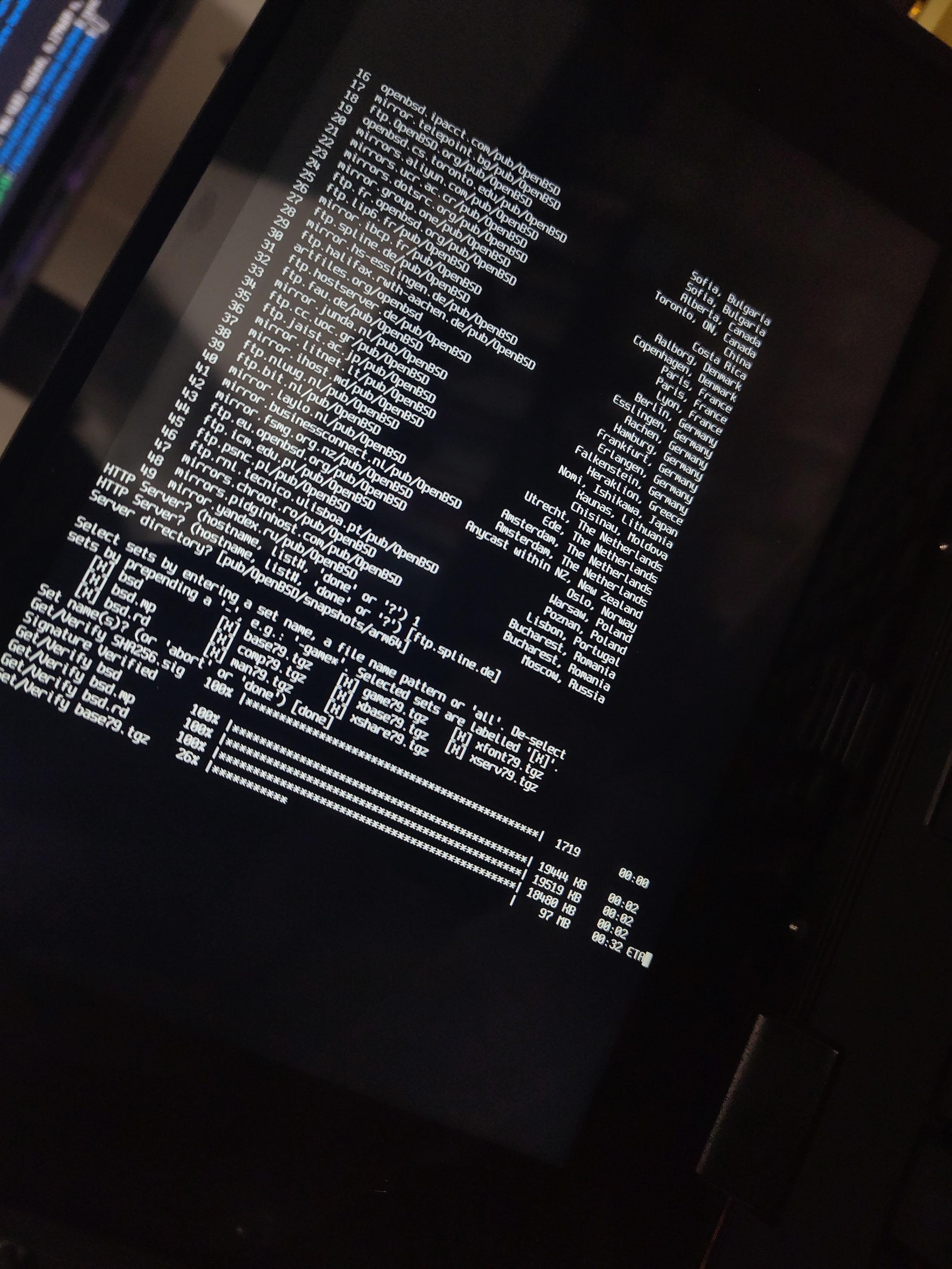
installing openbsd over usb network to a usb stick!
Alt...
installing openbsd over usb network to a usb stick!
...
"Relinking to create unique kernel..."
...
hmm, the installed system boots but hangs at repeated output of `> init: can't open /dev/console: Device not configured`... any hints?
...
fixed it
Alt...
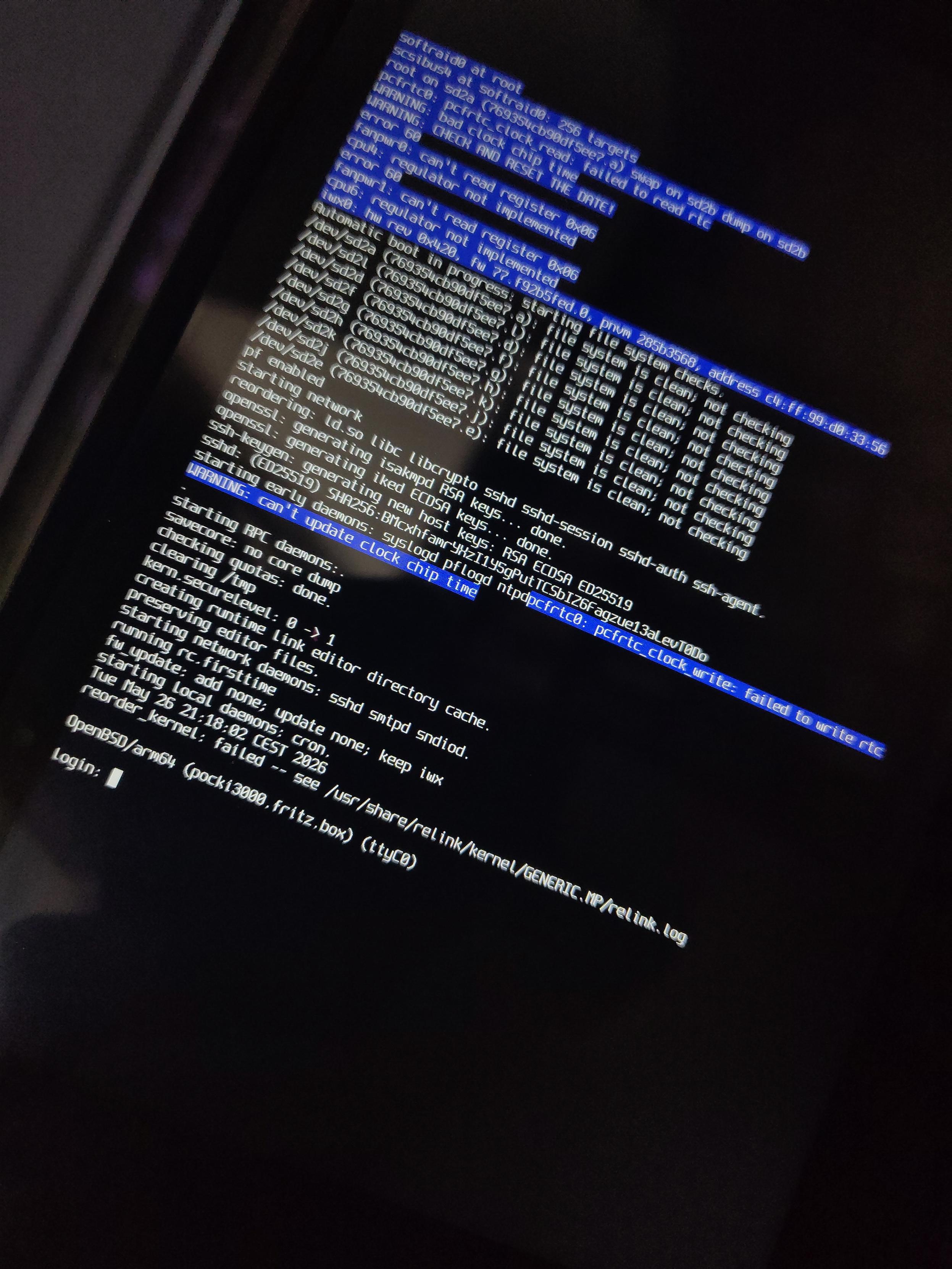
arrived at openbsd login on rk3588 mnt pocket reform
...
nice, sshd works too! > Welcome to OpenBSD: The proactively secure Unix-like operating system.
...
got X running, but xrandr -o won't budge, need to figure out how to make a xorg.conf (this feels extremely retro) or how to install some wayland compositor
...
okaay, worked with a tiny xorg.conf and setting `Option "Rotate" "CCW"` for `Driver "wsfb"`
...
it works! it's just a bit smol on this high res screen
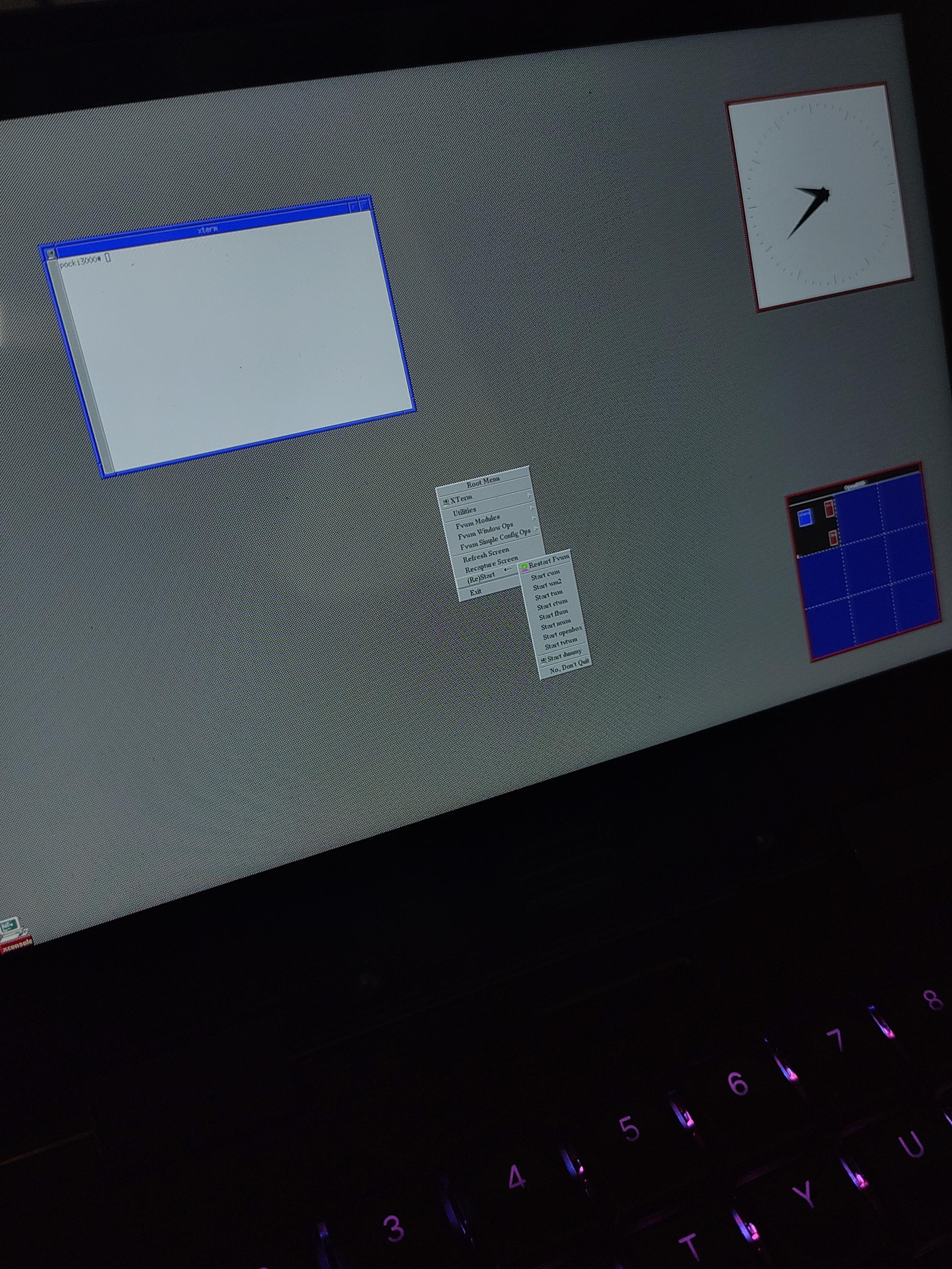
Alt...
openbsd fvwm retro glory on mnt pocket reform rk3588, but tiny
...
Older...
![[?]](data:image/png;base64, iVBORw0KGgoAAAANSUhEUgAAAEAAAABAAQAAAACCEkxzAAAAV0lEQVQoz43RwQ3AMAwCQDZg/y3ZgNqo3+JaedwDOUQBQFHYaTB8wTM6sGl2cMPu+DFzn+ZcgN7wF7ZVihXkfSlWIVzIA6dbQzaygllpNuTXZmmFNlvxADX1+o0cUPMbAAAAAElFTkSuQmCC)
![[?]](https://files.mastodon.social/accounts/avatars/000/021/458/original/059d63caf9d85122.png)
![[?]](https://media.girlcock.club/girlcockclubbucket/accounts/avatars/114/841/753/418/021/611/original/8d3733beb21a5218.jpeg) Gretchen the Goblin [they/them if you wanna be polite she/her if you wanna flirt] » 🌐
Gretchen the Goblin [they/them if you wanna be polite she/her if you wanna flirt] » 🌐
@goblin@girlcock.club
@mntmn oh dont do this id love one but i cannot afford one right now this is all too tempting
![[?]](https://corteximplant.com/system/accounts/avatars/114/215/258/753/110/739/original/445e9a4672508715.png)


# pkg_add qutebrowser#openbsd
...
![[?]](https://hj.9fs.net/khm/s/7accaff1d29c5d074218919d4150d1e5.png)
...
...
...
![[?]](https://files.mastodon.social/accounts/avatars/114/002/953/680/597/171/original/53effd989df13625.jpeg)
@mntmn I really want to try this out. Not a big X11 fan but it was pretty easy getting a usable desktop on other machines so a pocket would be fun with this.
...
@cararemixed it is extremely snappy as it's just cpu writing pixels to framebuffer with nothing in between...
...
![[?]](https://sbom.tilde.website/accounts/avatars/109/742/094/805/889/028/original/e60e7035e335356e.jpg)
![[?]](https://cdn.masto.host/mastodongamedevplace/accounts/avatars/109/307/320/668/816/022/original/937accc724248a2f.png)
@mntmn oh yeah, openbsd does that :D this way, even if a bad actor get a stack overflow, calling instruction at a fixed offset result in random instruction. This way, a working exploit need to figure out where the instructions it need to call are and that change after each reboot so getting a persistent exploit is harder.
It's all defense in depth
![[?]](https://media.infosec.exchange/infosec.exchange/accounts/avatars/111/739/336/200/113/101/original/b5dcf1f63a615878.jpg)
![[?]](https://media.mas.to/accounts/avatars/000/085/780/original/bfbabb760b2059a2.png)
![[?]](https://files.mastodon.social/accounts/avatars/111/389/807/503/317/899/original/a4b8a81d6e5fe954.png)
![[?]](https://assets.merveilles.town/accounts/avatars/000/000/005/original/edce181033892827.jpg)
I made a zine, it's called Fractions Are Everything, it invites the reader into looking at fractions a little differently.
The typesetting is done entirely in #Uxn.
https://wiki.xxiivv.com/site/pocket_fractions
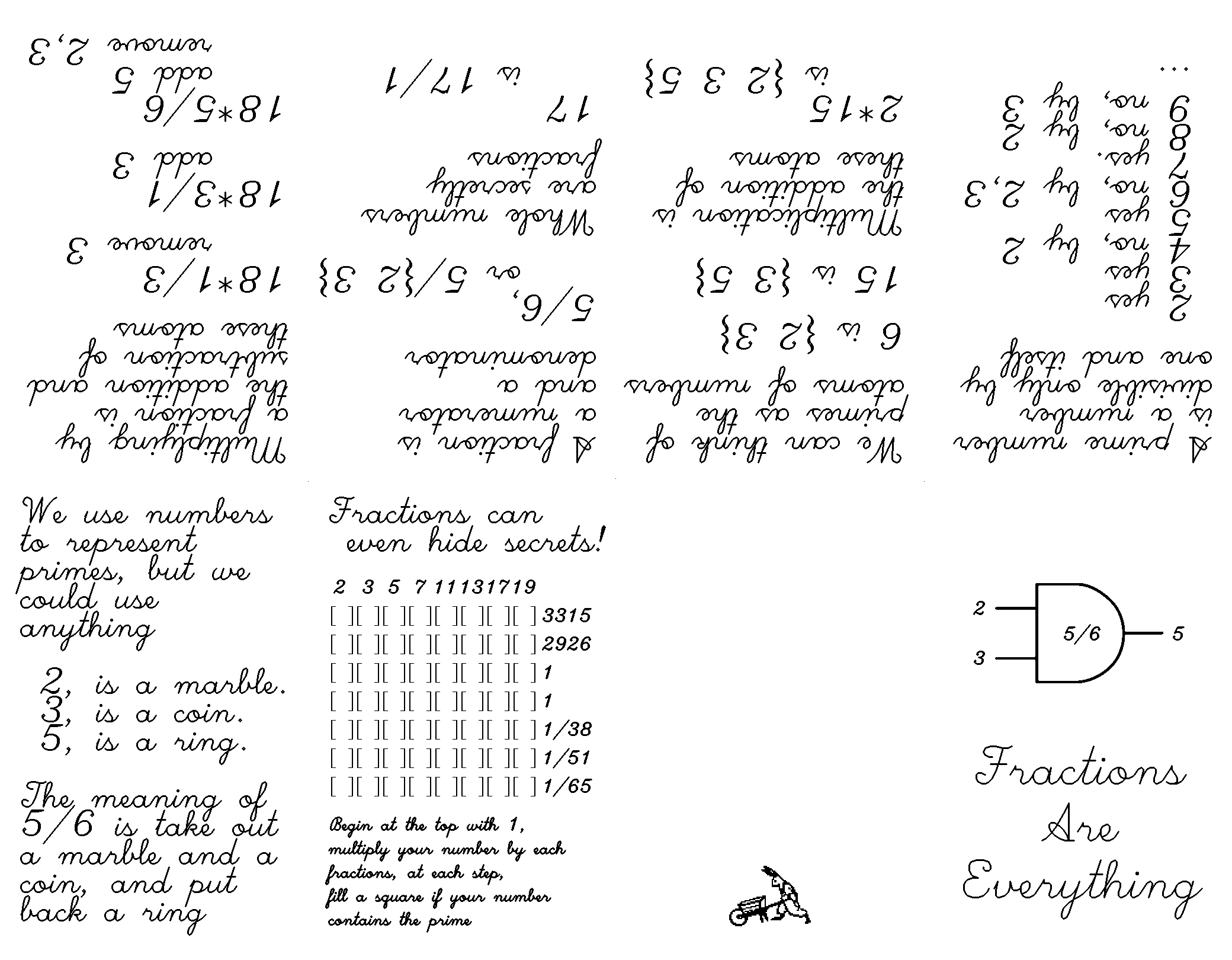
Alt...
8 pager, the cover is a AND gate with the primes 2 and 3, on one side, and 5 on the other.
...
Older...
![[?]](https://cdn.yiff.life/accounts/avatars/000/015/574/original/4ad055b2b494adfe.png)
@neauoire mind if i print out a copy for my local zine library?
...
![[?]](https://assets.merveilles.town/accounts/avatars/000/000/333/original/050403707586f8a1.png)
![[?]](https://social.nouveau.community/system/accounts/avatars/115/019/249/823/403/423/original/49e091ba776cfe9a.png)
@neauoire Vector text rendering fo uxn is so cool to see. You could animate your new logo for xxiivv with it.
...
@andnull yes! I've been shy to openly say that it changes everything.. but it changes everything!
...
@neauoire Oh, this opens the world in terms of text setting. I have been wanting to see a permacomputing adjacent project attempt to talk CTL* and how far you could push it on a system such as uxn.
*not everything tho, some stuff does just require a 5mb lookup table on the side such as word breaking iirc
Print them! Share them! Spread the love of commutative arithmetic.

Alt...
The main character in Only Yesterday who struggled with fractions.
![[?]](https://assets.merveilles.town/accounts/avatars/115/862/283/383/146/293/original/b13013867a561400.png)
@neauoire im so happy on how it turned out, thank you so much <3
...
![[?]](https://assets.merveilles.town/accounts/avatars/108/890/367/482/804/710/original/bd699857639cccf4.jpg)
@neauoire It looks amazing! That font is very beautiful. And doing this in Uxn is awesome. Move over, LaTeX :-D
...
@wim_v12e This came together after having the issue where I'd make the zines in GIMP, and I had these large print resolution files that I can't version. This is entirely textual, and it allows me to make it all pixel-perfect :)
The zine rom is 3236 bytes!
...
@neauoire amazing! is this the font format you posted about earlier?
...
@wim_v12e it is! You can see the renderer here: https://git.sr.ht/~rabbits/zine_fractions/tree/main/item/src/hershey.tal
docs: https://wiki.xxiivv.com/site/hershey
...
@neauoire Thanks, I've bookmarked that. So with this we could have Japanese in Adelie?
...
@wim_v12e yeah! I have some 200ish characters only tho, we'd have to fill in the blanks:
https://git.sr.ht/~rabbits/hershey/tree/main/item/etc/japanese.jhf
...
@neauoire Ah, how come that is different from https://paulbourke.net/dataformats/hershey/japanese.gz ?
...
@wim_v12e OH DANG, I took the wrong file, yes this is MUCH more complete.
Then yes, to answer your question, now you can write in japanese in uxn.
...
@neauoire let the fun begin! though it will have to wait until I'm done with the boring work stuff
...
@wim_v12e The file is truncated at 80 columns, which is a pain because it adds bytes in an otherwise clean stream of points, usually I clean those files by hand but this one is massive, you might have to make a program that reads each line, and if it's not a space-padded decimal number, erases the linebreak.
If you can't figure it out, lemme know and I'll make a little script in uxn to clean it up.
...
![[?]](https://media.hachyderm.io/accounts/avatars/109/689/505/220/562/788/original/df5016a576566d46.jpg)
This is delightful!
And I'm obsessed with that beautiful script font. The numbers render so beautifully
...
![[?]](https://cdn.masto.host/tooot/accounts/avatars/000/004/414/original/1a3c8fa5978463f5.jpg)
@neauoire
I'm a competent English reader since childhood, but I have to confess that cursive just slightly breaks my brain. Can't really read it fluently without getting stuck every few seconds.
...
@eladhen it's worth practicing, I hope the zine helps you practice not only fractions but also cursive!
![[?]](https://static.piaille.fr/accounts/avatars/109/347/436/515/647/095/original/6eef1d42249f592b.jpg)
@neauoire Beautiful and fascinating as always! Did you also draw the fonts? Is there a Uxn program to do that?
...
@arnaudb I didn't, it's one of the original hershey fonts, I've only implemented a renderer for the vector data.
https://wiki.xxiivv.com/site/hershey
@neauoire this is beautiful. Im embarrassed to say I am confused about what I'm supposed to do in the puzzle on the last page
...
@robd multiply 1 by 3315(the result is 3315), check what prime factors are in that number, and fill in the little box under each prime in the row, then use 3315, multiply it by 2926, and fill in the primes found that number, and so on :)
For example, if the number is 15, fill in the squares under 3 and 5.
![[?]](https://media.mathstodon.xyz/accounts/avatars/000/002/649/original/8edfdc387dd5fe3f.webp)
![[?]](https://media.ruhr.social/ruhr-social/accounts/avatars/109/380/782/126/907/561/original/a497370beee5986e.png)
![[?]](https://assets.merveilles.town/accounts/avatars/113/887/101/007/517/452/original/ccec97c677f46fa1.png)
@neauoire I absolutely ❤️ this. Was working through the ideas (and end puzzle) on the couch and my wife asked what I was doing. I said "interacting with social media"
...
![[?]](https://files.sfba.social/accounts/avatars/109/536/270/766/819/164/original/1097c50e90909f63.png)
@neauoire I love fractions. I really should try making some math zines too.
...

BTW if you're looking for an open hardware, repairable laptop made by a small team in berlin with no venture capital, maybe MNT Reform Next could be interesting for you: https://www.crowdsupply.com/mnt/mnt-reform-next
...
![[?]](https://media.spejset.org/accounts/avatars/110/325/472/120/471/246/original/bf22797e28d4903c.jpg)
@mntmn When it becomes available in the MNT shop after crowdfunding ends, will it be shipped from Europe or from the US when bought in the MNT store?
...
![[?]](https://files.mastodon.social/accounts/avatars/114/655/462/629/021/238/original/db568efbe3389d9d.png)
@mntmn mal rein interessehalber - mit welchen Distributionen wurde das Gerät denn schon so getestet?
Ausgeliefert wurden die noch nicht, oder?
![[?]](https://s3.flak.is/flaki.social/accounts/avatars/109/302/365/819/314/213/original/d50ee388fab463fb.jpg)
TFW you receive 14kWh of raw LFP battery cells 💙
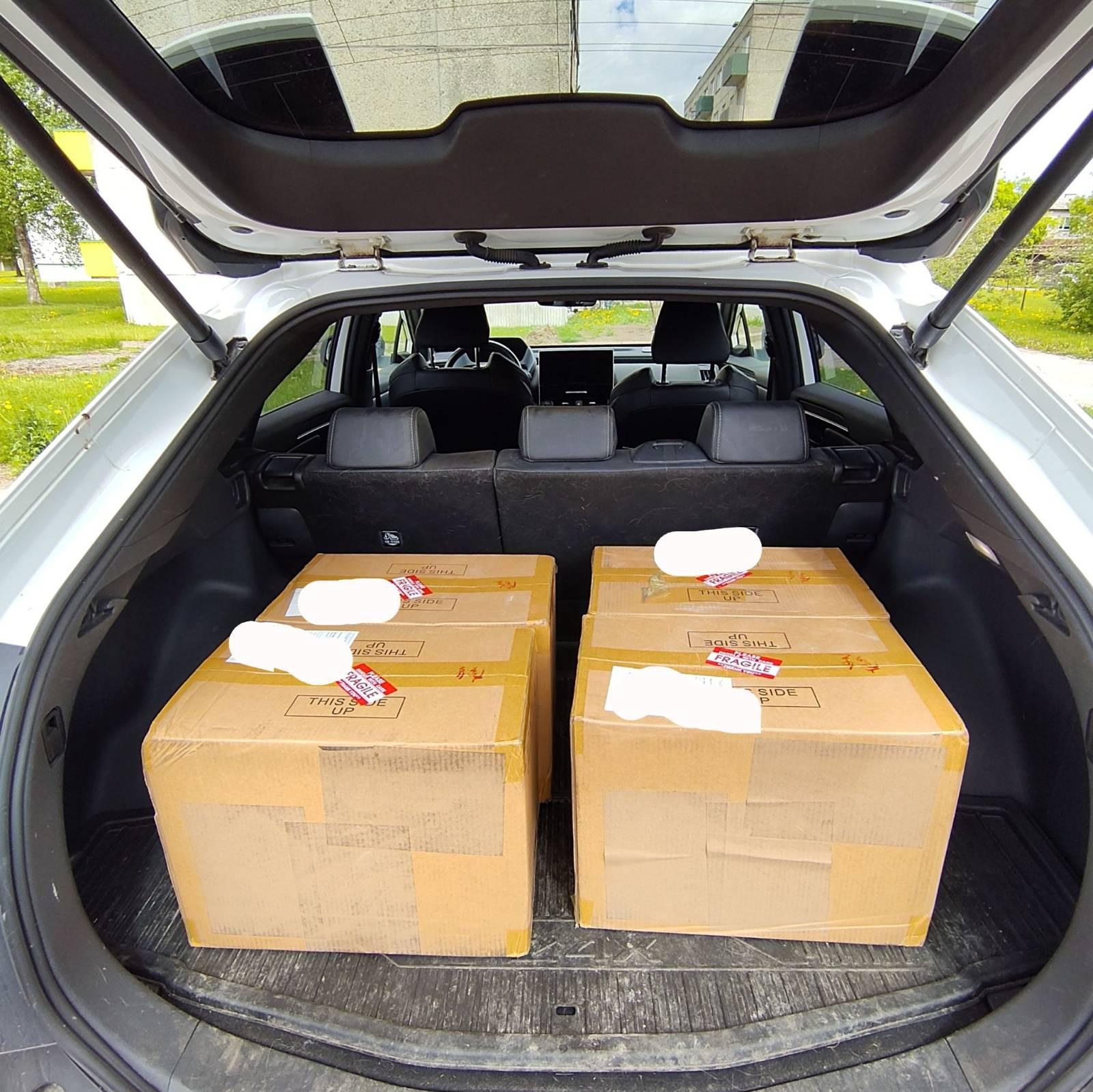
Alt...
Four large cardboard boxes in the back of an SUV. They have large red "FRAGILE" stickers and "THIS SIDE UP" markings on them
...
![[?]](https://media.hachyderm.io/accounts/avatars/110/938/967/908/106/596/original/51e83feef8711d4b.jpg)
@flaki Oof that must be heavy 😳
...
@to I'm glad I won't be lugging them up to the 4th floor with no elevator! :D
(roughly 5.4kg/cell, so about 21kg per box)
Fun fact: while a not-insignificant volume of those boxes is padding, sure, it's still absolutely bonkers to me that the car below actually has almost 5 times(!) as much battery storage hidden beneath the floor (~72kWh)
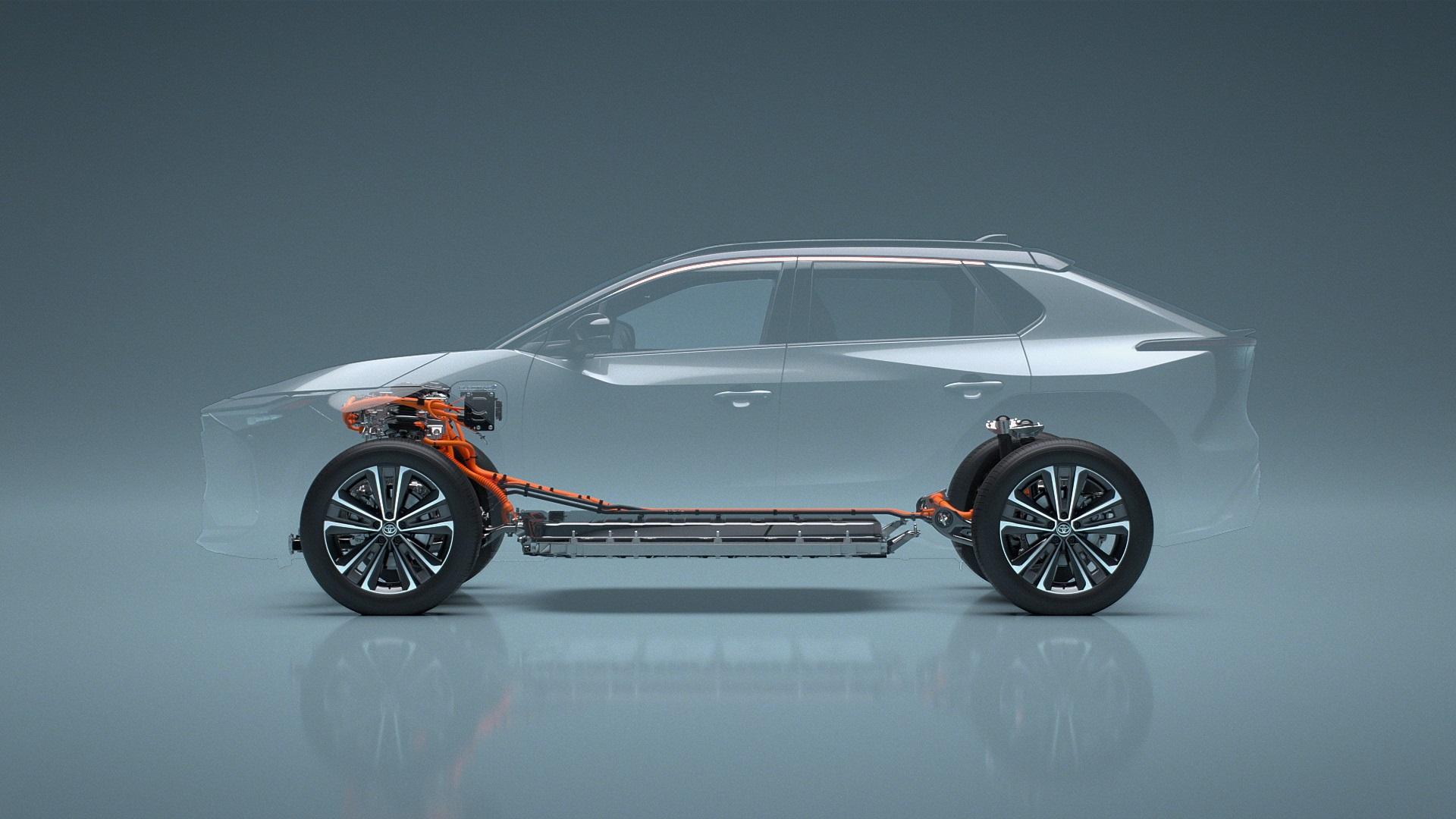
Alt...
See-through mockup of a Toyota bZ4X electric SUV showing the wheels, parts of the electric powertrain and the thin baseplate containing the battery storage across the floor between the front and rear wheels.
...
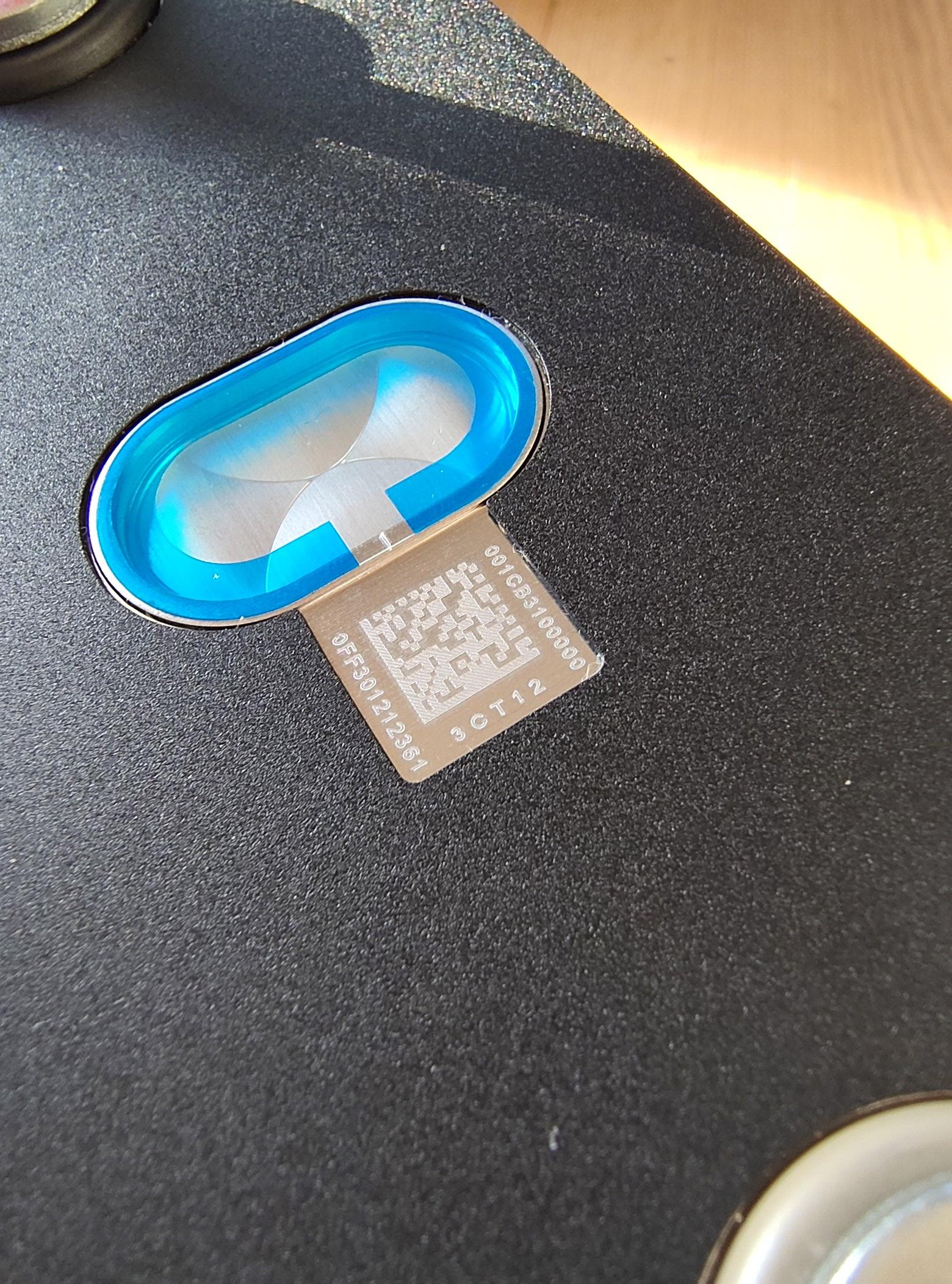
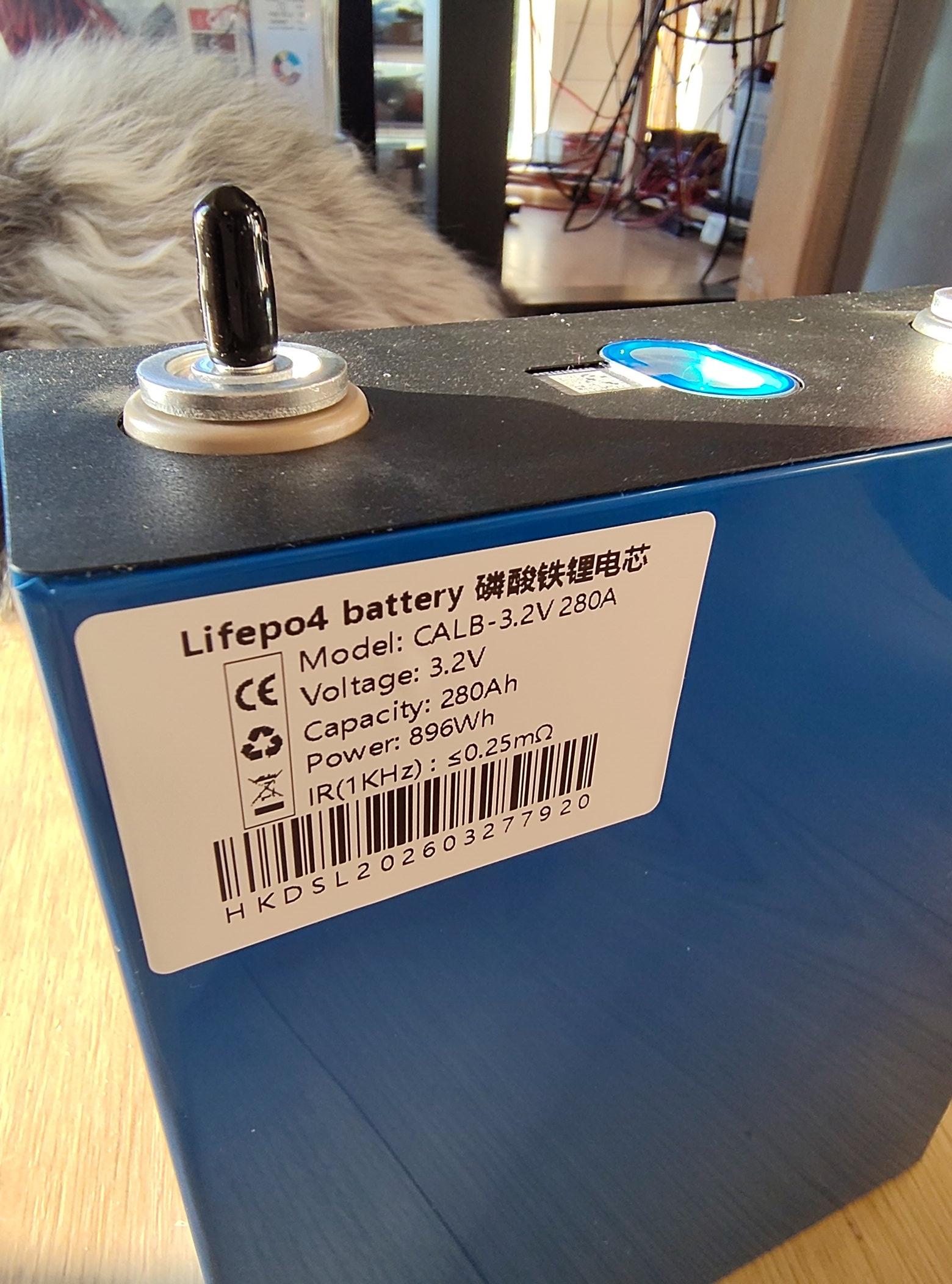
Hoookay, so plot twist: they didn't actually send me the CALB 280Ah battery cells I ordered, these are *CATL* 280Ah battery cells that are branded (according to the sticker on the battery) as CALB 280Ah cells, but the identification QR code seems intact and untampered-with which tells the true story. So far they look okay and new, no terrible bloating, voltages look fine, but crucially these are rated for 6000+ cycles, which is no slouch, but not the 10000 cycles the CALB are known for. 
https://flaki.social/@flaki/116636156518043476
@hi cost of the 16 cells was slightly over 1000€ (free shipping). Ordered them in late March so it took almost two months for them to arrive, as they had to be shipped from China first, but some more "mainstream" cells* they might have in stock. It eventually shipped in about a week from their polish warehouse, no customs or anything needed.
___
* I specifically wanted these 280AH CALB prismatic cells because of their longevity, they are rated for 9000 cycles
https://lythbattery.com/10000-cycle-calb-280ah-lifepo4-battery-cell-l173f280a/
...
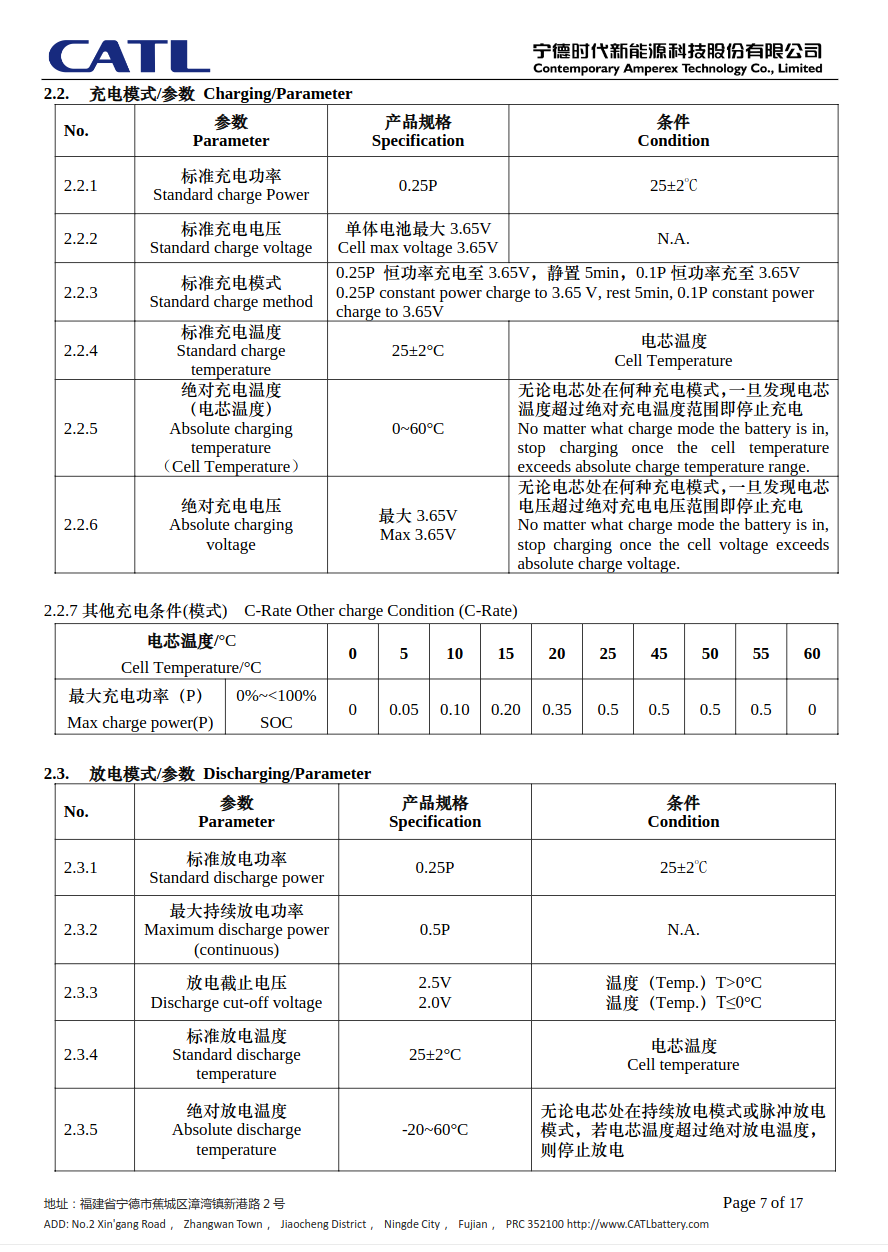
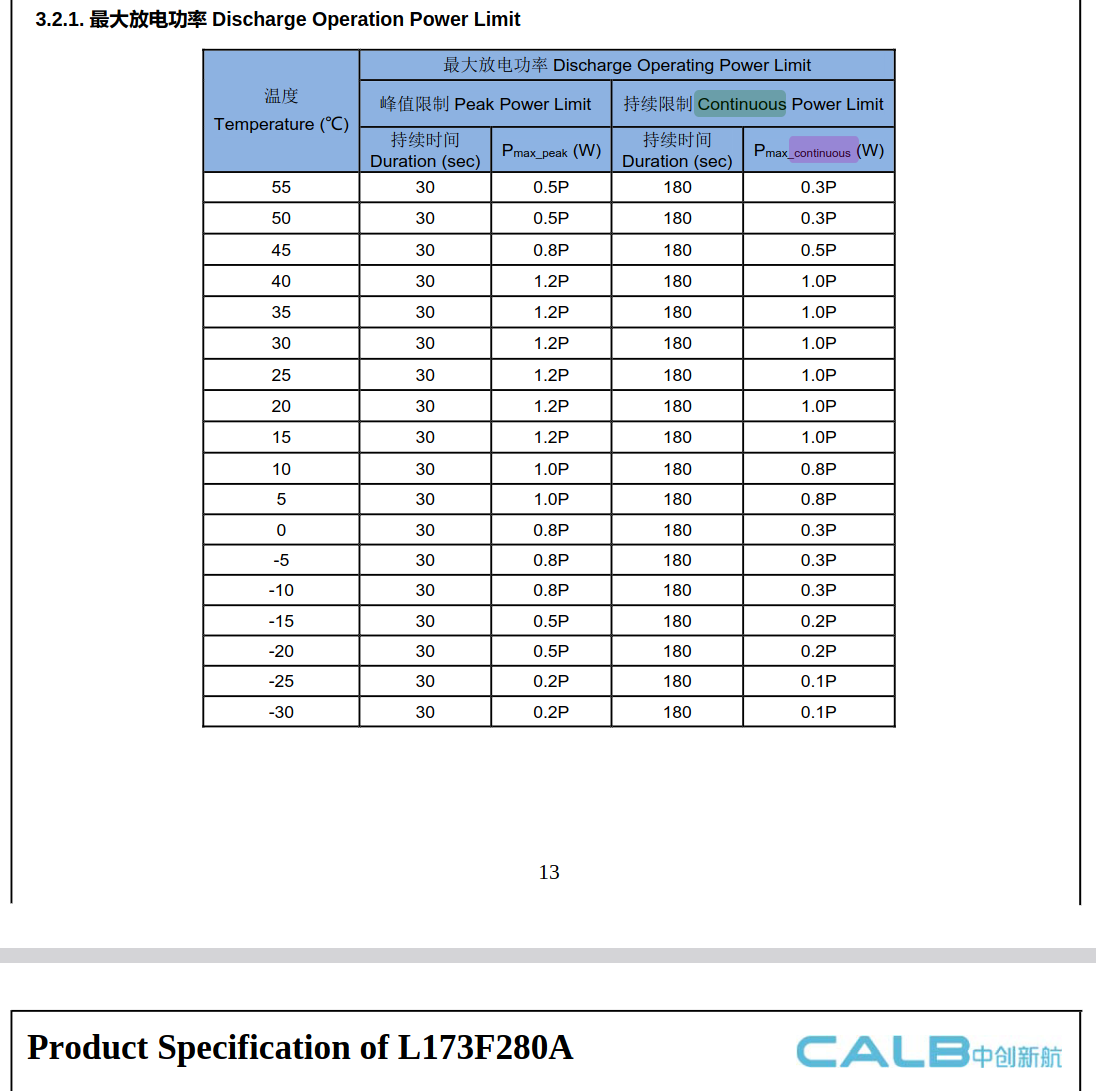
Yeah not only that, these are strictly inferior cells to the CALB, the differences are not just theoretical longevity. Check the datasheets - the CATL is not only rated for less cycles, it's very choosy about temperature of the cell when it comes to charging/discharging.
That's what I get for ordering from shady online Chinese resellers. 
Alt...
CATL specification lists "Standard charge" and "Standard discharge" power at 0.25P, notably at low temperatures between 0-25 degrees the max charge power is a fraction of the full capacity (0.05-0.35P, 03.5P even at 20 degrees).
Alt...
CALB - Product Specification of L173F280A. Discharge Operation Power Limit table shows peak and continuous discharge rates of the cell which range from 0.1-0.3P in the coldest conditions (down to -30 degrees) and up to 1P under 40 degrees for continuous discharge, the peaks are slightly higher.
...
![[?]](https://files.mstdn.party/accounts/avatars/109/315/596/526/696/573/original/c80c76c17aca1a52.jpg)
@flaki my big storage battery is a Fogstar / Seplos DIY kit with 315Ah Envision (AESC) cells. They're similarly fussy to your CATL ones.
https://cdn.shopify.com/s/files/1/1347/0997/files/AESC-Envision315ah.pdf
In my case my battery is indoors and my.inverterncan only manage C/5 (and I usually run less current) so low-temperature charging shouldn't be a problem.
But you ordered CALB it's a real shame that they've sent you CATL.
...
@sheddi it's quite something to send clearly a different kind of cell and just re-sticker it to whatever the customer ordered 🤣 even their own website confirms the QR code belongs to CATL cells 
Alt...
Characteristical blue C-shaped overflow valve of a battery cell, the laser-etched QR code on the cell lists "001CB310..." designating this as a 280Ah CATL CB310 cell.
Alt...
Sticker on the side of the battery cell reads "Lifepo4 battery", "Model: CALB-3.2V 280Ah"

Alt...
The HAKADI battery supermarket's own website decodes the QR code identifier of the battery cell as a CATL 280Ah LiFePO4 cell
![[?]](https://files.sueden.social/accounts/avatars/109/340/149/824/809/432/original/e4a899284ea85e42.jpg)
@sheddi it's quite something to send clearly a different kind of cell and just re-sticker it to whatever the customer ordered 🤣 even their own website confirms the QR code belongs to CATL cells
Alt...
Characteristical blue C-shaped overflow valve of a battery cell, the laser-etched QR code on the cell lists "001CB310..." designating this as a 280Ah CATL CB310 cell.
Alt...
Sticker on the side of the battery cell reads "Lifepo4 battery", "Model: CALB-3.2V 280Ah"
Alt...
The HAKADI battery supermarket's own website decodes the QR code identifier of the battery cell as a CATL 280Ah LiFePO4 cell
"Send detailed complaint to the seller who re-stickered your battery cells to look like different cells" was not how I hoped this day would end, but oh well.
At least these do look like "Grade A" new cells, so I guess you could say it could be worse...
https://flaki.social/@flaki/116636983502006268
@sheddi it's quite something to send clearly a different kind of cell and just re-sticker it to whatever the customer ordered 🤣 even their own website confirms the QR code belongs to CATL cells
Alt...
Characteristical blue C-shaped overflow valve of a battery cell, the laser-etched QR code on the cell lists "001CB310..." designating this as a 280Ah CATL CB310 cell.
Alt...
Sticker on the side of the battery cell reads "Lifepo4 battery", "Model: CALB-3.2V 280Ah"
Alt...
The HAKADI battery supermarket's own website decodes the QR code identifier of the battery cell as a CATL 280Ah LiFePO4 cell
...
@hi cost of the 16 cells was slightly over 1000€ (free shipping). Ordered them in late March so it took almost two months for them to arrive, as they had to be shipped from China first, but some more "mainstream" cells* they might have in stock. It eventually shipped in about a week from their polish warehouse, no customs or anything needed.
___
* I specifically wanted these 280AH CALB prismatic cells because of their longevity, they are rated for 9000 cycles
https://lythbattery.com/10000-cycle-calb-280ah-lifepo4-battery-cell-l173f280a/
...
what would the cost of the system with all the battery management, inverters, etc? also i assume assembly will take quite a long time...
...
@hi if you know what you are doing (=not me), assembly shouldn't actually take too long.
If you want it to "just work" I recommend buying 48V rack-mount or free-standing batteries from Ali Expess - 15kWh comes around 1.5-2k €, not much more than the parts (raw cells, box, BMS) and these are ready to plug into & talk to your inverter.
An inverter will set you back 500-1500€ on average, depends on your needs.
Solar panels are tricky to find by the piece (usually you need to buy a whole palette, and be a company ideally), this is especially true for the mounting hardware. You can buy consumer stuff like Ecoflow, or lower priced Renogy, Eco-worthy but they are still overpriced. I was lucky to find these panels in DEPO, I bought the last ones.
You need some wiring, solar breaker box, other breakers but all in all very doable within 5k.
The tricky part is the installation (of the panels, and the electrical installation of the inverter; next toot)
...
@hi it's pretty much impossible to find someone to do installation for you with your hardware. You can do the installation and then have it inspected by someone, but they can basically charge as much as they like.
If you are off-grid this is not really a problem—if you roughly know what you are doing you can build a fairly safe 48V system and live happily ever after. However if you have grid power and at any point you want to connect the two systems (with e.g. a hybrid inverter), you are legally not allowed unless you do the paperwork, inspection, etc. That costs Big Buck, see above. And also lots of time. I still don't have an electricity connection installed at the plot, and we started the process last summer. 😶
If you are off-grid, can source the panels and install them (e.g. on roof) and are willing to learn a bunch from YT and forums, you can do this stuff in a few months and under 5K EUR.
![[?]](https://media.exquisite.social/exquisite/accounts/avatars/112/740/281/679/421/243/original/8db2f712b2396f11.jpg)
If you are seriously thinking about learning #Vim / #Neovim, do yourself a favor and proceed as follows:
1. Grok ed(1).
2. Grok vi(1).
3. Ask yourself whether you really need anything ed(1) and vi(1) don't provide.
If your answer to step 3 is "yes", go ahead. But first, do steps 1 and 2.
Here is how to do step 1: Read the man page (it's rather short), read "Ed Mastery" by @mwl (those two steps are interchangeable and even parallelizable), then use it consistently.
Here is how to do step 2: Read the man page (it's rather short as well, though not as short as ed's), then use it consistently.
Also, have a look at https://stackoverflow.com/a/1220118.
...
Older...
i learned it the hard way—in exactly the wrong order: vim, then vi, then ed/sed...
...
@hi Same here - from Vim to vi to ed. While I do use (Neo)Vim, I am convinced that learning plain vi and ed has improved my way of using "improved" versions of ed/vi.
There is this truly profound core, around which Vim and its decendants have added layers upon layers of functionality (not all of it bad, of course - some of it simply superflous, some of it really good). But it is remarkable how much is contained in this small, beautiful core. And it is just as remarkable how often this core is fully sufficient - we often need way less than we think we do (a very general principle in life...).
...
![[?]](https://social.trom.tf/photo/profile/eshep.png?ts=1652029312)
So true! I count myself lucky to be just old enough to've begun working on #unix systems at a time before all the old guys I learned from started adopting #vim. They never taught any of us kids how to use #ed. All of our systems had #vi as the "editor of choice". I didn't move to using vim for about ten years, and to this day only use it as a convenience for formatting, and only use a single 'pack' which makes all the csv work I do less hasslesome. Too many people try to add far too many bells and whistles to their editor to the point that it becomes unusable as the tool it's meant to be.
@hi
![[?]](https://polymaths.social/fileserver/01HCMX6M1CZNEVJ4F5H58TT5XJ/attachment/original/01JHC5KM5K0V0J0436SPD3F86H.jpeg)


 🍵
🍵  [
[Dang it, I'm so upset that "grok" makes me think of apartheid clyde and his "ai" garbage.
Not remotely your fault.
But dang. 😆 🤦♂️
I even remember that word from the somewhat infamous late 80s William Shatner #SNL "move out of your parents' basement and get a life!" skit where the one guy had on a T-Shirt saying "I GROK SPOCK," and we all went hunting in our dictionaries for what the heck grok meant. 😄
P.S., #TIL I learned about marks in (even vanilla) vi/nvi.
I HAVE BEEN USING vi FOR A QUARTER CENTURY 🤣
I have no defense. I plead guilty of cluelessness and not RTFMming.
![[?]](https://media.bsd.cafe/bsdmmedia01/accounts/avatars/110/897/841/857/820/580/original/440da7fe4ff168a8.webp)
@thorstenzoeller There's one thing I desperately need from vim that ed and vi do not provide: keymaps. I don't know how to replace them. I need to type in Russian and at the same time be able to control my editor. Switching keyboard layouts back and forth is quite unhandy. So it's an internationalization issue.
It would be cool to find a solution that does not require vim or Emacs.
...
@chesheer Keymaps are definitely a feature I would consider highly useful and an improvement over ed and vi, and I can relate very well to being dependent on it.
![[?]](https://glamour.ovh/computer/s/avatar-3dcaf797f0cee4869e1b12a01c9c8028.png)
It is my 3rd month of running #snac #snac2 instance. I wanted to share a few words about how awesome this software is.
Few points that make snac icredibly good for my usecase are:
- No database needed - means easy migration for me
- No javascript - not a big fan of JS
- No cookies - so users are not tracked
- It only stores locally data about users on the local instance it doesnt download stuff from instances it federates with
- Extremely low resource usage
Basically you compile snac you get a executable program that you can run as a deamon, you just need to point it to data directory in which all data is stored, it puts out HTTP on which web ui is visible, you can proxy it and that's all.
After 3 month of posting (2 active users and 3 semi active users) my data dir is ~500MB and memory usage is ~200MB
it means i can keep running it on my infrastructure without even thinking too much about load
@grunfink@comam.es thanks for such a awesome piece of software 🩷🩷🩷
...
![[?]](https://comam.es/snac/susie.png)
![[?]](https://doasu.dev/pub/me/s/b00a9d90ec4f7d8ec22275ee04f18d02.png)
![[?]](https://files.mastodon.social/accounts/avatars/110/649/875/581/093/865/original/adf032f3e4c1e946.jpg)
please vote anonymously and boost this poll for transparency and participation:
How frequently do you chat with LLM?
| not at all: | 5257 |
| a few times per month: | 1143 |
| multiple times per week: | 1061 |
| over 1 hour per day: | 335 |
![[?]](https://media.bsd.cafe/bsdmmedia01/accounts/avatars/113/407/688/140/177/903/original/de6c43fbc2be3c55.jpg)
![[?]](https://assets.merveilles.town/accounts/avatars/000/079/359/original/5a8bda678aaa80c1.jpg)
The wrestlers at the carnival said to A "I saw you doing something cool before" and got her to do it in the ring: https://orllewin.uk/video/98ce184e12
Long hot day for me but the kids had a proper memory making time. P had never seen wrestling before and thought it was the best thing ever. He met an owl too which couldn't compete. A's dance group did a show, she was great and they all had a good time.

Alt...
A wrestler standing up on the ropes of anting in the middle of Todmorden park. A small excited boy has his hands up in the forefround

Alt...
A small boy holding a barn owl.
...
![[?]](https://assets.merveilles.town/accounts/avatars/000/118/364/original/092411715c54f0cb.gif)
![[?]](https://assets.merveilles.town/accounts/avatars/107/141/241/867/925/028/original/46e494f2498e4b79.png)
...
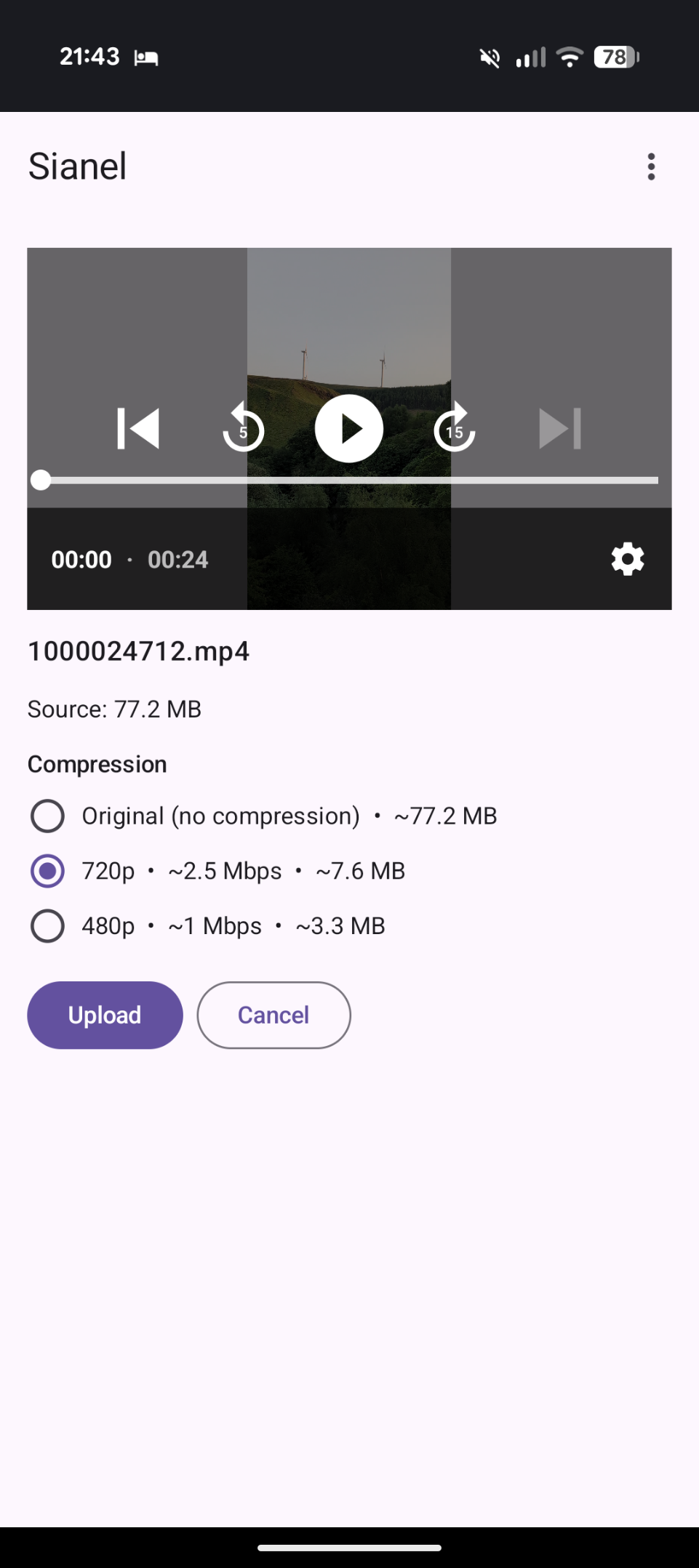
@mikael got some css work to do but yeah, YouTube prompted me to verify my age so I got to work on this instead (turns out they have a video method that doesn't require ID but still...).
Some awful PHP and a simple Android app (I'm adding scaling to the Android app which you can do natively now, no need to add ffmpeg as a dependency)
...
@oppen The positive side of me is actually hopeful about some of the crap things happening to the internet currently. Hoping it will drive people away from the age gated VLOPs (in EU speech).
What scales the video natively now? aspect-ratio:9:16;? Or are you talking about re-encoding the video itself?
...
@mikael media3 has a Transformer API (https://share.google/3LFJaq9QiFwg0qfMH) to re-ecode video at a smaller size so I'm using that to keep storage down on my server

...
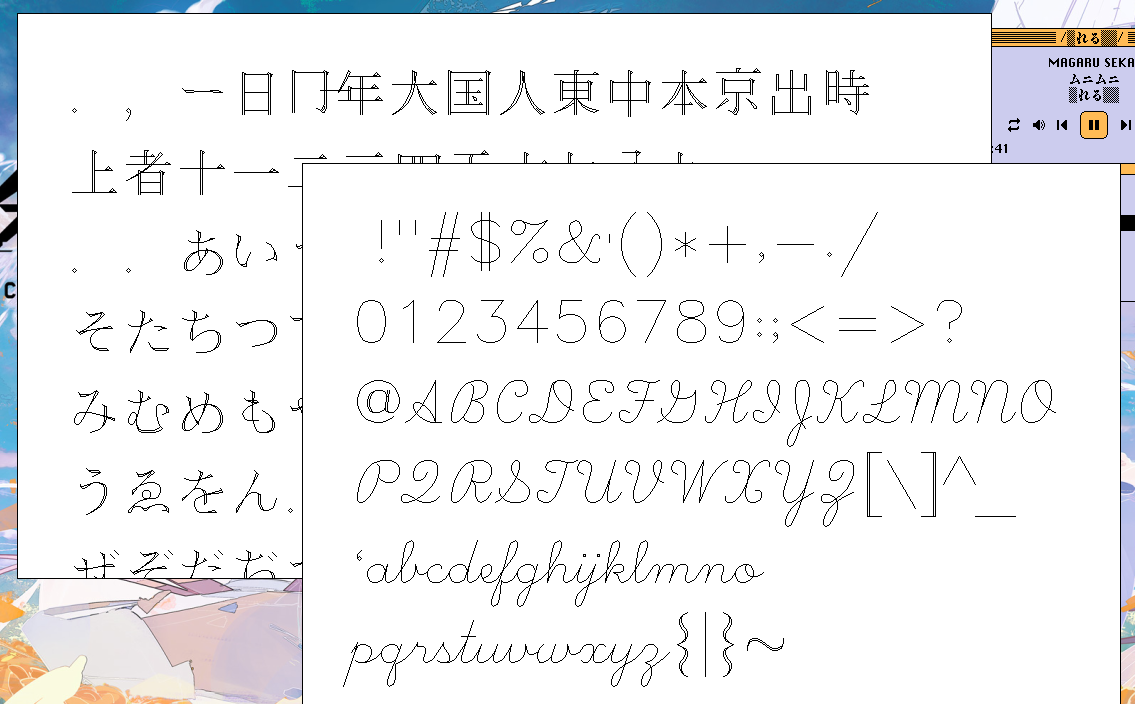
Figured out proportional spacing between glyphs. It's amazing this works on 8-bit systems. You can almost taste that vib ribbon energy.
...
![[?]](https://media.tech.lgbt/accounts/avatars/109/501/700/567/479/407/original/19792edeb2eab35d.png)
@neauoire
Oooh, very cool.
Are the vector fonts a new file format?
...
![[?]](https://assets.merveilles.town/accounts/avatars/114/314/561/863/583/111/original/023b6332124f4742.png)
![[?]](https://grapheneos.social/system/accounts/avatars/109/415/078/265/909/169/original/c74b93c7870e37a0.png)
The first public release of GrapheneOS Speech Services is now available in our App Store. After installing it, it can be activated as a text-to-speech service by tapping it in Settings > System > Language & region > Speech > Text-to-speech output > Preferred engine and approving it in the dialog.
...
...
![[?]](https://dalliard.ch/pub/nathanael/s/avatar-ebcd036a0db50db993ae98ce380f6419.png)
@hi Yes, we plan to add speech-to-text too. US English speech-to-text may be higher priority than adding more languages to text-to-speech but we haven't decided yet. We can do both at once since we have more developers now and are in the process of hiring more people.
...
![[?]](https://media.mstdn.social/accounts/avatars/109/275/440/085/410/322/original/cb7ba850e8af2bd1.jpg)
Were you referred to as “the weird kid” growing up / Do you consider yourself to be “weird” as an adult?
| Not weird kid / not weird adult: | 39 |
| Weird kid / not weird adult: | 92 |
| Not weird kid / weird adult: | 82 |
| Weird kid / weird adult: | 872 |
![[?]](https://media.tech.lgbt/accounts/avatars/000/065/526/original/8e7db2445303f872.jpg)

 [
[I ditched #BitWarden a while back, migrating everything over to a local solution, I can sync with syncthing.
BUT, it's been kind of startling to see their enshittification accelerating. I remember when they were kind of considered a glowing example of a FLOSS business done right.
EDIT: MAYBE startling isn't the right word. All for-profit FLOSS enshitifies given enough time. #capitalism
...
![[?]](https://media.mastodon.scot/accounts/avatars/109/331/630/233/504/605/original/e204cd82de1a035a.png)
@trashheap 1Password 7 (which I use, subscription-free) feels like it’s on borrowed time at this point, there’s no way I’m entrusting a password vault tied to my Apple Account, and the goal is to self-host VaultWarden but I haven’t been able to figure that out yet.
...
@callme_jc I haven't tried it per se. But if I were going to do it, I'd look at something like yunohost which automates self hosting some of the more convoluted apps to self-host. AND I see they do have Vaultwarden available.
![[?]](https://media.bsd.network/accounts/avatars/000/066/881/original/8b6ca5ca9984b88d.png)

...
Older...
![[?]](https://media.bsd.network/accounts/avatars/000/000/446/original/31267f8fefb710e0.png)

That was unexpected ! Good job @solene ! 
...
@ledeuns I had some much backlog related to OpenBSD, and 1/4 of links are dead now and a huge chunk of the rest is almost obsolete ^^' I didn't have much content but at least I can start with a fresh backlog, the daunting backlog is gone now.
![[?]](https://media.bsd.network/accounts/avatars/108/169/621/963/093/196/original/d2b514315880ccba.png)
![[?]](https://gts.tumfatig.net/fileserver/01FJ093H6Y5VGN20G998J7KN1M/attachment/original/01JZTJV1P9RVJ502PCXKN68R1F.jpeg)
![[?]](https://digitalcourage.social/system/accounts/avatars/109/746/138/283/301/651/original/93a46c4fe8617c29.png)
@solene what a fantastic artwork by @prahou https://webzine.puffy.cafe/images/tn_artwork-issue19.png

![[?]](https://media.bsd.network/accounts/avatars/000/069/910/original/ba932fe4520b958f.jpg)
@solene
Well.. Because of this webzine I finally got a usb-c docking station working nicely, thanks @joel ! AND I got vaultwarden deployed and working, thank you @stilla ! And because I am using a docking station I fixed some icons and behaviors on my smoking hot fvwm setup thanks to James' lovely documentation found over on ye olde dataswamp!
Not to mention the rather ho-hum easy upgrade to 7.9..
And it ends with @prahou art, a very nice touch to the zine!
Thank you Solène for putting it together, I needed the push!
...
@paulgatling @joel @prahou @stilla this webzine didn't had much content, most of the backlog I stored last year was obsolete, I took a few articles that were still useful or relevant, and not too technical - this is great they hit the spot for you ^^
![[?]](https://media.bsd.network/accounts/avatars/000/137/221/original/1fd6f9f33d309859.jpg)
- [x] upgrade all servers to #openbsd 7.9 ❤️

![[?]](https://cdn.mstdn.ca/accounts/avatars/116/568/389/127/791/801/original/4583fefa31ae71bf.png)

https://www.openbsd.org/plus79.html
https://cdn.openbsd.org/pub/OpenBSD/7.9/
...
@hi Ooo in https://cdn.openbsd.org/pub/OpenBSD/7.9/ANNOUNCEMENT it says 19th of May, which is tomorrow for me atm 
We'll soon find out if that's a placeholder or the actual #OpenBSD release date! 
...
![[?]](https://media.infosec.exchange/infosec.exchange/accounts/avatars/109/536/896/389/790/677/original/cd2c34e0e0d9533e.jpeg)

no, i don't want to use fossil fuel cars or burn firewood instead of harvesting solar.
i just don't want subscriptions, clouds, and apps.
i want standard interfaces, open protocols, open firmware.
...
@hi you have the choice. Either a 372MB phone app or a 372MB PWA. What you like best? 😬

![[?]](https://assets.oldbytes.space/assets.oldbytes.space/accounts/avatars/109/564/377/349/492/687/original/be4c30cc90da7b20.png)
Let's make a Pi Pico 2 powered video card.
This is going to be a long thread that either ends in glorious triumph or hilarious failure.
...
The goal of this card will initially be to implement CGA-compatible text mode.
Taking a page from the Seequa Chameleon, it will decode 16K of video memory from B0000-C0000, repeating it four times. This simplifies decoding. We may tighten that up later.
It will have a 4K region at AF000-B0000 where two soft fonts of 2K each can be written.
It will have IO addresses for a mode register, status register, color control register, CRTC registers, and eight palette registers.
...
This may seem overly ambitious - but I have an ace up my sleeve.
I have all the decoding PALs from a Seequa Chameleon on sitting on my desk. Including one that just decodes address ranges AF000-B0000, B0000-C0000 and produces an active-low chip select. And including another that decodes all the CGA's IO ranges.
...
It's cheating, yes. But it's an amazing shortcut to be able to leverage those. They can be replaced later with GALs or some other kind of modern CPLD.
...
A CGA card does not need a crystal - thanks to IBM's penny-pinching design decisions, the entire system crystal was tuned for an NTSC display, driving a master clock of 14.31818MHz.
This clock was delivered to the ISA bus via the OSC pin.
Deep in your modern PC, somewhere in the guts of its highly integrated chipset, there's a clock ticking away at this frequency.
...
14.31818MHz is not a transcendental number. It happens to be 315/22.
Thanks to @polpo for pointing out if I'm already overclocking my Pico 2's to 300MHz, I might as well go to 315.
...
Despite my fundamental lack of electronics background, I'm probably better equipped to make a bespoke CGA card than most people on the planet. At least that's my internal pep talk.
...
- I've written a cycle accurate CGA emulation
- I've made a working simulation of the CGA in a digital logic simulator
- I've reproduced 80% of the original CGA PCB in KiCad (I really need to finish that)
- I've captured digital logic traces from the CGA running demanding demoscene productions
- I am intimately familiar with the ISA bus and bus timings
- I've designed several PCBs in KiCad already and some of them even worked
...so why not?
...
This project will live on a breadboard for a while. The first milestone should be emitting some sort of test pattern on a standalone circuit to a real CGA monitor.
To do this we need to control five pins to start - the colors red, green, and blue (we'll ignore intensity, or pin it high), and the two sync signals, horizontal and vertical.
...
To simulate the OSC pin, I will program another Pico to just generate a 14.3181818 clock.
"What's my purpose?"
"You generate a clock."
...
Internally, the Pico will run MartyPC's CGA emulation, including my implementation of the Motorola 6845.
To cheat a bit, we'll tweak it a bit so it starts up with the register values pre-set for the PC's 80 column text mode, so it won't require programmatic set up.
...
This wasn't just a spur of the moment decision. I think ultimately, GlyphBlaster just makes more sense as an ISA card rather than being limited to living in the font ROM socket, and I've always wanted to make my own ISA card.
Designs for ISA cards in KiCad can be found all over the place, but they usually have other people's projects on them.
One thing I worked on previously is making a clean ISA card template in KiCad that you could start a new ISA card project with.
Credit to @tubetime as I basically took his EGA card project and scraped everything off of it, keeping the edge connector, and IO plate engineering drawings.

Alt...
A full-length, unpopulated ISA card project in KiCad.
...
I own a lot of ISA cards and I took measurements from several video cards, and there's no real standard - things vary a lot. You'll notice on this particular layout, the board edge dips down to give the most usable real estate after the end of the 8-bit ISA edge connector.
Unfortunately this means you can't plug an an original IBM CGA into your AT. We'll probably want to avoid that limitation. With a Pico replacing most of the logic on the board I don't really think we're going to need a full-length card in the first place.
...
On GlyphBlaster currently, I fight a lot with bus contention between the two ARM cores. Embassy, the USB-CDC connection and the network stack live on Core 0, whereas GlyphBlaster's video routines run on Core 1, so you might assume they could run independently.
...
But they still contend for the same flash - if I add some intensive video effect, I can starve Core 0 and it will stop responding to network requests or my USB debugging session.
The solution is to tag routines on Core 1 with #[unsafe(link_section = ".data.ram_func")] to force it to run out of RAM instead of flash, but this compounds my already dire RAM situation.
...
With a full board though, we could have a separate microcontroller that just handles the Wi-Fi. Maybe another RP2350? Maybe an ESP32? STM32 lol? I don't know. Worry about that later.
...
We'll definitely be using an RP2350B directly instead of soldering on a Pico 2 board. But I guess it's okay to still call this a Pico.
We basically double the number of available GPIO pins, meaning I no longer have to make compromises. Light pen? Sure. Capture every address line? You betcha. QSPI PSRAM? All day long.
Raspberry Pi is nice enough to provide a reference KiCad project, so you can more or less copy and paste a RP2350 into your project.

Alt...
A screenshot of Kicad showing the RP2350B reference KiCad project with the large RP2350B chip in the center.
...
![[?]](https://assets.oldbytes.space/assets.oldbytes.space/accounts/avatars/112/037/565/252/923/933/original/0ab50032f79d4e3c.png)
@gloriouscow If you're making a whole ISA card, then you're overlapping with #PicoMEM, #PicoGUS, and #PicoIDE which could be a good place to steal from / ask about!
...
...
@gloriouscow With your graphics card, all that's needed is an Pico 8086 emulator and you've got an "Oops, all Pico!" IBM PC :P
![[?]](https://assets.chaos.social/accounts/avatars/114/383/043/199/059/599/original/7ed1790c0857cbd2.jpeg)
Okay, first priority - let's make our Pico OSC pin simulator.
Raspberry Pi has a very nice Pico development plugin for Visual Studio Code. We just choose "New Rust Project," name it, and click create.

Alt...
a screenshot of the new project wizard in the Pi Pico visual studio code plugin. "Basic settings" prompts for a project name, given as "pico_osc" here, and a location, with buttons to cancel or create.
...
This gives you an rp-hal project, and GlyphBlaster is currently written against Embassy, and I don't really feel like rewriting all the overclocking code, so I'm just going to switch this to Embassy too and copy-paste that stuff.
I would like to thank FreddyV of PicoMEM for giving me the tips on how to stably overclock a Pico. It requires tweaking the on-board flash timings in a way I never would have figured out for myself.
The key do doing this in Embassy is this bit:
const PICO_SYS_CLOCK_HZ: u32 = 300_000_000;
const FLASH_QMI_TIMING_UPDATE_THRESHOLD_HZ: u32 = 280_000_000;
const FLASH_QMI_TIMING_HIGH_SPEED_HZ: u32 = 380_000_000;
const OVERCLOCK_FLASH_QMI_CLKDIV: u8 = if PICO_SYS_CLOCK_HZ > FLASH_QMI_TIMING_HIGH_SPEED_HZ {
    4
} else {
    3
};
const OVERCLOCK_FLASH_QMI_RXDELAY: u8 = if PICO_SYS_CLOCK_HZ > FLASH_QMI_TIMING_HIGH_SPEED_HZ {
    4
} else {
    3
};//...    let timing = embassy_rp::pac::QMI.mem(0).timing();
    timing.modify(|w| {
        w.set_clkdiv(OVERCLOCK_FLASH_QMI_CLKDIV);
        w.set_rxdelay(OVERCLOCK_FLASH_QMI_RXDELAY);
    });
...
I'll use GPIO16 for this which conveniently puts it on the top right corner of the Pico 2 board.
Our PIO program is stupid simple:
    let clock_program = pio_asm!(
        ".wrap_target",
        "set pins, 1 [10]",
        "set pins, 0 [10]",
        ".wrap"
    );
.wrap_target is just a standard label for the PIO loop, which will be restarted at the end with .wrap. The value in brackets is how many cycles to spin - the set itself takes one cycle, then we spin for 10 after. This should give us the 11 cycles on, 11 cycles off behavior we want.
'pins' here just targets GPIO16, via this:
let clock_pin = pio1.common.make_pio_pin(p.PIN_16);
clock_sm_config.set_set_pins(&[&clock_pin]);
...
PIO is the secret sauce that makes Picos so good at interfacing with retro hardware. They allow you to react to pin changes instantly, and read and write busses, doing the sort of high speed bus interactions that were normally the exclusive purview of FPGAs.
...
All in all, not too shabby for a $5 board. Let's see how our clock looks, right after I unbag this and hook it up.

Alt...
A photo of a bagged Pico 2 board with a $4.99 price sticker.
...
14.318MHz, baby.
Believe it or not, a sawtooth clock isn't that hideous. This is pretty much what the OSC pin looks like for realsies.

Alt...
A screenshot from a Siglent oscilloscope showing the 14.318MHz clock generated by the Pi Pico 2
...
![[?]](https://f-ckendehoelle.de/system/accounts/avatars/109/292/598/619/045/217/original/ce72f23ab2bda7c3.png)
@gloriouscow Could that be a probe issue? Not all probes go up that high in frequency.
...
@casandro Nah, I've gotten a clean read from a 66MHz crystal on this probe from a 386 motherboard. This is probably a limitation of the Pico's GPIO drive strength. I'm not sure if that's something you can configure on a Pico, you can on an STM32, although I usually don't as it can produce overshoots which ends up being worse to deal with.
...
@casandro The real CGA also cleans up the OSC pin by immediately passing it through an 74LS04 which we will probably also do.
It's actually kind of silly how close we already are to outputting something on a real CGA monitor.
We could drive two additional PIO state machines with divisors to control HSYNC and VSYNC.
Now, if you just output color all the time, you have no idea whether your picture is actually synchronized - the monitor will just keep the beam on all the time, so if you just say, emit magenta forever, you'll just see a solid magenta screen even if the monitor has no vertical hold.
...
So we're going to have a color latch like the CGA does.
This is a 74LS174 flip-flop, that is fed our generated colors and is clocked by /OSC.
The CGA doesn't use the 174's clear input, but we can - another GPIO output of the Pico should be able to pull that low to blank the screen, I think. Having a vertical blanking area will let us tell if we have vertical hold.

Alt...
a screenshot from the "Digital" digital logic simulator with GloriousCow's CGA simulation loaded. It shows U101, the CGA's color latch.
...
I can't overstate how useful it is to have a working digital simulation of the thing you are intending to make.
...
Time to start breadboarding!

Alt...
A photo of two packages of breadboards on top of a square plank of wood
...
You know, I just thought of something - the same technique I use in GlyphBlaster of formatting video frames as 912x262 would work for a static test. Except we expand it to 8 bits. That's 238KB which will still fit in the Pico's RAM.
The lower nibble will drive the RGBI outputs, while two bits in the upper nibble can directly drive HSYNC and VSYNC. We just need to center a 640x200 image in a 912x262 black bitmap, then just paint the sync periods in the overscan.
Screw boring test patterns, lets go directly for graphics!
...
we can represent this with a 8-bit palette in Aesprite. We have our normal RGBI palette, then we have hsync (green), vsync (blue) and hsync-in-vsync (cyan).
Now I just need a good picture to use. The easiest thing is to take a 320x200 4bpp image from Tandy or EGA graphics, and horizontally stretch it 2x.

Alt...
a screenshot of the palette viewer in Aseprite showing our 16 color + sync signal palette.
...
There sure is a lot of 320x200 pornography.
...
I'm gonna use the title screen from 1990's VAXINE by The Assembly Line, published by US Gold.
I don't remember anything about this game, but the title graphics are bangin'

Alt...
the title graphic from the 1990 video game VAXINE, showing a tilted purple horizon and a weird blue orb tree thing. I don't even know what i'm looking at so its hard to write alt-text for it. There are some planets too.
...
this is our final 912x262 video signal bitmap. The graphics don't actually need to be centered, since we're not trying to sync to VSYNC - we're producing VSYNC, so it can happen whenever. In this case its easier to translate CRTC parameters keeping the active display area origin at 0,0.
Now we just need to save it as a raw binary.

Alt...
the previous graphic now encoded in a 912x262 bitmap with green and blue stripes indicating horizontal and vertical sync regions
...
"RAW binary" isn't one of Aseprite's export options, unfortunately, but we have BMP. The resulting BMP file is 240,022 bytes. That's an additional 1,078 bytes. That just so happens to be:
BMP file header:      14 bytes
DIB header:           40 bytes
palette:            1024 bytes  (256 entries × 4 bytes)
------------------------------
final data offset:  1078 bytes
...
one thing i've been struggling with all evening is how to restart the DMA buffer without inducing some sort of sync-killing delay or jitter
...
![[?]](https://media.infosec.exchange/infosec.exchange/accounts/avatars/112/060/521/340/491/960/original/67eb73e6899eb4b0.png)
@gloriouscow that was kind of a pain when I was doing a similar thing, are you chaining two dma channels? Iirc that's fast but I couldn't make it wait for the frame buffer to be ready so there was some tearing. I also didn't have a lookup table so that would complicate matters
Here is a writeup (not mine) of some PIO/DMA graphics gymnastics that does involve a lookup table, maybe some of the tricks will be useful: https://dmitry.gr/?r=06.%20Thoughts&proj=09.ComplexPioMachines
Good luck and I look forward to seeing the updates!
We have a picture. It isn't perfect - there's some flickery bits - I don't know if dot crawl is the right word. Not sure what's going on there.
Driving sync signals with a single image buffer was untenable - it's really difficult to have seamless, continuous DMA on the Pico. Every time you restart DMA there's a discontinuity, and if the thing you're DMA'ing represents every single clock cycle in a video field, inserting extra time messes up your picture.
So separate PIO programs generate hsync and vsync, and we restart our now image-only DMA in vsync, just like the OG Glyphblaster does, which we already know works.
I think the crawling may be that the color output is not perfectly aligned with the dot clock.
...
I'm starting to think a pico is not the appropriate thing to build a video card with.
all my fun ideas always end up with me concluding i should use an FPGA.
FPGAs are like the crabs of electronics projects. everything wants to turn into an FPGA if you give it enough time.
...
Older...
![[?]](https://cache.treehouse.systems/accounts/avatars/109/295/738/651/555/797/original/c37011acbd1fa785.jpg)
@gloriouscow is the pico generating the dot clock? EDIT: the same one generating the pixel data
...
@gloriouscow oh there's no clock on the CGA port just HSYNC VSYNC and it's an alignment issue?
...
@ldcd correct there's no clock line on the video connector. The monitor has PLLs to synchronize to vertical and horizontal frequencies within a certain range. A CGA monitor expects a 15.7kHZ hsync, for example. The signal, although digital in color, is put through analog circuit and so the monitor does not have to sample colors.
The Pi in the rgb2hdmi is sampling the color at a certain period within a dot window. If I am writing colors out of phase with the sampling then we will have various flickering going on. Why only in those specific areas? I am not really sure.
I do have a de10 nano FPGA board. It's in my MiSTer. Which I never use!
...
![[?]](https://media.mastodon.nu/accounts/avatars/109/309/896/241/539/913/original/e0d36259f168c74e.png)

@gloriouscow A bit more expensive than 2 x $5 though 😅
Right. This isn't completely baffling or anything

Alt...
The "Pin selection" interface in Quartus, an IDE for Alterra FPGAs. It's a square with a ton of geometric symbols and I have no idea what i'm looking at. the top says "Top View - Wire Bond , Cyclone V"
...
Oh, wait, I remember this level from ZZT.
...
I think the elf needs food badly
...
okay this isn't that confusing
for example, these are the snake pins. you can choose from left snakes or right snakes

Alt...
some pins with ...clock edge symbols? I'm not sure.
...
you know, there's a very good reason NOT to use an FPGA
when you actually use the proper tools for a job, it stops becoming a hack.
you're no longer a hacker, you're some kind of engineer or something. ugh.
...
Well, I did an FPGA thing. Can check that off the bucket list.
...
![[?]](https://mastodon.sdf.org/system/accounts/avatars/113/059/004/569/382/369/original/1b5ae86850d2461a.png)
“That's why they call me the Count!” —you, probably
...
![[?]](https://media.infosec.exchange/infosec.exchange/accounts/avatars/109/293/135/593/383/089/original/acefffb890336933.png)

Alt...
Die Hard meme photo of John McClane immediately after throwing the dead terrorist out the window onto a police car. "Welcome to the Party Pal" is in white text in the bottom quarter.
Okay, lets see if I can get a 14.31818MHz clock out of this thing.
We have a 50MHz clock source, on a pin called FPGA_CLK1_50.
How do we get 14.31818MHz out of that?
By attaching a PLL to it, hopefully.
module de10_clock_test (
    input  wire FPGA_CLK1_50,
    output wire GPIO_1_0
);    wire clk_osc;
    wire pll_locked;    cga_pll pll_inst (
        .refclk   (FPGA_CLK1_50),
        .rst      (1'b0),
        .outclk_0 (clk_osc),
        .locked   (pll_locked)
    );    assign GPIO_1_0 = clk_osc;
endmodule
...
pll_inst is a PLL instantiation. But notice it says nothing about like dividers or anything. We have to go into something confusingly called the IP (Incendiary Pickle) Catalog to actually configure the PLL.
This is far as a I get because doing this causes Quartus to hang.
...
Oh wait I just had to wait seventeen minutes. cool.

Alt...
The PLL configuration "MegaWizard" . i'm not typing all this out for alt text as i barely know what i'm looking at . there are various controls for PLL parameters in this wizard dialog
...
i bet there are people reading this that know how to actually use this stuff and are having themselves a sensible chuckle at my expense

![[?]](https://files.mastodon.social/accounts/avatars/000/040/138/original/894fc912c854f10e.jpeg)
![[?]](https://media.hachyderm.io/accounts/avatars/115/629/854/937/926/501/original/4d4b2b1f20442d75.jpeg)
![[?]](https://files.mastodon.social/accounts/avatars/000/445/781/original/b000e5ebb13e22aa.png)
![[?]](https://assets.chaos.social/accounts/avatars/109/330/059/382/272/802/original/53c5f27758993e6c.png)
![[?]](https://social-coop-media.ams3.cdn.digitaloceanspaces.com/accounts/avatars/113/895/610/375/643/426/original/d24d1d32f563b0df.png)
@gloriouscow I think it's easy to just default to implementing solutions in software. There are plenty of good reasons why - the tooling is usually better and more familiar, it requires less specialized knowledge, it's often easier to throw together the first PoC and to extend it later.
Often the "proper" solution is that you probably should be working at a lower level - whether that's FPGAs or discrete components. The classic example is using an Arduino to make a blinking light. I don't think there should be any shame in it no matter what solution one uses, but good engineering involves knowing when you've outgrown the current approach
![[?]](https://assets.oldbytes.space/assets.oldbytes.space/accounts/avatars/109/626/429/464/414/280/original/7f1f95976d3590da.jpg)
![[?]](https://cdn.masto.host/num23social/accounts/avatars/115/411/208/487/910/857/original/bf8c157109f04f5b.png)
@gloriouscow to be honest going FPGA would kill most of the tingle that project caused in my brain.
I'm obsessed now with the idea of an IBM compatible build only out of picos.
I will follow your progress with interest anyway. I like your way to think and your presentation style. Jeep up the food work. <3
...
@Hackbroetchen No, I get where you're coming from. I did joke that using an FPGA makes it feel like it's no longer a hack.
I start a lot of projects - its a bad habit of mine. It often seems like I abandon things, but there's a method to my madness. Many of my "new" projects are investments in acquiring knowledge and skills to finish older projects, while still getting to do fun stuff.
I've wanted to know how to program FPGAs for a while - I need the power of an FPGA to make a version of my ArduinoX86 that can run chips at full speed.
Making a digital logic simulation of the CGA would have otherwise been a distraction project, but making the Verilog MC6845 for it was the first step in learning FPGA programming. I wouldn't be sitting here with working video if I didn't already have a Verilog MC6845 written that I could just plop in.
This has all been planned. These are all pieces of a puzzle - my ultimate goal is an art piece - a cycle-accurate IBM 5150 replicated in on an FPGA, with a real 8088 at its heart, using one of those beautiful white ceramic and gold packages. I want to mount the CPU socket in a cutout in something like polished black plexiglass. So you just see the CPU, as if it were running all on its own.
It will be my love letter and tribute to the chip that started my journey into computing.
...All that said, I think I will still finalize the original, font-ROM based GlyphBlaster PCB. It's inexpensive, easy to install, and it's funny.
Maybe I'll call the FPGA version the GlyphBlaster Pro.
...
@gloriouscow looking forward to that!
...
@Hackbroetchen I might revisit the PIco stuff.
... honestly I bet a lot of the issues I was having with the Pico was just that damn capacitor.
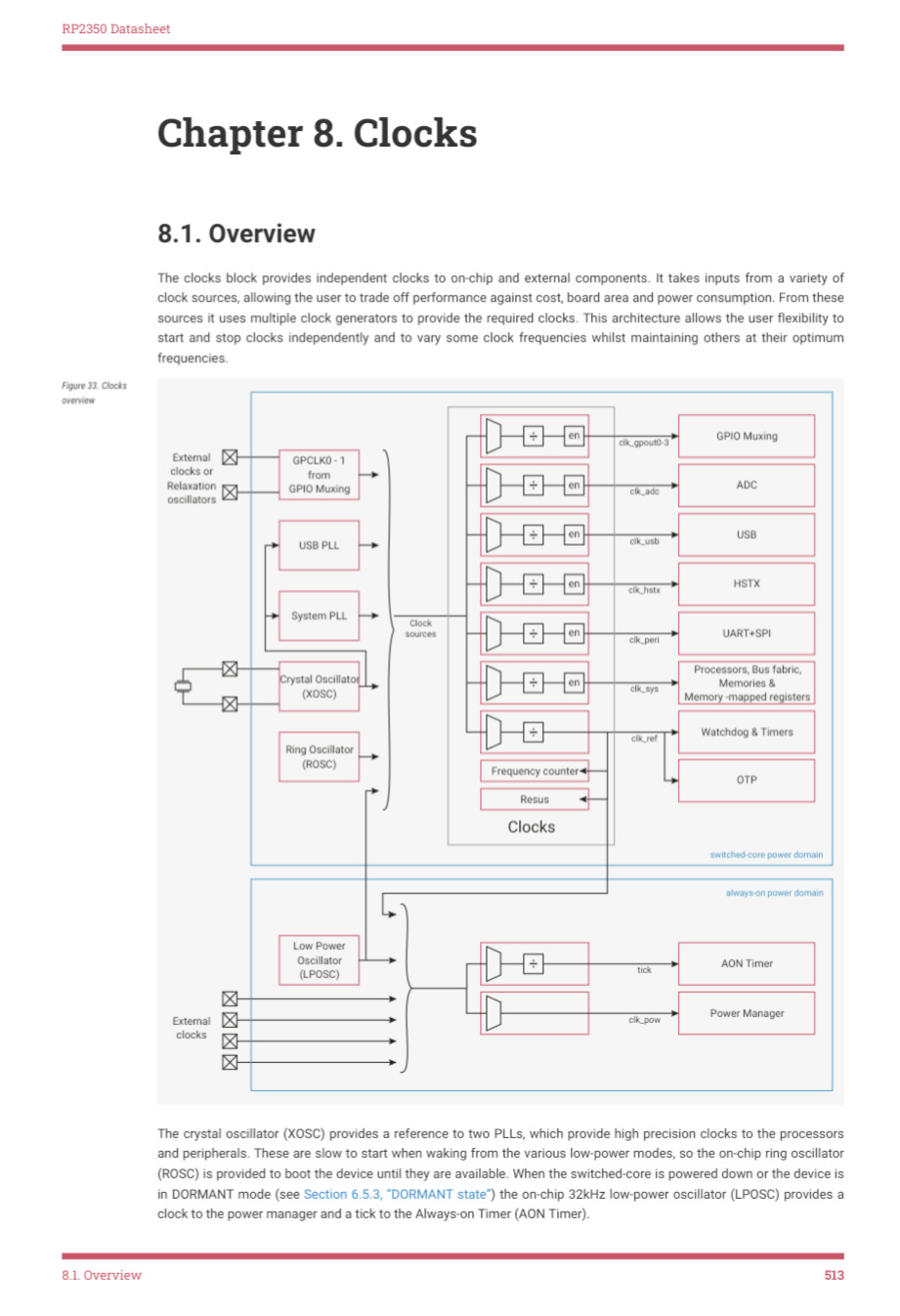
@gloriouscow the 2350 also has an extremely flexible clock tree for micro; each off the gpouts has an individual int/frac divider with duty cycle correction and coarse phase adjustment
The PLL can also run up to 1600MHz (don't think any of the IO buffers can manage that though) and you can input an external clock to it (I think this is what you're doing)
Alt...
Section 8.1 of the rp2350 datasheet showing the clock tree
...
@ldcd The plan is to drive the ISA board version off OSC, yeah. Can you give a Pico 2 board an external oscillator?
@gloriouscow I’m pretty happy with my decision to use an ESP32 on PicoIDE. It’s a little awkward dealing with a different SDK and toolchain but kind of fun?
@gloriouscow I’ve found the drawings in the EISA spec (https://picogus.com/docs/isa/EISA_Specification-v3.1.pdf) to be the closest thing to actual cards I’ve seen BTW
![[?]](https://files.mastodon.social/accounts/avatars/109/243/623/902/756/898/original/693ad7d7e2e93a5e.png)
@gloriouscow keep in mind the descender behind the edge fingers will prevent this card from fitting in a 16-bit slot. you might want to pull that back.
...
![[?]](https://media.hachyderm.io/accounts/avatars/109/300/964/808/674/961/original/253374d57c48cee4.jpeg)
@gloriouscow can you just use a PIO for that?
...
@petrillic That's the plan, overclock to 315MHz, then just have a PIO running to twiddle a GPIO every 11 cycles.
![[?]](https://media.chitter.xyz/accounts/avatars/111/917/917/817/370/718/original/1fa6ca0d243548ce.jpg)
 💾 [
💾 [@gloriouscow glad we're not at the state of vibe hardware yet where we need to convince it to actually do that
![[?]](https://awesome.garden/system/accounts/avatars/109/593/993/412/791/963/original/212c784db254e278.png)
@gloriouscow I’ve done the exact same thing for a VGA 25.175MHz clock. :)
...
@bytex64 just out of curiosity what's the derivation of that how how did you drive it with a pico?
...
@gloriouscow IIRC it’s the regular fractional divider PWM mode but it was a while ago. I do have the source for it: https://github.com/bytex64/tt-munch/tree/main/clockgen
It’s also not super exact. IIRC the closest it could get was like 25.150 or something.
![[?]](https://mastodon.sdf.org/system/accounts/avatars/111/256/750/064/749/383/original/3a6666a960074ea2.jpg)
![[?]](https://zia.io/media/73f8b57df59d9e60491c2f17dda35f7da87b0cb509ccf119ffe3a70d89251985.jpg)
...
![[?]](https://digipres-club.s3.bhs.io.cloud.ovh.net/accounts/avatars/109/388/102/040/291/211/original/047d8e9fbc4f81a0.png)
![[?]](https://toot.mirbsd.org/fileserver/01GS55SW7VWYN3BFRYCX5NW526/attachment/original/01E0WMWASQCF8MPB3SR7F5R557.jpeg)
@gloriouscow let’s rather not buy stuff off the “surveillance cop, proud of it and silencing questioning voices” organisation
...
@mirabilos do you know how little that narrows it down
...
@gloriouscow the raspberry pi foundation, in this case (I have more grievances than just that one, too)
...
I remain kinda heart broken, that I don't really see FreeBSD following NetBSD's example of banning slop code from the project.
However, it's the BSD that remains the easiest to slot into my life; and at this point, it looks like slop code is going to infect the vast majority of medium and large scale FLOSS projects.
Linux distros all have it in their kernel, and it's littered in low level dependencies and programming language already. Even if individual distros ban it from their project code.
OpenBSD has some sort of quasi-ban except for those tmux commits no one likes talking about, and who knows where else.
AND it's already infected a good amount of stuff in NetBSD's pkgsrc.
SO, it's increasingly feeling like it's going to litter your computer no matter what you do.
SO im trying to make some sort of peace with, using software tainted by it. WHILE still avoiding using LLMs directly.  #AntiAI #NotAI
...
made me want to move in to the woods and start writing my own software for my own use :)
![[?]](https://snac.bsd.cafe/bpl/s/avatar-b605f1db31dc57fe49b6eb2033dc306c.jpg)
...
@bpl Haiku has banned AI from the project, but it's alot like NetBSD, in that slop code is all over haikuports / haikudepot.

![[?]](https://cdn.masto.host/acp/accounts/avatars/000/019/451/original/3f4ac18d105a5d7a.jpg)
...
Older...
![[?]](https://assets.merveilles.town/accounts/avatars/108/071/092/925/189/944/original/b093f1249a04f5c2.png)
@thezerobit I think you should do what you're doing, switch one computer over, try to make it your main computer, and see how it goes.
Having an escape hatch for awhile is probably healthy and good, and will help you research/debug/compare any issues you find.
Eventually you can convert more machines as you feel like it.
...
@d6 Yeah, I was going to "install" the OS onto a USB drive rather than the main SSD anyways and just boot to that for awhile so I have an easy fallback. Might eventually set up some of these systems to dual boot from the main drive, too.
...
![[?]](https://files.bitbang.social/accounts/avatars/109/441/705/675/284/619/original/1a523fedafbbcb9d.png)
@thezerobit @d6 If you are already using grub2, it knows how to load NetBSD's kernel directly. I've used it in the past to dual boot Linux and NetBSD.
These days I've been using limine on my multiboot machines, and it's been great. It will happily chain load just about anything (this machine triple boots NetBSD, OpenBSD and Linux, I have another machine running OpenBSD, FreeBSD and tribblix, both using limine for the boot selection menu).
![[?]](https://cdn.masto.host/mastodonart/accounts/avatars/000/027/118/original/056a177a38b6feaa.png)
![[?]](https://media.bsd.network/accounts/avatars/000/006/949/original/9592eac6e5018e39.png)
it all depends on what hardware you have and what software you want to run.
netbsd, openbsd, freebsd... try them all :)
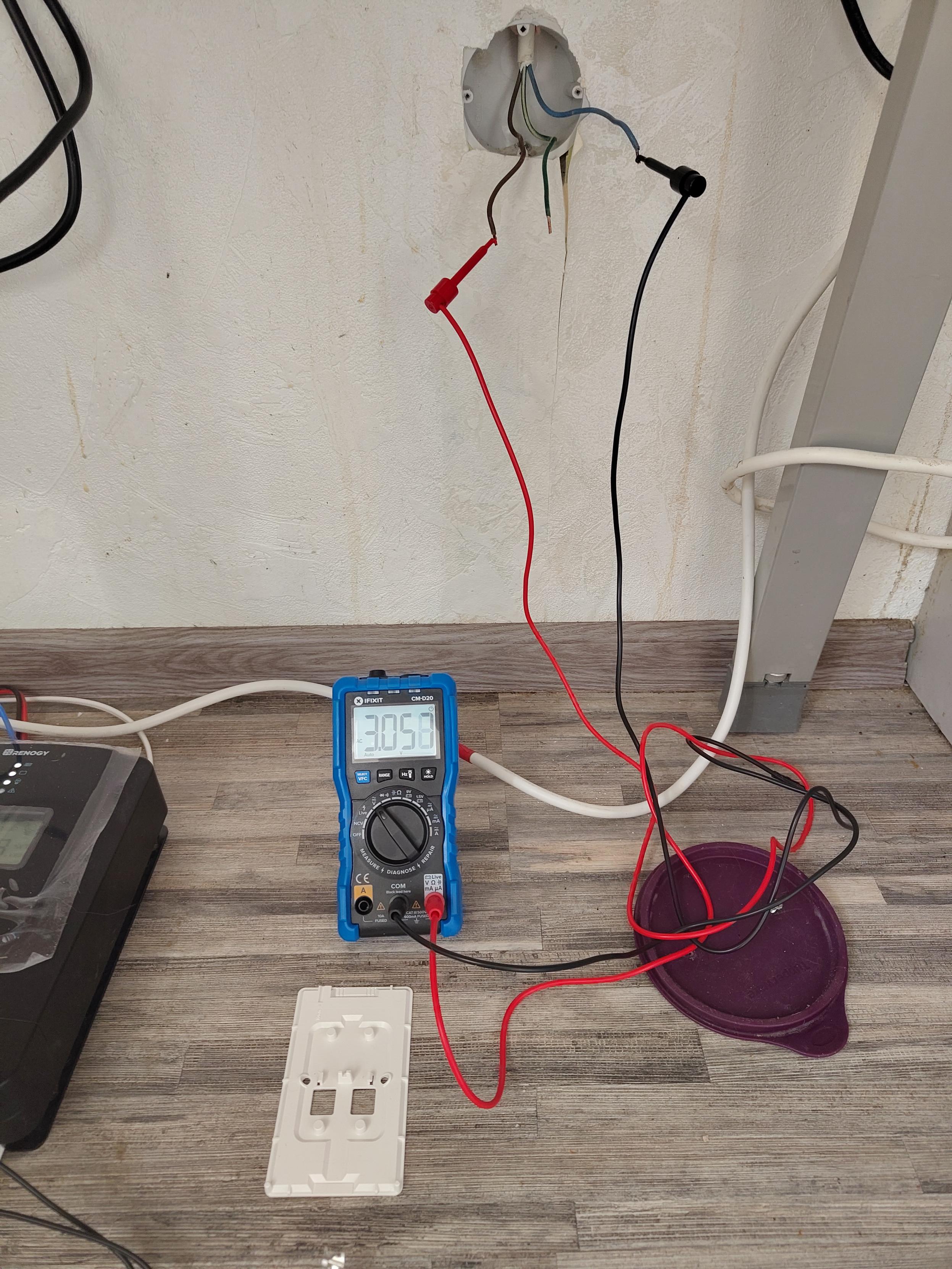
Chat, is this bad? (the breaker is off…)

Alt...
Wall socket removef with three wires sticking out. Test leads attached to the brown & blue wires are connected to a multimeter that shows 3.057V of AC voltage across the two wires
...
Not exactly sure what's going on, I thought it was a bad breaker, but no a brand new one exhibits this same issue. No other sockets exhibit the same, they have zero voltage across when their respective breaker is off.
And yes, I have called a Qualified Electrician to take a look because this is the same wall socket that had an electric stove hooked up to and when I got rid of the stove the quick connectors used to hook it up were all sad and melty, so I don't trust this wiring. It is probably Evil 
...
![[?]](https://files.genart.social/accounts/avatars/109/293/009/794/232/479/original/5b9303d181d23ed6.jpg)
...
@hi I know when I reached the limits of my knowledge and it's time to hand it over (there are also some other things I have been wanting to have inspected...).
Now if only I could find an English-speaking electrician...
...
@hi (since the breaker works, I suspect shenanigans in the neutral wire, as that's not actually connected to the breaker, but there is enough current flowing that it tripped the residual current breaker when I (I guess) touched the wires to the ground wire - which is how I found out about the Evil in the first place - but also not enough current to trigger the contactless live wire tester)
how is your estonian, by the way?
...
@hi ma õppin :)
It's good enough to tell the electrician I'm calling that I'm looking for an english-speaking electrician, but certainly not good enough to explain in the ways my apartment's electrical wiring is cursed and in need of being exorcised :D
...
requirements:
- play audio and video from local storage
- play all files from one directory one by one
- play in the background when phone is locked
- (optional) remember position in a file
...
![[?]](https://honk.any-key.press/meme/X-COM-128.JPG)
I use VLC
...
@hi seconding @continue 's suggestion for VLC.
I just use it for my podcasts (which I batch download into one flat directory as you mention wanting to play) so I can't speak to the video aspects, but I've seen support in there. It plays when the phone is locked and remembers where you left off. And in my case, I like that I can crank playback speed since I usually listen at 2–2.5× while maintaining pitch. It also has an EQ to help make some podcasts easier to understand.
![[?]](https://files.mastodon.social/accounts/avatars/116/560/552/534/006/722/original/7bc088fd6d5ba929.png)
Interesting. It seems like there are way more Linux users here than I expected.
So, let’s do a little roll call:
What are you using?
Linux?
Windows?
macOS?
BSD?
Something beautifully weird?
I’m curious 👀
#Linux #LinuxUser #Fediverse #Mastodon #OpenSource #Tech #OldschoolInternet
| Linux: | 268 |
| Windows: | 17 |
| macOS: | 46 |
| BSD: | 39 |
![[?]](https://files.mastodon.online/accounts/avatars/000/208/592/original/864b5aa48ad1d21d.png)
...
...
![[?]](https://media.bsd.network/accounts/avatars/000/006/851/original/f9b88839c44340b9.png)
![[?]](https://files.sfba.social/accounts/avatars/109/295/384/097/117/517/original/b7e3b41d0070c9a4.jpeg)
A very unimportant question because u got a new iPad with a keyboard case:
When you put stickers on your laptop or laptop-type thing, do you place them so they are right side up for you when your laptop is closed or right side up for others when it’s open?
| For me when closed: | 3 |
| For others when open: | 12 |
![[?]](https://files.mastodon.social/accounts/avatars/108/059/796/589/211/569/original/5e06058f5e3da5a9.png)
![[?]](https://cdn.masto.host/pdxsocial/accounts/avatars/000/032/810/original/d4a97e4e531e2075.jpeg)
Being a corporation is not punk. But which is *least* punk?
| Microsoft: | 24 |
| Google: | 9 |
| Apple: | 7 |
| IBM: | 29 |
...
![[?]](https://post.lurk.org/system/accounts/avatars/108/212/697/722/831/063/original/a6947d5c088bf016.jpg)
@a they are all so painfully not punk...
...
@rose_alibi I picked these four because dropping in, like, Palantir or a defense contractor would've just swamped the results.
...
@a IBM by the tiniest margin though
...
![[?]](https://f2.tchncs.de/accounts/avatars/000/005/899/original/e25b9214df0b7bc5.jpg)
same here, and I'm pretty sure that IBM these days won't even deal with anyone who isn't a large corporate, especially since they sold their hardware division to Lenovo many years ago..
...
@vfrmedia @rose_alibi Hrm, you might be right; I think my mental model of them is stuck pre-sale.
![[?]](https://lile.cl/system/accounts/avatars/109/274/731/890/686/540/original/3fc019722a4b4d8c.jpeg)
@a I'm kinda torn (I voted IBM). IBM have never ever given or wanted to give any punk vibes, in fact, the opposite. But Microsoft, on the other hand, have at times tried and failed spectacularly to be punk.
Which of the two attitudes is the least punk? I do not know.
ok new touchscreen samples for MNT Vector (7inch tablet) are in, and they're great. now how to build and run Gnome Mobile on Debian...
...
Older...
![[?]](https://cdn.fosstodon.org/accounts/avatars/108/197/969/086/481/548/original/f43b841da05ee6e2.png)
![[?]](https://cdn.masto.host/writing/accounts/avatars/113/867/600/728/920/015/original/3a1abdafcfc17eb1.png)
![[?]](https://cdn.social.linux.pizza/system/accounts/avatars/000/175/531/original/b5eeb2861a265256.png)
![[?]](https://static.mamot.fr/accounts/avatars/000/180/965/original/6b3823f020502820.jpeg)
![[?]](https://cdn.periwinkle.nl/Mastodon-System/accounts/avatars/109/518/953/659/246/493/original/99c6abc937c42737.png)
![[?]](https://files.mastodon.social/accounts/avatars/001/197/378/original/2d616d5eede0823b.jpeg)
eINK? Or LCD? Or LED?
Just curious (and always looking for good eINK devices to make into book readers. An MNT based device with eINK, running debian, could use calibre as its ebook reader)
@mntmn Hello,
Are you interested in purchasing Qatar/ Kazakhstan Origin Petroleum Products on FOB, CIF, TTO (LPG + D2 + LNG + PETCOKE + JET A1+ EN590 + NPK + E.T.C )?
Please revert ASAP for more information on prices, terms and conditions of sales.
FOR SCO KINDLY CONTACT ME
Email: gibsonhugo744@gmail.com
Best Regards
![[?]](https://files.mastodon.social/accounts/avatars/000/258/832/original/218ad2b5723840a1.jpeg)
![[?]](https://files.mastodon.social/accounts/avatars/112/308/003/382/489/082/original/05d9dc9240391de4.png)
@mntmn I love it (ofc). Would be awesome if it would be possible to back it without the...sbc-card (cannot remember the proper term) if I wanna move around and upgrade my MNT Reform Next.
![[?]](https://files.mastodon.social/accounts/avatars/116/557/708/439/880/649/original/a6813d9f3d7a817a.png)
![[?]](https://mastodon.maymundere.org/system/accounts/avatars/115/492/803/940/102/394/original/e22907d6bd915c8f.png)
![[?]](https://cdn.fosstodon.org/accounts/avatars/115/773/571/006/938/896/original/ccae695b6120b6c3.webp)
![[?]](https://media.mas.to/accounts/avatars/000/233/446/original/2c4be3cb54af0826.jpeg)
![[?]](https://files.mastodon.social/accounts/avatars/000/862/206/original/c23873e778ffb5c2.jpeg)
@mntmn Ooooooooohhhh... If it:
Runs "Libby" https://askubuntu.com/questions/1555829/how-to-install-libby-in-ubuntu
Isn't too heavy to hold for a long time
Runs some other pdf/ebook reader software
.... it could 100% be my new e-reader.
![[?]](https://files.mastodon.social/accounts/avatars/116/463/844/518/087/462/original/4fa3afa8656d1d29.jpg)
![[?]](https://files.mastodon.online/accounts/avatars/108/199/098/375/519/473/original/5ba6f02da0a4f4ac.jpeg)
@mntmn That's pretty flickery on camera. Looks smooth otherwise, though.
...
![[?]](https://cdn.fosstodon.org/accounts/avatars/000/313/346/original/660c0322b82e60cb.jpg)
![[?]](https://media.infosec.exchange/infosec.exchange/accounts/avatars/000/057/902/original/2346f4bfdf0bf859.png)
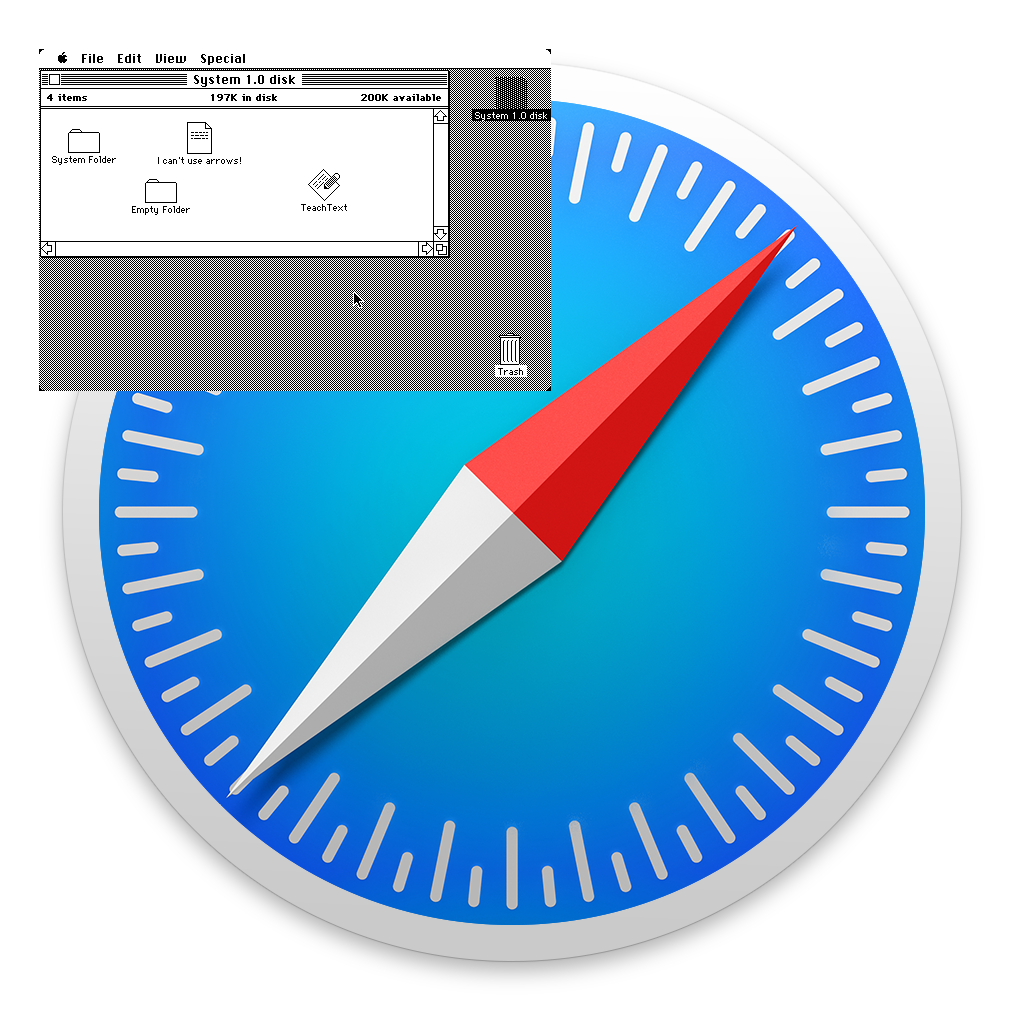
I made this a few years ago, to compare the size of the entire screen on an original 128k Mac with the size of the Safari icon on modern macOS. Enjoy!
Alt...
An image of an old original Mac screen, superimposed over and dwarfed by a Safari icon.
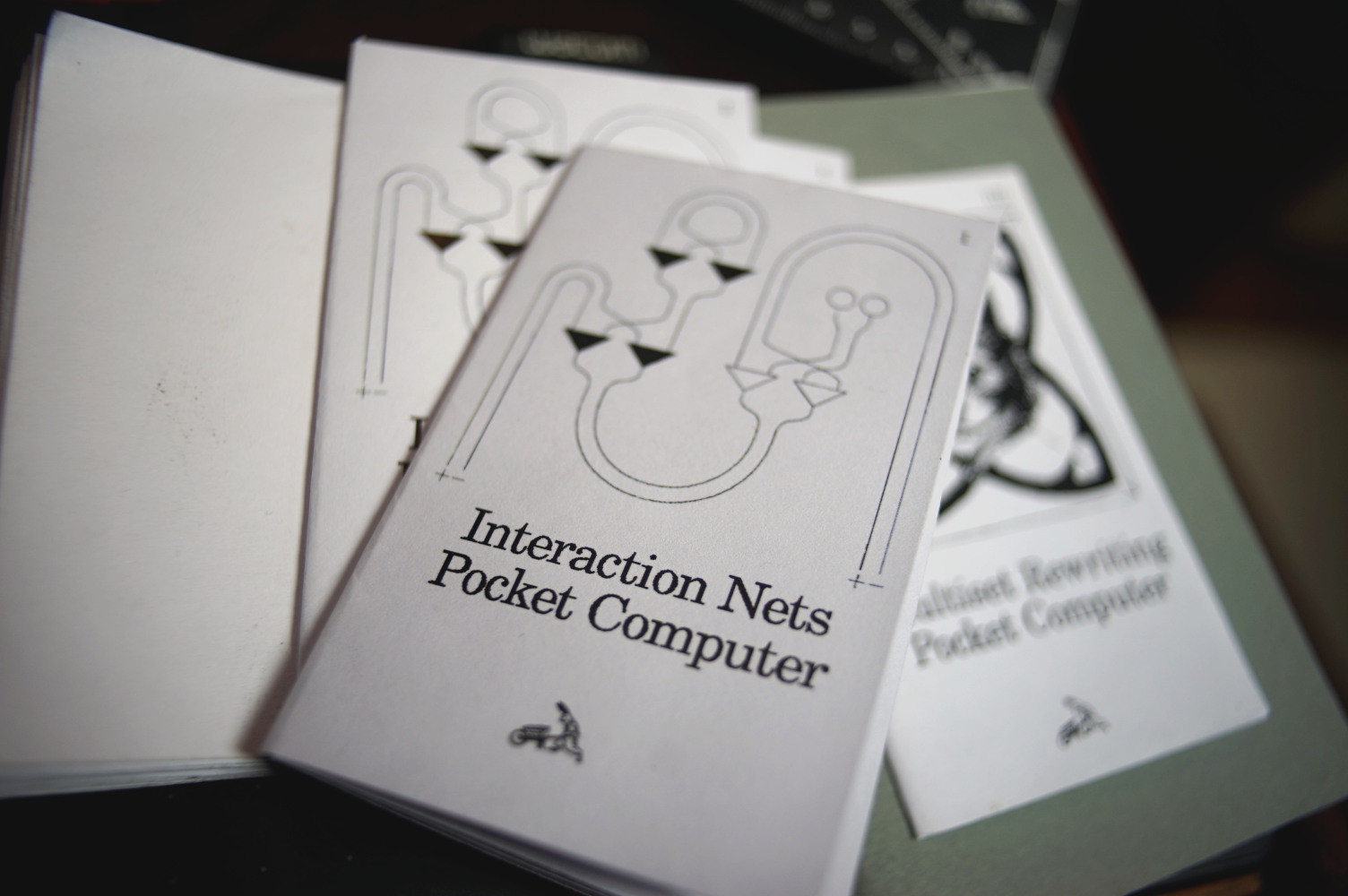
Psst! Hey, you, yes you,
here's another zine about some obscure computing paradigm.
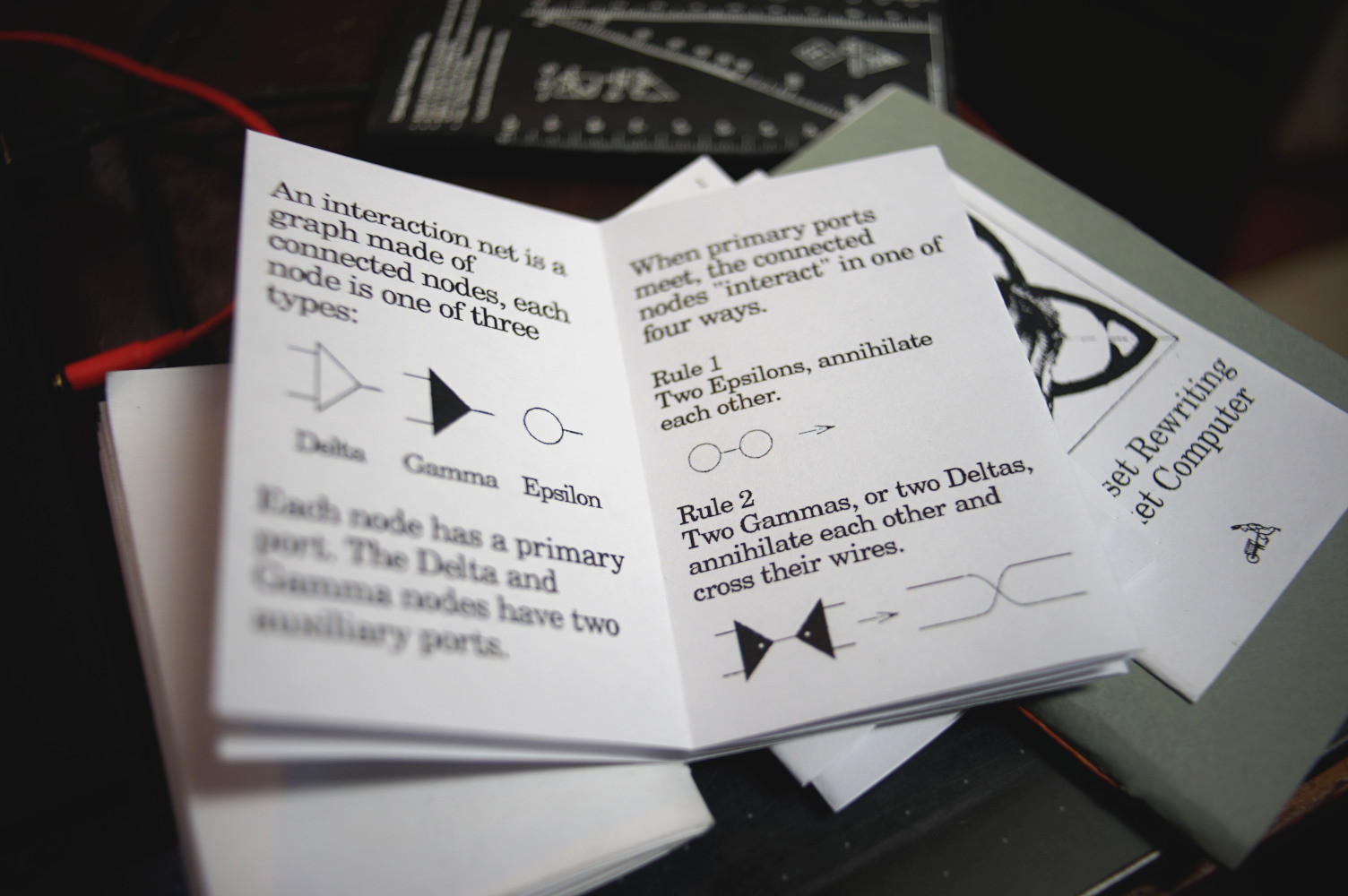
https://wiki.xxiivv.com/site/pocket_nets
Alt...
Interaction nets pocket computer, folded.
Alt...
The first two pages, showing the nodes and the first two rules of graph rewriting
...
![[?]](https://mastodon.puffer.fish/system/accounts/avatars/112/654/151/289/902/465/original/b573c78cbde9f9f3.jpeg)
![[?]](https://6-28.mastodon.xyz/accounts/avatars/000/001/258/original/4ebc15b16a9159d0.png)
@neauoire c'est pas très bon pour la santé mentale je crois bien 😂 j'ai passé la journée a me demander comment faire de l'arithmétique avec des nombres entiers (int64)
...
@maxime_andre Haha, je travaille justement sur un section sur la page sur l arithmetic
...
@neauoire t'as fait des trucs récursifs déjà avec les interaction nets ? c'est balaise... factorial j'arrive, du coup je pensais que fibonacci ce serait facile, mais non... 😅
...
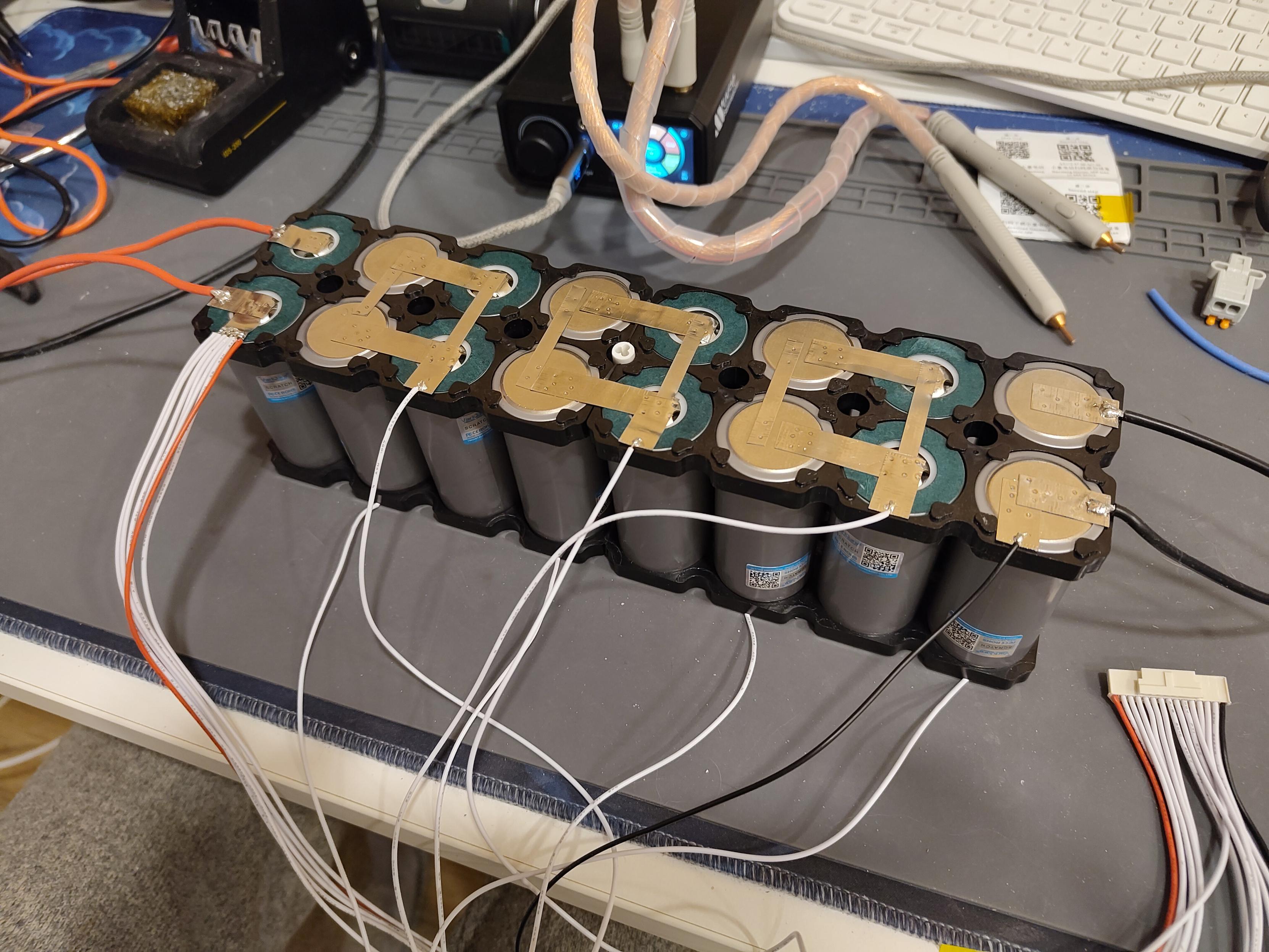
How it started/how it's going. 
Alt...
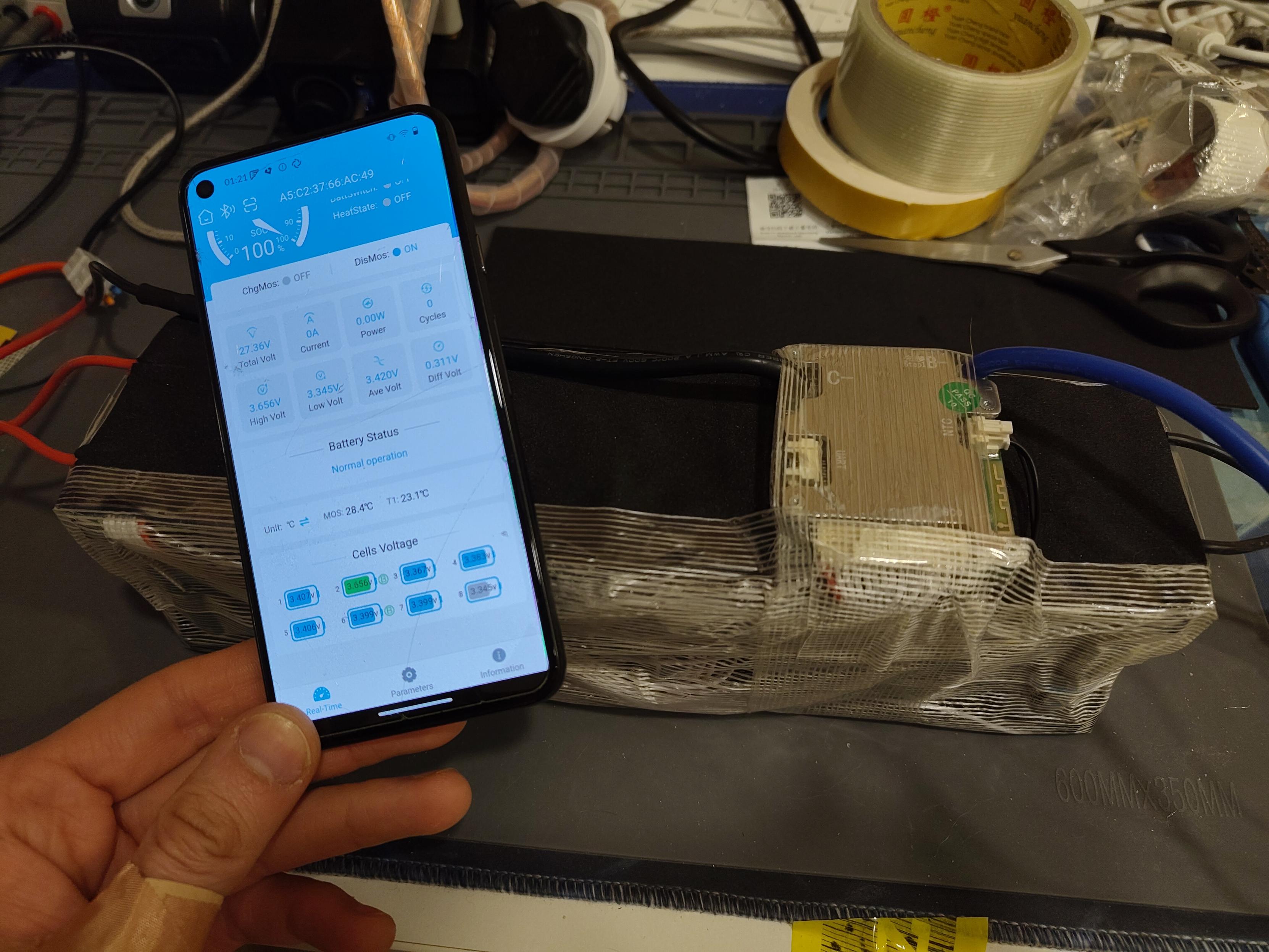
Large grey battery cells, arranged in a 8-by-2 pattern within a black frame, connected via spot-welded nickel strips (with the spot welder in the background), on a silicon mat on a table with various other DIY electronics equipment scattered around. A wide connector with its many cables attached to individual cells lies unattached on the table.
Alt...
Battery cells, now wrapped in tape, with a small battery management device attached on the top connected with thick cables to the battery terminals. The previously unconnected many wires are now attached to the battery manager, visible under the semi-transparent tape cover. A phone displays battery information and individual cell voltages of the newborn battery bank
...
Building your own battery bank isn't particularly cheap, the cells here cost ~70 euro (a little less in bulk), the BMS is another 20, and then all the equipment and materials - while you can easily find a similar-size ~20Ah batteries under 100 EUR.
However what you get with building your own (besides the skills/experience) is *flexibility*.
See, the 20Ah "Trolling motor" battery from Renogy is $90, and you get a decent 12V battery for that price with about 240Wh of capacity. But it's a *dumb* battery. Want to monitor your battery status, capacity, charging/discharging? Most brands will sell you a "smart" battery - with a hefty markup! - that has bluetooth and an app* you can download (though, probably not in this size/price category).
But can you get one with *wired* monitoring? And, maybe a 24V one without having to deal with balancing series-connected batteries? No money can buy that.
Mine can do all of this and more.
___
* that needs an account, see next post
...
The most infuriating bit, of course is the standard enshittification "you don't actually own the thing you bought" part.
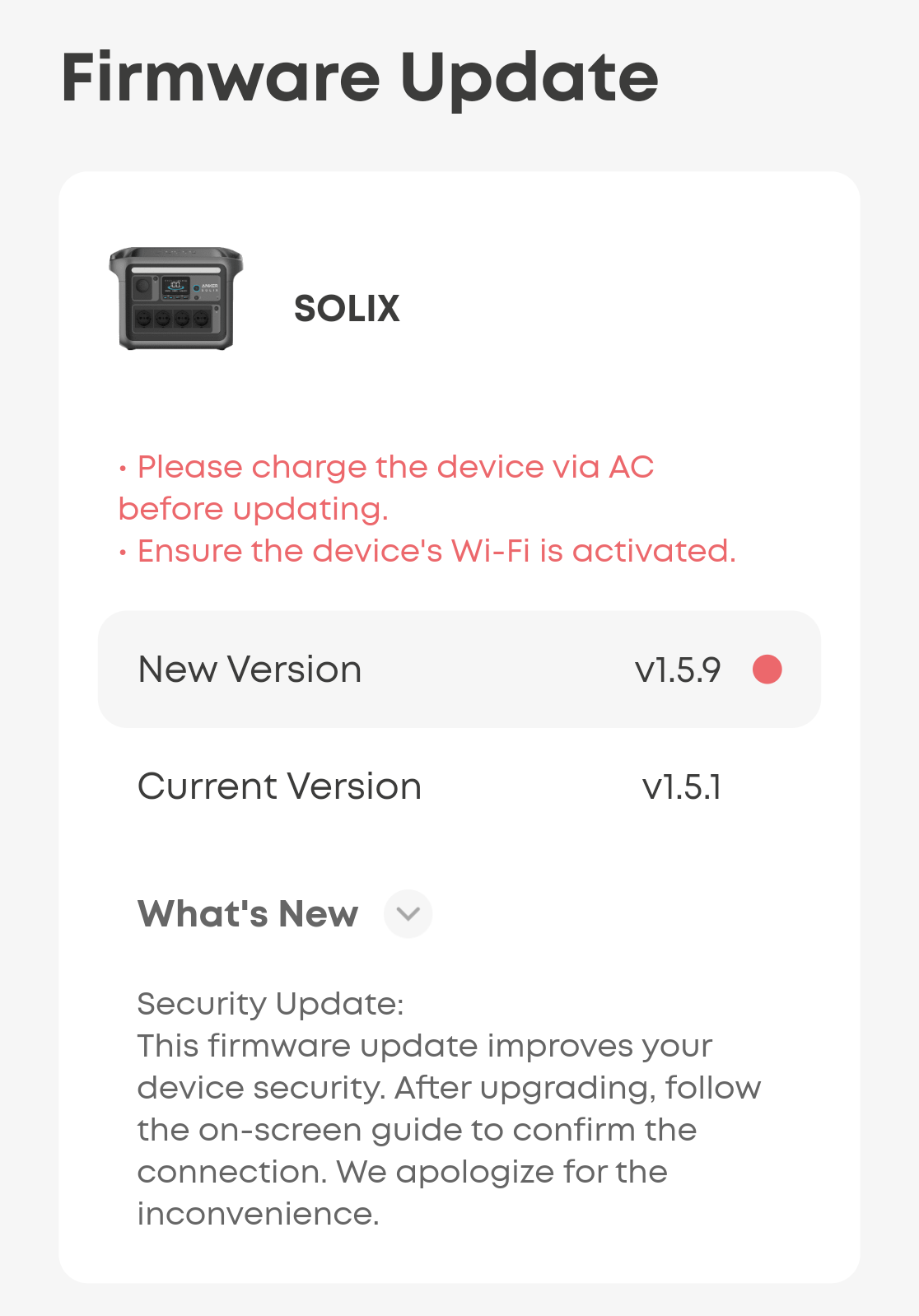
My Ecoflow power station locks most features in an app that needs a cloud account to do *anything at all*. And it has Bluetooth! My Anker power station? Better, at least it lets you control the device with the app over bluetooth, however it will try to upsell you on connecting it to wifi(!!) and logging in at every opportunity, and will only do firmware updates when you log in and connect it to wifi. So you need to connect to wifi to fix security issues caused by...connecting your batteries to the internet. 
https://flaki.social/@flaki/115016229202016176
This reminded me of the screenshot I took the other day and forgot to post
https://flaki.social/@flaki/115016139335121817Important context: Anker's power stations can be accessed via Bluetooth & their app. They really want you, though, to create a cloud account, to the point that they nag you every time you start up the app, but you can skip it. The one thing you *need* to have a cloud account for is connecting your power station to wifi: and while they will tell you you have a pending firmware update, you can only install it by connecting to wifi (which requires linking to a cloud account).
With that context now you can really see the beauty here: please install this latest firmware update that fixes important security issues arising when connecting your fucking SOLAR POWER BANK to the cloud by... being forced to connect said overgrown phone charger to the internet.
Fuckin A+, brilliant, no notes.

#enshittification #internetOfThings
Alt...
Screenshot of the Firmware Update screen of the app. Icon shows a smaller C1000 solar power bank from Anker. Instructions in red: • Please charge the device via AC before updating • Ensure the device's Wi-Fi is activated New version: v1.5.9 🔴 Current version: v1.5.1 What's new? Security Update: the firmware update improves your device security. After upgrading, follow the on-screen guide to confirm the connection. We apologize for the inconvenience.
...
Funnily enough, the JBD BMS I used for this custom battery build supports Bluetooth, and comes with its own app.
That only lets you view rudimentary statistics. And you can't even configure your BMS to your battery bank's specifics until you create an account with them and log in!
But then, here's the kicker, to put insult to injury if you do all these and then *dare to disable wifi* (still logged in!!) the app will forget everything about this BMS and will refuse to give you proper access until you reconnect to wifi! 
But remember, the flexibility part? Trivially you can use a variety of hardware/software solutions (probably the easiest is ESPHome/Home Assistant) to control the BMS without the app - either wired with the on-board UART port or via Bluetooth.
https://github.com/syssi/esphome-jbd-bms
![[?]](https://media.hachyderm.io/accounts/avatars/109/384/070/400/580/051/original/c07a2ea5ea756a6d.jpeg)
@flaki week you write this up somewhere? I'm super curious
...
@coldclimate eventually 
https://flaki.social/@flaki/116533375955761568
@asciijungle it's evolving :)
There will likely be a blogpost out of it eventually. I have been experimenting with solar power for a while now, so I have a bunch of stuff lying about that I don't regularly use, like this Ecoflow River 3 power station and a couple amorphous silicone (=flexible/light portable) panels that I stuck on my East-facing balcony so they get to take in the AM sun.
The easiest is to just hook everything up to the power station's AC output and only enable AC charging when the sun doesn't provide power and the battery level is low (you could automate this with home assistant or similar if you wanted).
Better is running whatever you can from DC power and skipping the inverter altogether. Even with voltage conversion and other losses you are going to see at least the same or better efficiency.
My next step is more storage and a higher-voltage battery (which improves DC power conversion losses), skipping the Ecoflow power station entirely and going full DIY.
@flaki looks good!
I built a 25Ah 48v battery a few years ago. The cells were great (I've still got them here) but my BMS was always the weak point.
I chose Daly (who seemed to be a big player) but, despite using 30A or 40A rated BMSs and only charging/discharging at a max of 10A, i had to replace the BMS three times in four years.
Last year I got fed up of fixing it (and LFP cell prices had plummeted) so I bought a 315Ah / 16kWh kit from Fogstar and retired the 25Ah cells.
@coldclimate FYI.

Alt...
Sixteen blue 25 amp-hour lithium iron phosphate cells, connected in series by silvery aluminium busbars.
Thin red wires connect each cell to the battery management system, while thick black wires lead to a yellow XT60 plug at the far left of the photo.
All packed within a plywood box with a hinged lid.
...
@flaki @coldclimate
Note I wouldn't build it quite like this if I was doing it again today. I'd use actual cell separators, for example, rather than relying on the shrink-wrap. But the principle is the same.
...
@sheddi @coldclimate yeah I have used JK-BMS for my previous build https://flaki.social/@flaki/116127774031846291 honestly it works decently well, my only complaint is that at low power draw (<100W) the power consumption figures are very approximate (which is sort of understandable for a 100A BMS). So I wanted to try something more oriented for smaller cells/builds, the JBD seems that, more aimed at e-bikes and similar. I like these 32700 cells because of the size and flexibility, even if in raw storage they are not the most efficient.
I have some 280Ah prismatic cells coming in that will eventually likely go into a "battery wall" case or rackmount case, those will be the main bulk power storage for the house, these 32700 cell builds are more for experimentation and learning.
Couple days ago I finished my first ever custom-built battery pack, which is now assembled and running in test mode at the Flaki Farm (aka my "cabin").
It was a fun challenge! For sizable home ESS (solar electricity storage) it is much better to go with a couple large prismatic cells and simple screw-on bus bars but I really wanted to try my hand at spot-welding a reasonably-sized stationary pack from cylindrical LiFePO4 cells. It's not winning any endurance contests, but the 32 cells sport ~25Ah (~600Wh) of energy that will happily run the house's systems (Home Assistant, LTE router, etc.) for a few days and can handle a useful inverter load (should be capable of 1kW so you can make some ham & eggs & tea with it, easy-peasy).
Alt...
Small table with a large cobbled-togethet battery pack made of gray cylindrival cells. The cells are arranged in a 8x4 setup and connected in intricate patterns by nickel metal strips. Many small red wires run into a battery managment system on the side covered in a big silver metal heat sink. Two thicker wires on both ends connect the battery pack through the BMS to a lab power supply that shows 3A of power draw 27.32V as it charges the battery pack
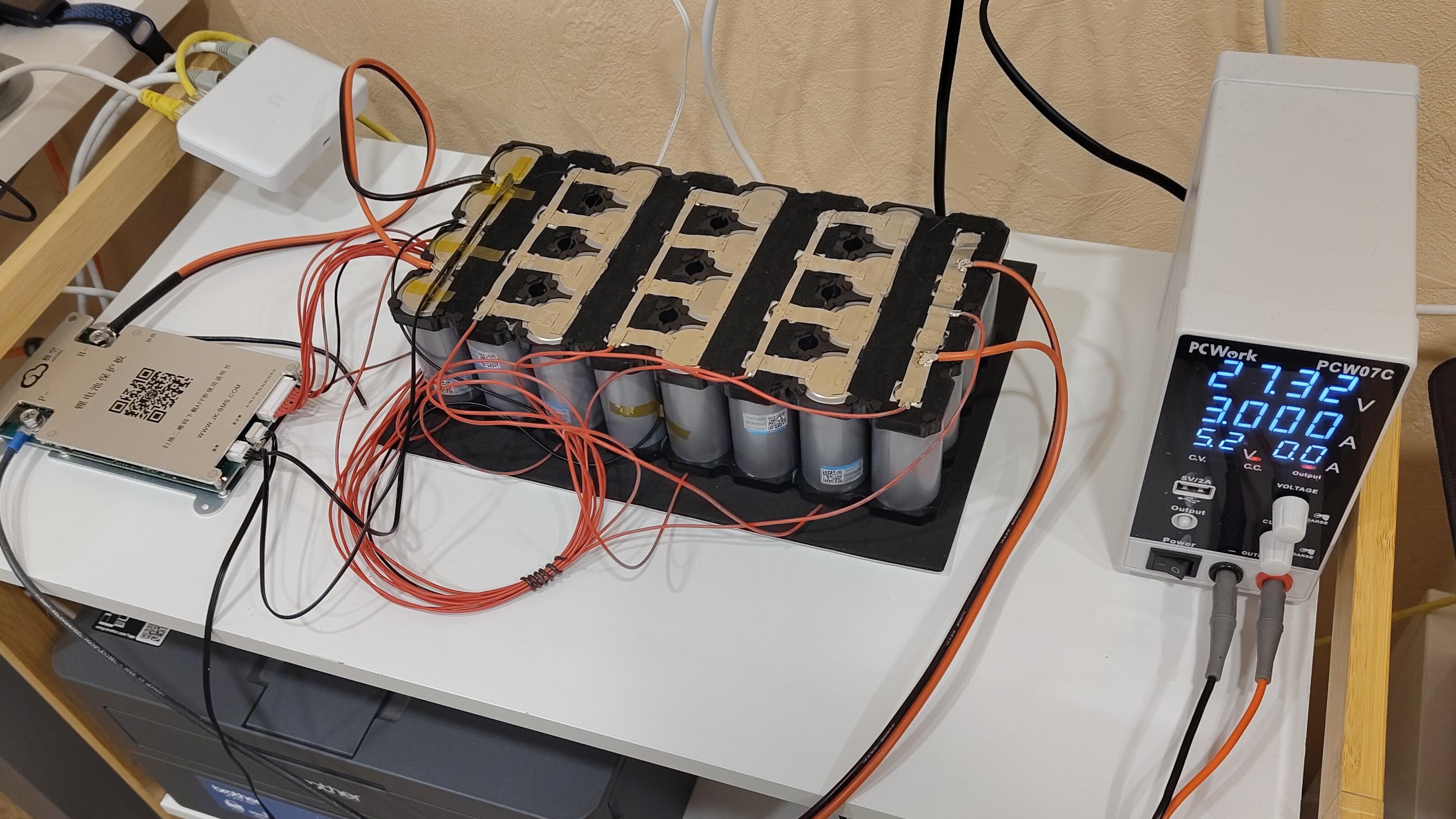
...
@coldclimate @sheddi you are quite likely better off just flat-out replacing the existing battery with a new bank. Depending on the specifics of your installation and system, you might be able to just plug&play replace it and then have it re-inspected (which you need if you are feeding into the grid).
14kWh battery banks (16S 48V) on Ali Express go for under 1.500 EUR. The raw cells I ordered were ~1000 EUR and you can get a BMS and a case for 3-400 EUR if you eager to build, but there is little to be gained if you just want a working system, buy a premade box.
![[?]](https://mastodon.tomodori.net/system/accounts/avatars/115/312/380/337/748/146/original/c4ab1d9803c59204.png)
tiny lua compiler: a lua compiler in a single file, that's well-documented, that was hand-crafted over several years, and made to teach you compiler/tokenizer/parser/lexer design.
this is a crazy impressive project, and in a time when people are haphazardly slopcoding projects, is a standard to live by.
...
![[?]](https://fv390.hs.bam.moe/wec/s/avatar-9542296e59ee23d876e391d6fa391e4a.jpg)
![[?]](https://files.mastodon.social/accounts/avatars/109/417/627/915/917/761/original/a5a4877904ebb09f.jpg)
@vga256 I love this so much. It reminded me of this 21-line spelling corrector in Python https://impythonist.wordpress.com/2014/03/18/peter-norvigs-21-line-spelling-corrector-using-probability-theory/
![[?]](https://assets.merveilles.town/accounts/avatars/000/042/155/original/d52b27671bdc331e.jpg)
![[?]](https://media.mas.to/accounts/avatars/000/259/583/original/94ea92dec33a7f7b.jpg)
I sell Libreboot, and Libreboot accessories.
Libreboot is free/opensource boot firmware, replacing proprietary BIOS/UEFI. I'm Libreboot's founder and lead developer, and I use sales to fund the project.
Libreboot gives you better security and customisation. As a Free Software project, Libreboot democratises the boot firmware, giving you control. It's your computer, nobody elses.
Debian Linux, other distro or a BSD of your choice can be preinstalled.
...
![[?]](https://files.mastodon.social/accounts/avatars/115/886/953/279/732/220/original/b2d57cde19a54d8d.png)
@libreleah of course this is probably in their ball court as much as yours but I'm curious if you have any plans or interest in doing framework laptops with libreboot?
...
@wombatpandaa I have no such plans, and I'm aware that the company responsible for Framework products has made some rather problematic political choices as of late; if a Libreboot port were to become technically viable, I still very likely would not touch Framework with a fourty-kilometer barge pole.
...
@libreleah I wasn't aware of any political faux pas, I may have to look into that. Whatever the case, fair enough! In this era we have to be willing to carefully pick our battles.
...
@wombatpandaa If free boot firmware were supported, you could just use whatever they/someone provides. As I said, I'm almost certainly not touching Framework at all. I don't want to be associated with that company in any way whatsoever.
...
@libreleah gotcha, thanks for being straight with me about it! And for all the work you do for the open source community.
![[?]](https://kirche.social/system/accounts/avatars/116/364/954/346/508/734/original/18db49bcf9cd268b.png)
@libreleah You make the same mistake like most selling laptops. You didn't put the screen size anywhere. Its not even in the specs.
Screensize is mostly the first decision when buying a new laptop. And there are few who already know how many inches has a Lenovo T480...
...
@evangeligal correct! i've fixed this now. i simply put it in the title of each product page. i don't even think about screen sizes myself, easy to overlook.
![[?]](https://fe.upload.disroot.org/media/c70b2ac738fb826b554bb9c59f3888e7e8ee268bf2fc8457472fd34be69ff782.png)
"It's your computer, nobody elses"
On that note, have you considered adding a guide for assembling your own laptop batteries?
Would also be interesting to see Libreboot ported to various small form factor desktops, especially the ones that are energy-efficient enough to be converted into DIY laptops (thin clients, high-end Chromeboxes, industrial/embedded machines).
Also massive thanks for re-arranging the list of supported devices (sorting by hardware generations and installation difficulty): frankly surprised that you didn't announce it on here.
...
@moses_izumi i mean, i didn't do that, someone else did and i merged their patche. making your own battery packs should be feasible. e.g. a bunch of lipo batteries wired in parallel for amperage. there are probably already solutions for this that you can just buy. generic portable power supplies. for a high power desktop, yeah get a large UPS (that's what i use at home and at the lab)
so long as the voltages match you should be fine
...
@moses_izumi the libreboot documentation needs a massive audit and cleanup, and add a few missing bits.
i did this for the libreboot build system from 2023-2025, essentially re-writing it incrementally over a two-year period. that same obsessive love is needed for lbwww.git i think
![[?]](https://files.mastodon.social/accounts/avatars/000/407/544/original/ebc6dc1c589f26e1.png)
Today I tried out my new Ego battery powered riding lawnmower and it was... well...
Complicated.
Alt...
An unoccupied Ego (battery powered) Z6 zero turn riding lawn mower sitting at the edge of my yard and driveway.
...
There are at least 3 complications in play:
1. I've never driven a zero-turn machine before. It's simple in principle but not as easy as it seems in the heat of the moment. (aka trying not to hit a tree)
2. My yard is apparently more sloped than is ideal for these sorts of mowers. I was worried about that, but I had no idea where the line was. I think my yard is over the line.
3. The battery life was rated for 1.5 acres. I have 1 acre. That seemed like it'd be good enough margin. It is not.
...
The first issue is perhaps mostly a skill issue - but I'm not sure. Perhaps I can learn to be better at it. In the time I spent with it today, I did feel I was already improving, but due to some of the hills and the 30 trees I have to contend with in my yard, there were a number of close calls that I felt legit freaked out by.
You ever see those videos of some old guy getting confused about which pedal is the brakes and then crashing through a building?
That.
I get it now.
...
As a n00b with this control scheme, it feels unbelievably dangerous. As in - how the hell do they sell these. This isn't likely a problem unique to Ego. It's not even a problem unique to this kind of machine. I mean, a motorcycle kinda has the same thing going on there.
But the thing is, I didn't expect a motorcycle. I didn't expect this learning curve.
I have a spot near my mailbox that plunges 10-15 feet straight down to a drainage creek. I'm terrified to cut anywhere near that with this.
...
And, again, this likely has nothing to do with the Ego - it's the zero-turn control scheme. I might get better at it. I have to remind myself I have literally decades of experience driving a "normal" wheel+pedal type of arrangement and zero experience with this. But holy hell.
Which brings me to the second issue.
I figured this would work better on hills, tbh. I mean, just look at the center of gravity here. The weight of me + batteries are all right over the drive axle.
...
What I failed to think about (and didn't run across anyone mentioning), is that doesn't matter in the slightest because if one of the two wheels slips a bit, like, say, when on a slope, you suddenly cannot turn.
You need both drive wheels to turn. The front wheels are just coasters. The only way to turn is to have BOTH wheels firmly on the ground.
Imagine the terror of a momentary lapse about which handle to pull to turn while on a slope and gravity pulling you down and it won't steer anymore.
...
So not only is the handling on a slope somewhat terrifying to a zero-turn n00b, it also absolutely murders battery life.
Which brings me to the third point.
My yard is 1 acre. It has a whole house on it. There's an old trampoline. An area we ignore that we call the "prairie." What I'm getting at is, it's nowhere near an acre of grass.
I stopped for lunch and the battery was already down to something like 30% left. I wasn't even half done.
...
I charged it over lunch, but not to full.
Cut some more and ran it dead. (Luckily it shuts off the mower before going entirely dead so you can drive it back to the garage - which is handy.)
Then I charged it for another hour or so. (Again, not to full.)
I managed to finish the yard at that point.
It's *possible* that maybe I could do the whole yard with one *full* charge break.
Maybe.
But that's the thing - given its 1.5 acre capacity I didn't expect to have to.
...
At one point it was down to 10% or so. I went up one of the hills and watched it drop an entire percentage point. I went back down and then back up the hill again. It dropped another whole percentage point.
The hills are murder for this. Obviously they tested this on a totally flat 1.5 acre lot (maybe one with a HUGE house on it, too).
So all in all, this is very disappointing.
...
It's possible that 1 and some of 2 could be mitigated by experience. I might simply get better at it. (Hopefully will.) And maybe it won't feel so dangerous and such.
But 3 and the other half of 2 are just physics. I can't do anything about them.
...
Yeah, sure, I could spend even more money on bigger batteries for it. (And maybe I eventually will.)
But that's just a bandaid, isn't it?
If I'm right about needing at least one full recharge for my yard, then I don't even think I could get a single pass even if I replaced all SIX of the batteries with Ego's biggest (and wildly expensive) batteries.
I fear that the energy math just doesn't work here.
...
And the disappointing thing is... I can't tell if this is a case of not doing the math correctly or just not having the info. How could I have known? They said it'd cut 1.5 acres. Probably some fine print says "(must be totally flat)." But I missed it. (And maybe didn't want to see it.) How do you factor in the slopes?
But there's no returning it or something without a huge financial loss. Even if I were to somehow exchange it magically for the tractor version it won't fix the battery issue.
...
So ultimately I'm probably stuck with it.
I mean, I don't totally hate it. My assumption is I'll get better at it.
I can do the yard in two passes, maybe, sure.
But that's all kinda not the point. It's quieter. A *lot* quieter. It's cleaner. When I'm not near barriers, it's actually pretty fun to drive.
But it's turned what used to be a 1-1.5 hour job into multiple passes with multi-hour charging downtime.
I'm not all that happy with this tradeoff right now.
So yeah.
...
Older...
![[?]](https://furry.engineer/system/accounts/avatars/111/943/131/287/243/076/original/448f67c3868393d3.jpg)
@bigzaphod maybe you've already checked, but are the tires aired up to spec?
Lower tire air pressure = more rolling resistance = more battery drain. Might be worth checking (dealer could easily have gotten it wrong). If it is correct already, maybe over-air by 10-15% if it's safe to do so?
...
![[?]](https://files.mastodon.social/accounts/avatars/000/410/390/original/5f961fcc2d379734.jpg)
@bigzaphod You’ll def get better at driving it, like anything it takes practice. I’m sure you’ll also get more efficient at mowing the lawn. Then the only that’s left is somehow hooking your solar panels up to charge it and you’ll be golden! Seriously though, glad you’re okay. You need to get one of the kids to film you while you mow so we can see some of what you’re experiencing.
...
![[?]](https://cdn.masto.host/indiewebsocial/accounts/avatars/109/304/635/411/062/785/original/d01fb59483fbf749.png)
@gedeonm @bigzaphod i was thinking the same thing about efficiency, EVs are much more sensible to how you drive and it can have a big impact on range where on gas it wouldn’t make as big a difference. especially now that you’re struggling with turning in the hills once you figure it out i bet it’ll be at least a bit better
but also: agreed on the video, would be fun for us to watch 😂
...
@manolo @gedeonm yeah I suspect some amount of range improvement might come just from better technique. It’s so sensitive to small changes on the levers and I was herky jerky all over the place overcorrecting, over accelerating, etc. trying to get used to it. Plus there are probably better or more efficient ways to tackle the hills than my old route. One the one hand, might be interesting to experiment. Other the other hand, I didn’t expect to have too, I guess.
...
![[?]](https://files.mastodon.social/accounts/avatars/000/448/918/original/f1e5610581d70669.jpeg)
@bigzaphod @manolo @gedeonm You’ll get used to operating it. When I was a kid, we had a field swather that had the same controls. It just takes a while to learn. Be careful on the slopes though. You might have to change your cutting pattern so that you always are at a safe approach on the slopes.
![[?]](https://media.mstdn.social/accounts/avatars/109/291/858/763/426/691/original/5b3a5d2d723d5b1d.png)
@bigzaphod ooof. That’s rough. It does tell me a few things:
One is that our mowing area includes steep enough slopes — a little iffy even in a tractor style, depending on conditions — that a zero-turn of any sort is out of the question.
Two is that, partly because of #1, if our current one dies electric might be questionable — though I expect the range would be less affected by slopes with the tractor style.
...
@bigzaphod I just watched a couple of videos demonstrating zero-turn handling on various slopes and… yeah, that wouldn't work here.
Most would be fine, and a bunch doable, if a little freaky (and more finicky than I'd like), while getting used to it — but there are a couple of slopes I wouldn't even attempt.
Not that it really matters since we're not in the market anytime soon, but clarity is good.
...
@bigzaphod Maybe it would be fine, and I'm just getting overly cautious in my advancing years — but I'm not terribly interested in running the experiment 🙃
...
@montyhayter that's what bugs me. I didn't want this to be an experiment for anything more than, like, battery power. Now it's like 3 other things. And I'm not young and adventurous anymore. (Or maybe I never was.. lol.)
...
@bigzaphod If I had to guess, it’ll all be mostly “fine” in the end — you'll get used to driving it, and the best way to deal with the slopes — picking up some efficiency in the process — and settle into a new mow-charge-mow routine.
But it is unfortunate that the transition is considerably more fraught than expected, and the upsides not unmitigated.
robots mowers are not that good yet?
...
@hi well I don't know for sure. I briefly considered a robot, but the vast majority were for 0.5 acres so that kind of ruled most of them out - although I'm not sure what the limit is there. (Couldn't they just go back to the charger and make multiple passes throughout the week? I dunno.)
My robot vacuums haven't been very smart and honesty I sort of doubt the grass robots are much smarter. But... I don't really know.
![[?]](https://media.hachyderm.io/accounts/avatars/109/311/774/107/002/246/original/eccc6b2e81c09187.jpeg)

@bigzaphod I don’t have this model but when I did push mowing with an electric mower we just expected to buy multiple sets of batteries. One charging while you mow then swap.
...
@ezekiel the batteries are *really* expensive. But that brings up another issue - the machine very cleverly *is* part of the charger, to some degree. Like, I plug the wall charger into the machine to charge them all together. No need to remove the batteries. Great except now there's no charger to put another set of batteries on, either. So to do that, now you need *another* charger in addition to the batteries. I happen to have a 2-battery charger for the snowblower, but this thing uses 6.
![[?]](https://media.phpc.social/accounts/avatars/000/028/461/original/e87c661f124f6d52.jpeg)
@bigzaphod have you considered augmenting with a robot lawnmower? I saw some at the local airport this week, they seemed to be doing an alright job.
...
@kboyd too expensive to augment, really... maybe should have just got a robot (or two) instead of the Ego... but... I dunno. I've only seen 1 of them around here. Not sure if they just aren't popular or don't work well in our climate for some reason. I'm a bit skeptical of them still, though, considering I've had 3 robot vacuums over the years and they've all been kinda dumb and I'm kind of doubting the lawnmowers work much better... but..... hard to say!
...
@bigzaphod Ah. Well, I'm sorry that the electification result has been so resoundingly disappointing.
![[?]](https://files.mastodon.social/accounts/avatars/000/107/084/original/ea839958e9704556.jpeg)
@bigzaphod My experience with electric mowers is that long grass also kills range. We had an electric push mower once and if I couldn’t mow at least once a week (or more in spring) the range was obliterated.
It sounds like you have a lot of room to make your route more efficient as you get used to using it.
Range anxiety also extends to lawn mowers, apparently. 😅
![[?]](https://cdn.masto.host/connectifiedcom/accounts/avatars/108/284/591/144/192/025/original/28787ab734aa8d95.jpeg)
@bigzaphod 1 and 2 are absolutely addressable with practice. We have a gas zero turn mower and I drive it up onto and down off of a slope of at least 30° every time we mow. It is along the edge of our driveway, so I go up and down it again and again and sometimes drive along it sideways, depending on where I am.
That is about building confidence. The thing that is more skill is learning to do a really tight turn without spinning one of the wheels.
Older...
@bigzaphod just looked up what zero turn means, that seems so complicated to drive. i mean maybe it’s fine but like you said that’s got some steep learning curve for sure!
...
@manolo it's way harder than it looks. I see guys using these all over the place here in industrial/commercial settings. But dang... I had no idea they were this tricky to control. And they zoom through those yard like it's Mario Kart.
![[?]](https://files.mastodon.social/accounts/avatars/000/411/551/original/b27d3a4ed08ad6ec.jpeg)
Muted: meow
@bigzaphod I would return it ASAP and hire a service.
But that’s just me. I cut way too many lawns as a kid and young homeowner to ever want it to do it again.
![[?]](https://mediacdn.aus.social/accounts/avatars/109/306/669/236/862/340/original/533eaf6f92f6f88d.png)
@bigzaphod I worked for an importer of various zero turn machines (Hustler, BigDog, Walker). I can say with experience that tire choice makes a big difference on slopes (turf vs traction focussed), but so too does ensuring that your zero turn is rated for the slopes you want to use them on.
There is definitely nuance to the control scheme (less steering input than you expect, in many cases); but it could also be that this style of machine is just not suited to your terrain.
The battery life issue is a seperate factor, of course. But when I left that market, I know that there were nascent commercial EV zeroturns that were getting all day run life.
![[?]](https://cdn.masto.host/iosdevspace/accounts/avatars/109/383/373/893/994/663/original/5ec3e1998ee1f025.jpeg)
![[?]](https://cdn.uncontrollablegas.com/accounts/avatars/109/447/384/596/014/099/original/8db7a5eca6e1d681.jpg)
@bigzaphod Fascinated about how this is worse than gas in re #2 would have thought these would be lower center of gravity
![[?]](https://cdn.masto.host/indiewebsocial/accounts/avatars/109/373/327/800/616/312/original/52785f331fe6cc74.jpeg)
@bigzaphod I used commerical lawn equipment when I worked for the city years ago.
1. It’s like riding a bicycle, once you get comfortable you’ll be flying around corners and wonder why anyone uses anything but.
2. The center of gravity is much lower on these compared to a tractor. I have mowed incredibly steep hills on both tractors and zero turns. The tractor will flip if you’re not careful. I’ve never come even close to flipping on a zero turn. With that said, don’t push past your comfort.
...
@bigzaphod We have a half acre yard and my wife tried our neighbors zero turn. She was incredibly uncomfortable and liked our tractor more but after about 3 cuts, she wants to buy a zero turn now
...
@joshdm even near the end of my first cut I did sometimes get that weird zen feeling with it - like it was very briefly just an extension of myself. I would think, "I should go over there" and then the machine just... went over there. Which was awesome. But then I'd snap into indecision when I got close to a tree or fence or something and immediately pull the wrong lever.
I'm hoping the skill thing works out and I get better at it. But it's been a long time since I've learned to ride a bike. 😛
![[?]](https://files.mastodon.social/accounts/avatars/000/450/556/original/995d9882c2deb002.png)
![[?]](https://tapbots.social/system/accounts/avatars/109/328/362/168/626/149/original/e3acdae41e92aafc.jpeg)

@bigzaphod wonder how many of these you’d need to cut your yard.. https://9to5mac.com/2026/05/01/iphone-controlled-anthbot-m9-robot-lawn-mower-has-replaced-cutting-grass-for-me/
![[?]](https://files.mastodon.social/accounts/avatars/109/603/050/513/718/912/original/f6ed5dbfc20a13cd.png)
@bigzaphod @davidfindley I love EVs. I have EV cars and two EV bikes in my house but when I was looking at this lawnmower, I didn’t get the sense that it would work for me. Picked up a used John Deere instead and it’s been working great. Seems like I made the right choice.
I apologize for bringing this into the world.
...
![[?]](https://social.v.st/system/accounts/avatars/000/000/006/original/19N4C170AUC1.png)
@gloriouscow neat! There was a similar demo that turned a webcam or video into PETSCII via the PET's RAM.
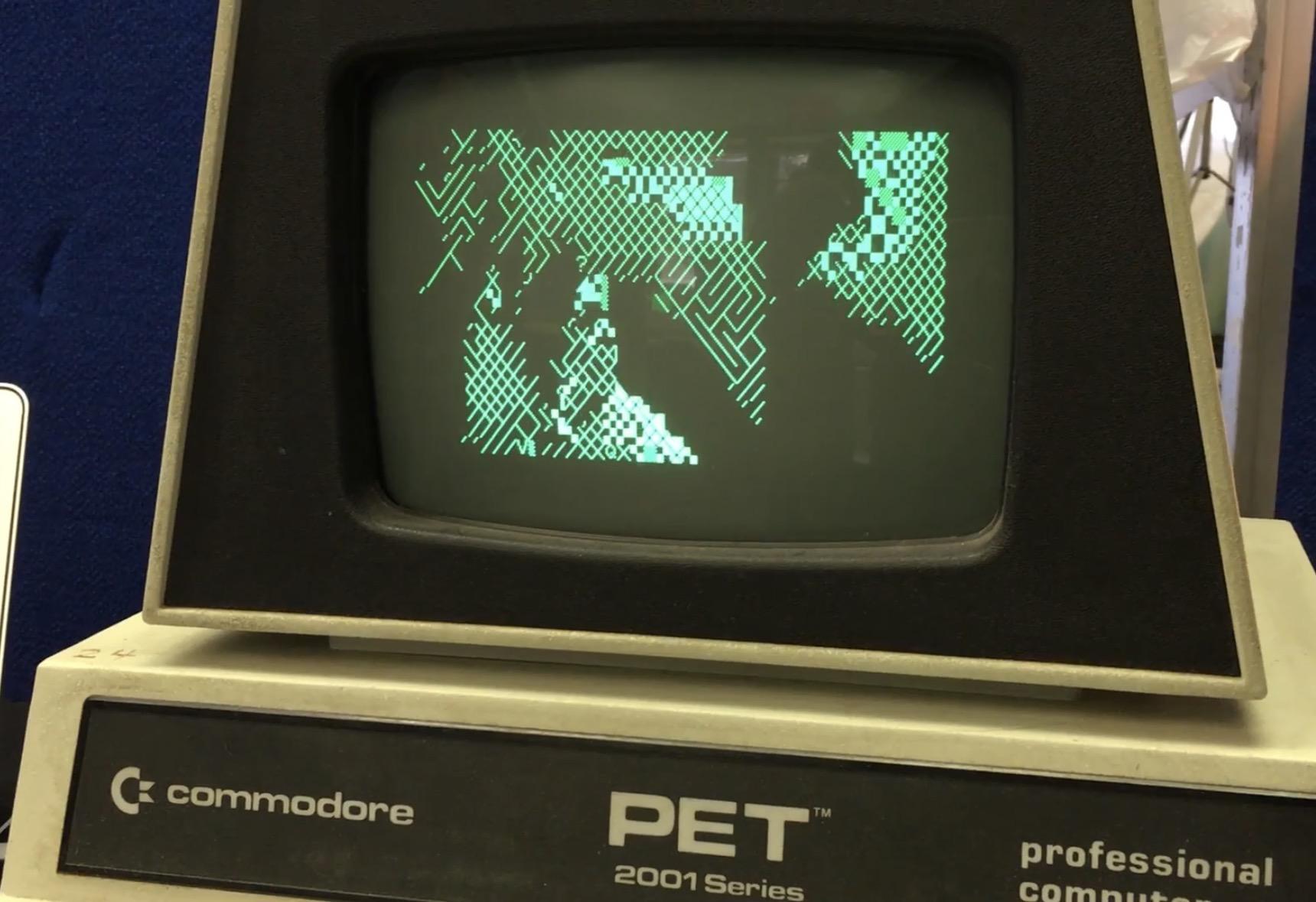
Alt...
Scene of leia meeting Vader rendered with low res characters.


 boosted
![[?]](https://s3.eu-central-003.backblazeb2.com/social-lol-media/accounts/avatars/111/559/923/870/165/558/original/5c1a92fdf91205a8.png)
I'm literally unscrewing lightbulbs to renew their DHCP lease
smart home was a mistake
...
Older...
![[?]](https://indiepocalypse.files.fedi.monster/accounts/avatars/109/547/041/995/696/411/original/f8cb3c80aeafbc09.png)
 (moved)
![[?]](https://zalasur1.files.fedi.monster/accounts/avatars/109/130/666/469/326/211/original/cd5bc2dd0b4a63b1.png)
![[?]](https://corteximplant.com/system/accounts/avatars/111/265/219/058/396/312/original/a4b87b952ecf1490.gif)


 [
[![[?]](https://autistics-life.s3.bhs.io.cloud.ovh.net/accounts/avatars/114/613/151/536/635/497/original/c49d9783b68a9905.jpg)
![[?]](https://cuties.social/system/accounts/avatars/116/325/778/397/284/487/original/3915d2901dc0c701.jpg)

![[?]](https://tomkahe.com/system/accounts/avatars/111/586/164/979/249/096/original/a5c0de9b43b5a4ff.jpg)
@db I had a smart bulb in my apartment that needed to turn off and on in rapid succession 10 times in order to enter pairing mode. The knob on the lamp swapped between 3 settings (off, low, on) so turning off and on wasn't fast enough via that method. And it wasn't connected to a light switch, which meant I had to repeatedly pull the plug out of the outlet and jam it back in to get it to work
![[?]](https://s3.c.im/accounts/avatars/116/307/071/344/437/495/original/a7ae07b95304058b.jpeg)
![[?]](https://media.mas.to/accounts/avatars/109/320/767/959/414/770/original/17fb88e47a360a05.jpeg)
![[?]](https://files.mastodon.social/accounts/avatars/114/084/303/667/368/082/original/778961d96cb52915.png)
![[?]](https://s3.eu-central-003.backblazeb2.com/freja-zone/accounts/avatars/109/299/699/943/254/373/original/abbacf4ca896448c.png)
@db i enjoy having smart home, but i think devices like thermometers and lightbulbs etc should never be on a computer network, with stuff like IP and DHCP and whatever. zigbee and whatever sounds a lot more reasonable to me, and perhaps optionally a little dongle for a computer to be able to talk to them
![[?]](https://files.mastodon.social/accounts/avatars/109/354/958/117/566/026/original/2b5504a6989a9596.jpg)
I got in the habit long ago to reserve addresses for every device I know is mine, so I guess without knowing it, I've sidestepped this issue entirely.
Although, I had to reset one light last year to get it to honor an NTP time change. It was on a dusk to dawn setting and somehow got a corrupted local cache and also jumped into a different time zone.
As I typed that, I'm thinking how absurd it is that a light bulb has a damned data cache in the 1st place.
![[?]](https://media.mstdn.social/accounts/avatars/109/467/884/352/059/999/original/c498bf748103205c.png)
 [
[![[?]](https://files.mastodon.social/accounts/avatars/109/926/652/860/022/604/original/b15c35554c62ee26.png)
![[?]](https://media.infosec.exchange/infosec.exchange/accounts/avatars/113/744/233/997/249/082/original/5abf7fb3af0631c2.jpg)
@db mains breaker off -> on?
...
@finity i'll remember that for next time
i needed to do it one by one so that I could label each MAC address
![[?]](https://files.toot.lv/accounts/avatars/109/307/885/519/979/554/original/e790fc28de6bd1fa.png)
@db 15 years ago I was like "smart home sounds cool but all of it will be pricey because system needs to be robust".
5 years ago I was like "so they just did not bother at all".
![[?]](https://files.mastodon.social/accounts/avatars/000/027/123/original/032b02ddf7bbd6ab.jpg)
@db Feel ya! Having Plejd for controlling light switches etc. Bought new lights with "smart" features and the light is great... But, when the internal battery of the lights runs out (aka you have the switch turned off for to long)... Next time you turn the lights on they go in to pairing mode (flashing until pairing is done) #fml
![[?]](https://darmstadt.social/system/accounts/avatars/000/000/001/original/d1e1465b6fcf900c.png)

@db oh dang, the light switch signal is lost again in an mqtt QoS1 queue as the home assistant mqtt client disconnected due to an invalid certificate since the acme client can't authenticate against the DNS server, bummer
![[?]](https://files.techhub.social/accounts/avatars/116/516/598/447/523/349/original/a2b7dc6b51f8f72f.jpg)
![[?]](https://files.mastodon.green/accounts/avatars/109/258/048/381/846/891/original/97290ecebc04985d.png)
![[?]](https://media2.ai6yr.org/accounts/avatars/109/321/592/360/914/018/original/f918064fa4350d36.jpg)
![[?]](https://media.infosec.exchange/infosec.exchange/accounts/avatars/109/321/486/967/246/372/original/c62b220e33a806a8.png)
when design my home next time, i'll make it as dumb and as flexible as possible (to be able to change pipes, wires, partition walls, etc)
![[?]](https://media.mstdn.social/accounts/avatars/109/451/378/449/019/751/original/7ca2718f36c569ba.png)
![[?]](https://files.mastodon.online/accounts/avatars/110/428/180/827/656/563/original/da1fdfbf0a8103c0.png)
![[?]](https://todon.eu/system/accounts/avatars/115/601/049/471/092/408/original/a8da4b58eef8affb.png)
@db What I want to know is why the fuck we put the microcontroller in the literally designed to be disposable part of the light and not as an additional layer like a smart plug. At least then, you could just take out that additional layer and deal with dumb lighting while you fix it.
...
![[?]](https://media.bsd.cafe/bsdmmedia01/accounts/avatars/115/015/302/977/472/157/original/42ad1d8b0f4dbf22.png)

 [
[@disorderlyf @db Such things exist! When I was bying parts for my "smart" home I saw the little cylinder-shaped things with E27/E14 connector on the one side and a same socket on the other side, so the usual lamp could be inserted and replaced while the "smart" part stays intact.
But I spent a lot of time on the online marketplace to find one. The marketplaces nowadays are filled with that idiotic WiFi lamps with RGB colors and the phone app to control it 
...
@evgandr @disorderlyf yeah in hindsight it makes way more sense to "smarten" the switch/relay and not the lightbulb itself
the market does indeed suck, i've given up looking
![[?]](https://files.mastodon.social/accounts/avatars/000/691/094/original/6444289115b174f8.gif)
![[?]](https://files.mastodon.social/accounts/avatars/000/491/503/original/75fb2885b77cbabe.png)
![[?]](https://files.mastodon.social/accounts/avatars/109/256/738/924/496/069/original/26aa559ce618e308.jpg)
![[?]](https://cdn.theblower.au/accounts/avatars/109/341/004/747/057/107/original/38dffe6f1167e7bc.png)
![[?]](https://o.mastodon.au/accounts/avatars/109/690/747/070/102/059/original/eca06cd5e3c7fd4d.png)
![[?]](https://babka-mastodon.nyc3.cdn.digitaloceanspaces.com/accounts/avatars/112/865/403/370/842/076/original/5de489931cd9a87a.jpeg)

@db what, you didn’t create a separate, isolated 2.4 GHz WiFi network just for your lightbulbs, and assigned them each a static IP? I thought that was basic practice, once you assembled your team of lightbulb installation IT specialists!
...
![[?]](https://bonn.social/system/accounts/avatars/000/058/391/original/50dafe747c597d8b.png)

...
@Archaide zigbee wasn't an option when i stupidly bought very expensive wifi bulbs, they'll pay for themselves in another 10 years
![[?]](https://files.mastodon.social/accounts/avatars/113/539/535/344/775/975/original/dd8f49395fd7d161.png)
![[?]](https://birdbutt.com/system/accounts/avatars/109/767/358/226/959/787/original/af9d2e814889589b.png)
![[?]](https://media.infosec.exchange/infosec.exchange/accounts/avatars/109/305/055/916/982/206/original/5bd743a84a54b258.png)
![[?]](https://cdn.masto.host/mastodonie/accounts/avatars/109/377/668/970/705/007/original/b1bbe2e7ecfd9ff8.png)


![[?]](https://pwl.farted.net/system/accounts/avatars/114/829/312/581/848/512/original/51f16a4fb348a5fd.gif)

@db So how many DHCP leases does it take to screw in a lightbulb?
This really is a new twist on an old joke.
![[?]](https://files.mastodon.social/accounts/avatars/000/501/947/original/c0ec9ece3cfd5dd9.jpg)
Any recommendations for running my own mastodon instance on OpenBSD? I am using @OpenBSDAms and really want to continue moving my networks there
...
![[?]](https://media.mastodon.sunny.garden/accounts/avatars/114/293/475/139/384/681/original/9ade1248257cc4a2.jpg)
also been practicing my colour selection for illustration; I still don't feel confident with colour and building palettes, but I think I'm getting somewhere

Alt...
A small illustration of a crumbled old wall with bushes growing out of it, in various shades of yellow stone and lush greens
...
openbsd-79-base.pub:	RWTSdNN9A3yvWNn7mUjXwv9DOCOUnyfuV+mq1iGPIfD+NhN8EYnEQ1at
openbsd-79-fw.pub:	RWQdmBb/OCe1hXE08xCj5VLnBpGpphy7kYPdU3oWyfnrwswjtl8K385E
openbsd-79-pkg.pub:	RWSw1kDLJJy6OYgnayEMReLV57z2rzx5jYNCghO+2ARwqd6KuwGFWSn7
openbsd-79-syspatch.pub:	RWTJmz/ur68S9e26/JVRr7T88lAPZIF3YgZ3w2lDnf/frAxTerC/DrZ6
...
aarch64: 12883
amd64: 13044
i386: 10631
mips64: 9309
powerpc64: 9507
sparc64: 10079
arm, powerpc, riscv64: work in progress
![[?]](https://snac.smithies.me.uk/justine/s/avatar-270304302821a87b50026a5768a00c56.png)
![[?]](https://d35e9bfo1msux2.cloudfront.net/accounts/avatars/109/297/074/350/826/033/original/af9a60e7ef744952.jpg)
![[?]](https://media.exquisite.social/exquisite/accounts/avatars/110/326/591/179/948/352/original/99fcf794b9e7ae00.jpg)
I can't speak to the accuracy or "correctness" of the guy's instructions, but the way he opens the video is freaking hilarious.
https://inv.nadeko.net/watch?v=uTrOIPIx7pY
How to Install OpenBSD (2027 Edition)
...
it was mostly correct, though I'd have recommended copying the window manger (around @11:24) to /usr/local/bin rather than /usr/bin.
And overriding the resolution with xrandr in the .xsession file felt a little weird.
For a from-zero tutorial, I might have stuck to using vi/xterm/cwm instead of installing extra packages for vim/alacritty and building the WM, but there's value to installing zig and showing the build process if that's a goal.
But otherwise it wasn't too bad.
...
Oh man, yeah. I never put anything in {,/usr}/{,s}bin except the occasional symlink.
I want to try a pure "just use base" install of #OpenBSD sometime. ;)
cwm is kinda neat, a wee bit reminiscent of #dwm or #rio, but definitely on the mousey side.
The default theme of the version of #fvwm they ship is kinda too colorful, but I'm sure it's extremely configurable... if I can only learn the rather elaborate config setup for it.
...
I have a couple mostly-base systems and OpenBSD's is more usable than most. I wrote up some thoughts on using mostly-base. I'll see if I can find my notes.
While cwm has some mouse annoyances, it can be configured to be pretty keyboard-only, and I like that I can make windows chromeless (very few WMs let me remove all window chrome/border)
...
I got cwm decently close to my i3wm config a while back ;)
My main reason for using i3/sway is the tabbed window mode. That's my favorite way to fly. ;)
...
@rl_dane yeah, my ~/.cwmrc is pretty close to my ~/.fluxbox configuration. But one of the things I miss from fluxbox is the ability to group arbitrary windows together into a single tabbed group, and manipulate them as one.
...
Ooo, what do fluxbox tabbed groups look like?
...
@rl_dane You can position the tabs on any edge/corner you want. I prefer them vertically along the top-left edge like this screenshot showing a merged xterm+xpdf pair of windows. Hiding the window-chrome hides the title-bar and the tabs, but the "next tab" and "previous tab" key-combos continue to work even when they're not visible. You can also have them appear in the title-bar if that's your thing.
Alt...
As advertised, a screenshot of xpdf and an xterm merged into a single window that can be moved/resized, with tabs running vertically along the top edge of the left side of the window.
...
That's neat! Can you switch between them with the keyboard?
...
@rl_dane yep, from my .fluxbox/keys file (Mod4 is the Logo/Windows key)
Mod4 Next :NextTab
Mod4 Prior :PrevTab
which is Mod4+PgUp and Mod4+PgDn switch to the next/previous tab. There's also absolute indexing if you want something like
Mod4 Shift 1 :Tab 1
⋮
Mod4 Shift 9 :Tab 9
Mod4 Shift0 :Tab -1
but I just use the next/previous ones.
...
I find the arbitrary-window-grouping particularly helpful when dealing with Gimp palettes…I often end up with a half dozen floating windows for options/layers/colors/etc, and it's nice to corral them into one grouping that I can manipulate as a unit.
...
Wait... how old a version of GIMP are you running? ^___^
...
I'd have to check/dig, but there's a menu option somewhere to have single-window (default?) vs floating palettes (old way). So I usually enable the floating-tool windows and then let Fluxbox wrangle them for me which works better with my workflow than keeping them all contained in the single root Gimp window.
...
Ah, you should try single window mode, it's pretty nice. It actually has its own tabs. :D
...
@rl_dane I've tried it and find that it didn't fit my workflows well. Inkscape adopted a similar single-window containment and I tend to pop those out and let Fluxbox wrangle them too.
It might be different if I had multiple monitors or a larger screen, but on an old-school laptop monitor at 1366×768, it's what has worked best for me
@rl_dane Found one of my write-ups¹. A base system gets you:
GUI: xenodm/xenocara
Window managers: cwm (my favorite, gives me ~95% of what I use in fluxbox), fvwm (default) and twm (ouch)
Terminal: both the console and xterm
email: You can use mail(1) to read/compose mail, and send/receive via smtpd as long as your ISP/DNS is configured for outbound mail (or you configure smtpd to use a smart-host for relaying the mail). Also, supports aliases for address-book type info
web-serving: You have httpd & relayd in base . If all you want to serve is static pages, httpd will do just fine. If you want to serve dynamic pages, you can configure httpd with slowcgi and then farm out the dynamic serving to scripts using any of the available stock languages (C, /bin/sh, awk, or perl though I don't know which perl modules are available out of the box). You can also tie into tools like ftp which will perform web requests if you need to hit remote API endpoints.
other dev: base comes with a C compiler and scripting languages (as above, various shells & awk(1) as well as sed(1)).
text-editing: ed(1), vi(1), and mg(1) available out of the box
version control: cvs(1) or rcs(1)
project management: make(1)
documents: mandoc(1) or plain HTML with ed/vi/mg
games: You have the whole bsdgames collection (if you opted for them at install-time)
calendar: cal(1) and calendar(1), while reminders can be issued via cron(8)/at(1)
calculator: bc(1) and dc(1) as well as limited shell math like `echo $(( 314*141 + 589))` and using awk(1); also xcalc
networking: You have snmpd for network management, pf for building firewalls. lpd for sharing out printers. iscsid for dealing with iSCSI devices. unbound for DNS caching. ftp(1) for making web/API requests.
The big items I would tend to miss:
- web-browsing (lynx(1) was removed from base a while back)
- media (PDF viewing, music playback and editing, video, and graphics editing likeGimp or Inkscape or Blender)
...
I know xterm is supposed to be this enormous terrifying bodge, but honestly it gets you a lot. I just don't know how good unicode/emoji support is. Even with #OpenBSD 7.8, some of the emoji appear as black and white outlines, instead of using the Noto Color Emoji font I have installed in ~/.fonts. I'd miss proper clipboard support (I think?), but the memory footprint sure is nicer:
  VSZ    RSS STAT   STARTED       TIME COMMAND
 7632  16536 SpU     6:14PM    0:00.14 /usr/X11R6/bin/xterm
49420  61956 S      Fri06PM    0:01.30 alacritty
I so rarely check mail, other than on my work machine. :P
I should really learn awk more. I just use it as a glorified sed/tr/cut most of the time. ;)
Huh, when's GoT going to be included in base?
I do really love qalc/qalculate, but bc is pretty functional.
I would occasionally miss yt-dlp and mpv, and absolutely scrot/i3-scrot and imagemagick.
Oh man, and w3m and dillo! Argh. XD
...
I haven't found a way to get color emoji, and the B&W emoji support is spotty (especially with double-width characters or the three-em dash). Fortunately, I don't use emoji for much in the terminal, so it's not much of an issue for me.
I haven't had clipboard issues, I can copy/paste to/from the SELECTION buffer (copy by selecting/paste with MMB), or use xsel from packages to facilitate clipboard manipulation (or clipit to manage clipboard history).
Awk is fantastic ☺
I wouldn't be surprised if GoT made it into the base system eventually which would be a nice upgrade.
As long as I remember to properly set the `scale` in bc, it works for much of what I need.
And yes, I do add scrot (and have keyboard bindings) for screenshots like the one I just gave 😆
![[?]](https://mastodon.neilzone.co.uk/system/accounts/avatars/000/000/003/original/1686a2608fa9766e.jpg)
Did you ever Ask Jeeves?
| Yes: | 632 |
| No / What on earth are you talking about Neil?: | 190 |
...
while I tried it on more than one occasion, it almost never produced useful answers. very much like modern LLM results in search-engines. If it's something simple and factual like "What's the capital of Morocco?" or "What's the current population of Texas?" it can usually succeed. But that deeply technical question? right out.
![[?]](https://social.gosha.net/gosha/s/avatar-cd3294fc46a0f4fe1205d3919f938e94.png)
style.css for a bit 🙏🙏...
tip: when i want to like, boost, or follow i open the post in a new tab so i don't have to reload the whole page with the feed...
![[?]](https://assets.merveilles.town/accounts/avatars/108/906/936/261/705/540/original/1d1b280194dba2a9.png)
Since my son was born ~a year ago I’ve been living a kind of fantasy project life, in that I’d often daydream about projects I could build or cool things I could work on, and plan them out in my head, and then not actually do anything about them because free time is essentially nonexistent. It’s still oddly satisfying in a way!
...
Older...
![[?]](https://assets.merveilles.town/accounts/avatars/000/000/548/original/1d1edb1df7a6c0de.png)
@gosha and then, some free time comes back - and some things become things to share with children instead of just being personal ❤️
...
![[?]](https://assets.merveilles.town/accounts/avatars/110/697/608/787/257/053/original/14b6c319761248eb.png)
![[?]](https://cdn.fosstodon.org/accounts/avatars/109/617/151/179/023/759/original/42c777ac1396aa1a.jpeg)
@electret
100%
Free time is scarce, but you don't get that time back with the little ones. The projects can sit in the notebook and wait.
But, now my eldest is 6. We've 3D printed and built a working robot together. The other day I was updating a hobby game I built before she was born, and now she's drawing characters, I'm putting them in the game, and she's loving it. She's done Scratch Jr. Helping her exercise her creativity with the machine is a fresh kind of joy.
@gosha
...
@electret
We have an approach in our house of "computers are for creating, not consuming" and it's worked really well. Even just setting her up with art programs and the wacom or having her decorate ponies in this old game Paint N Play Pony. And now I can see that she feels powerful with the machine.
For me, I have my personal projects, but coding is also my job. For the kids, they have that original unbogged down spark.
@gosha
![[?]](https://assets.merveilles.town/accounts/avatars/110/834/801/488/189/190/original/3bcb6fecc68de592.png)
@gosha exactly the same situation! Our 2nd is nearly five months old now and the biggest difference is basically the lack of free "doing" time (especially laptop time is totally gone). Free "thinking" time is kinda there though, so yes, I have been planning a myriad of little things (programming language ideas mostly, for some reason), but without *actually* implementing them.
I do enjoy spending my time with my daughter and son though, and I feel I should enjoy that while it lasts...
On top of that, the whole IT world around me has gone bonkers for... well, you know what. So yes, it is a strange time to live in and raise kids.
![[?]](https://m.f-h.co/cosocial-ca/accounts/avatars/109/493/705/899/503/027/original/161d79af33d78831.jpg)
Which of the top 4 Fediverse server projects will be the first to implement the ActivityPub API?
#EvanPoll #poll #ActivityPub #ActivityPubAPI
| Mastodon: | 191 |
| Pixelfed: | 68 |
| Lemmy: | 19 |
| PeerTube: | 21 |
...
![[?]](https://cdn.fosstodon.org/accounts/avatars/108/850/931/200/916/556/original/5fe24bf087a9754d.png)
@evan I don't get it, isn't the point of these four supporting AP?
...
@golemwire it's OK not to respond to polls about topics you don't understand!
This repo might help a bit.
...
@golemwire ActivityPub has two main parts; a social API and a federation protocol. All of these platforms support the protocol but not the API (at least, not in read-write form).
...
@evan Oh!
> Instead, they often implement platform-specific APIs, with a narrow range of functionality. Mastodon, for example, implements the Mastodon API, which focuses primarily on microblogging. Threads implements the Threads API. Many other ActivityPub implementers have APIs that clone the Mastodon API, to make it easier for users to adapt third-party Mastodon clients to their platforms.
That's really cool. Thank you so much for working on stuff like this, it makes a difference (you know :)
MNT Quasar module with Qualcomm QCS6490 now running our Debian System Image on MNT Reform Next
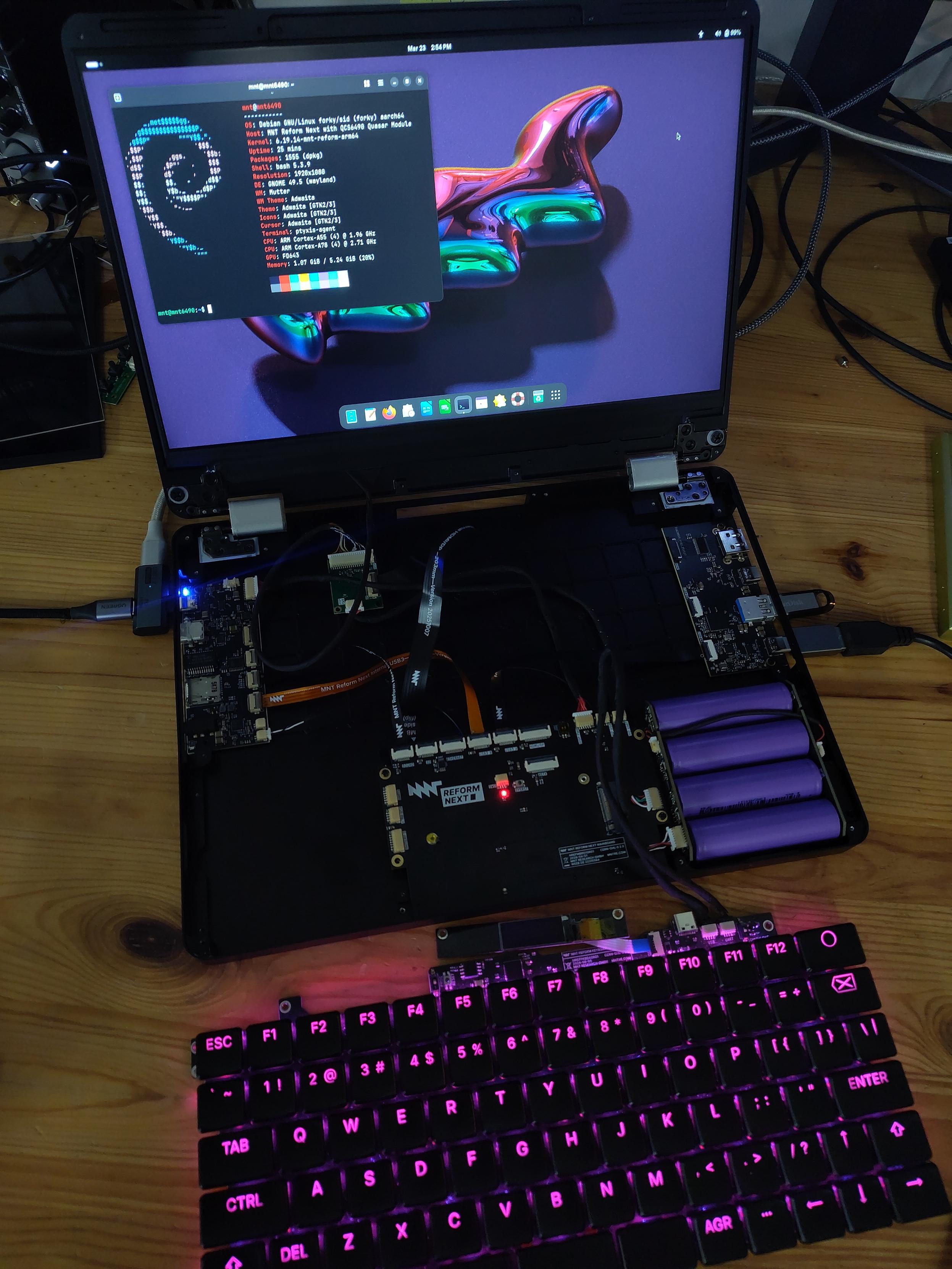
Alt...
overview of a disassembled mnt reform next laptop with gnome + hyfetch
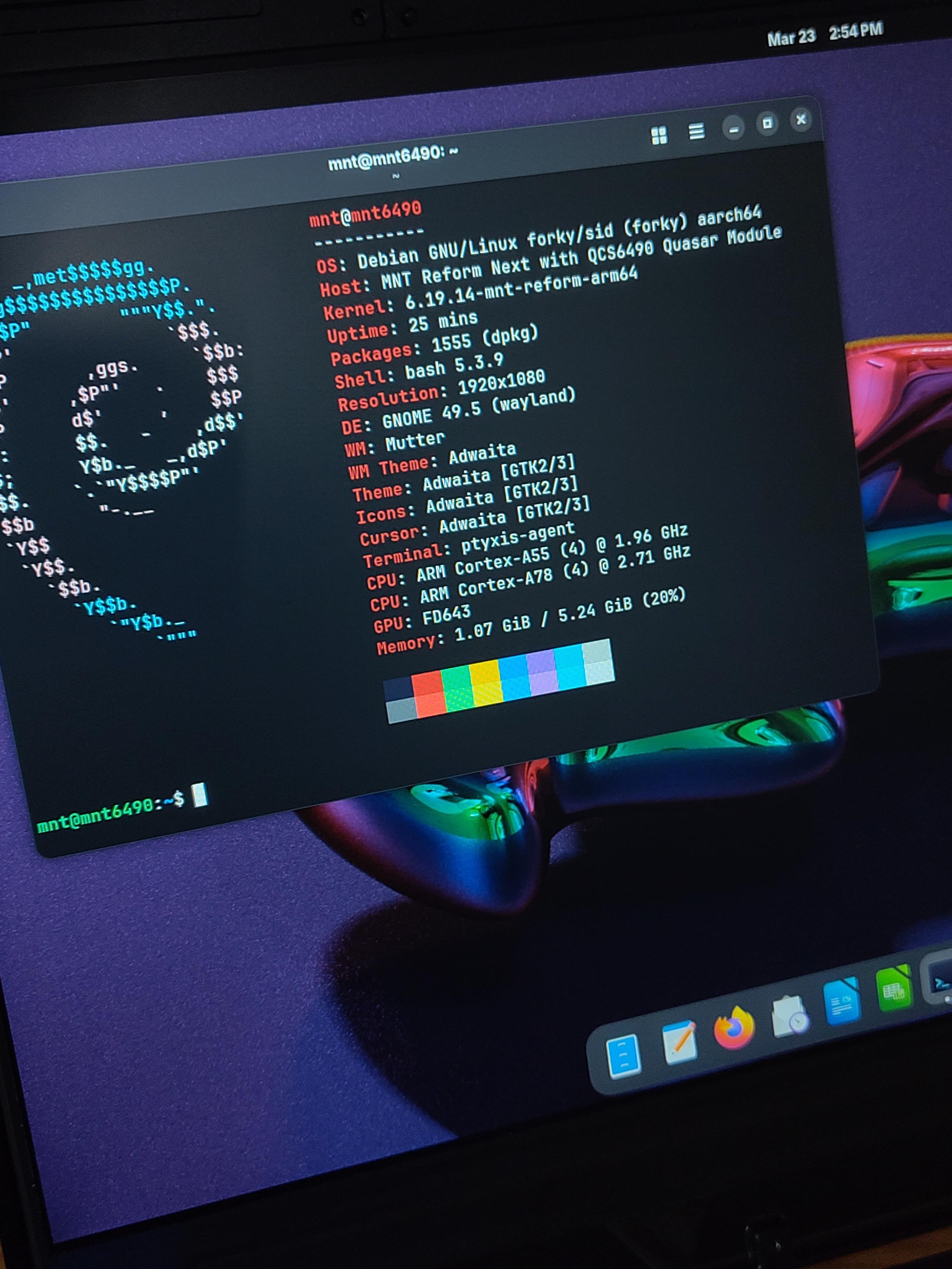
Alt...
closeup of hyfetch showing the specs
...
![[?]](https://cdn.masto.host/snabelenno/accounts/avatars/109/299/003/897/597/585/original/ae5be45e12344274.jpeg)
@mntmn so now I’m looking forward to my reform next AND the quasar board for whenever that ships. Would it be after the first next shipments or more 2027 territory? Really cool!
@mntmn Sick! I am playing around with Radxa Q6A (same cpu as far as I know). Great performance - especially single thread. However, not great support for encode and the npu mainline yet. But for laptop yes - homeserver - not so much (yet).
@paco @davidgerard Depends if you burn them in parallel or not and it depends on the oxigen supply. If you would burn this as one big connected line of paper, you would burn something that would go 7800 times around the world, so that would be a roll almost a meter thick going around earth. If you would burn that in parallel, I am lacking imagination how long it would take.
...
@paco @davidgerard However, for the fun of it, let us assume that a dollar bill takes 2 minutes to burn. Then burning once around the world would take 975 years!
So burning 7800 times that one after another would take 7.5 million years. So, to put that in perspective, if I can believe my understanding of Wikipedia, 7.5 million years ago Wolves were state of the art, and no-one talked about monkeys.
So yes, if you don't want to burn the money on a heap, it will be slow compared to OpenAI.
...
@paco @davidgerard And yes, this was just a calculation on a lazy day and I may have made tons of little errors. Somewhen in the middle I had a version that confused minutes and days.
...
![[?]](https://asset.circumstances.run/accounts/avatars/109/330/846/558/995/088/original/9aae78ca8a673cb2.png)
@muellerwhh @paco clearly we'll need an empirical test