Search results for tag #uxn
![[?]](https://assets.merveilles.town/accounts/avatars/115/862/283/383/146/293/original/cd3a8b0d42930a9a.png)
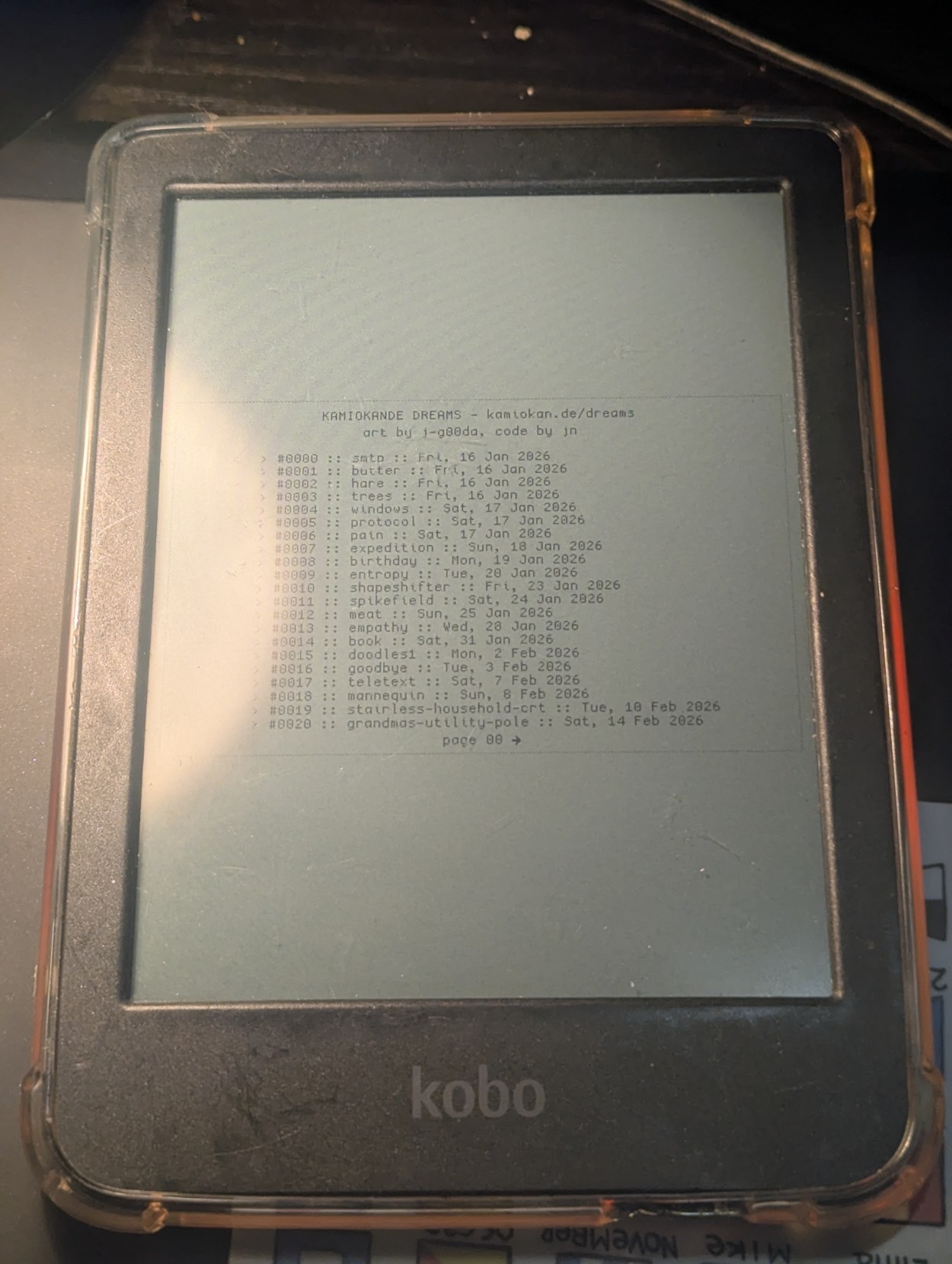
my kobo is free of koreader, its #uxn only!
https://git.sr.ht/~angelwood/uxn-lfb-kobo
Alt...
Dreams.rom running on my Kobo
Alt...
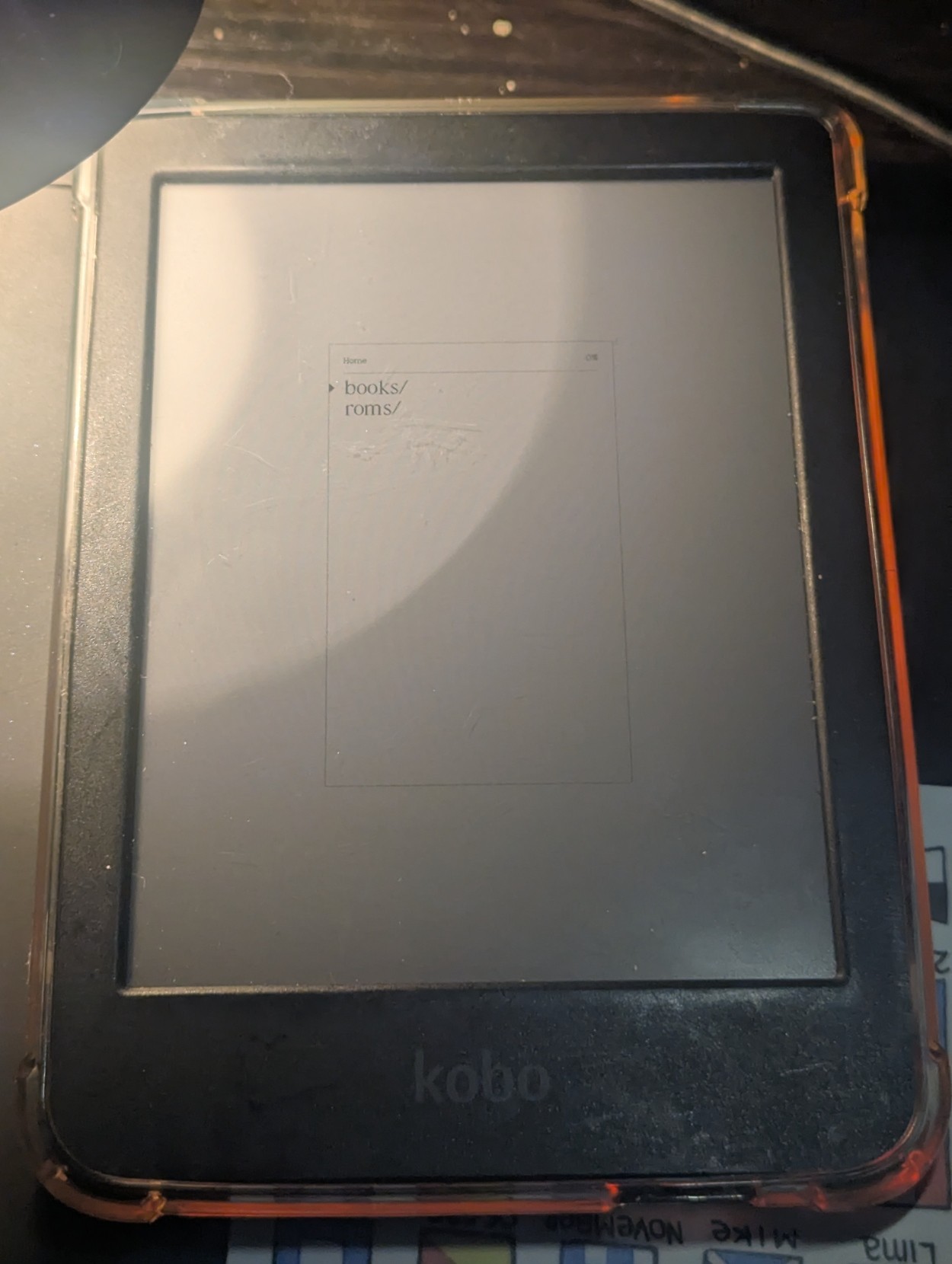
Uxn4's firmware running on my Kobo Woooo!
![[?]](https://media.bsd.cafe/bsdmmedia01/accounts/avatars/110/895/682/427/813/307/original/f0791f9f9b45b9e6.png)
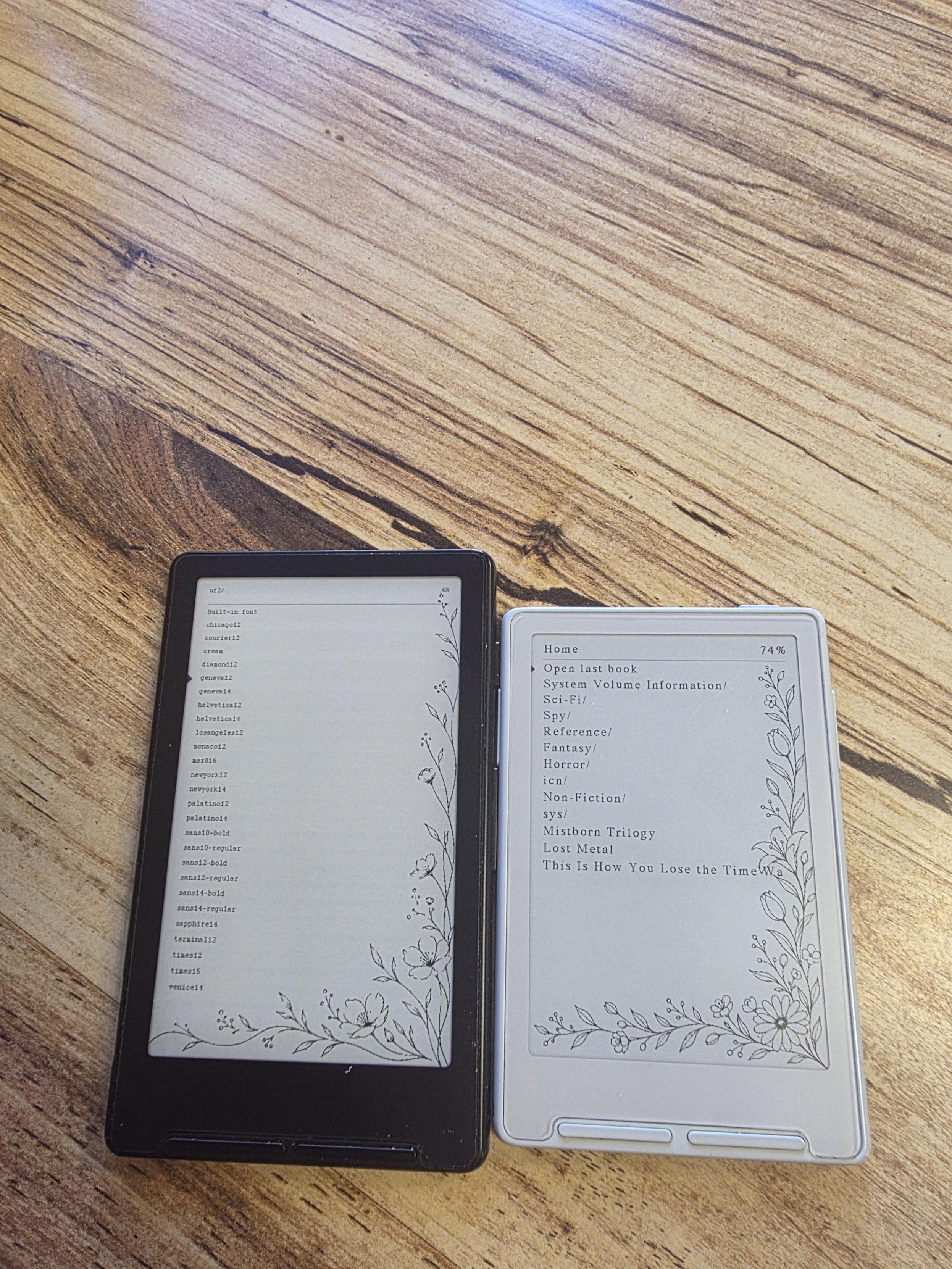
Good morning. I'm continuing to work on my #xteink x3 #uxn reader vm & firmware.
I updated my branch to have it load the uxn rom from sys/firmware.rom if present, or fall back to the built-in rom if not. So testing further updates on the device won't need further flashing.
Now working on handling font selections.
![[?]](https://assets.merveilles.town/accounts/avatars/000/000/005/original/45bd589b3400325e.jpg)
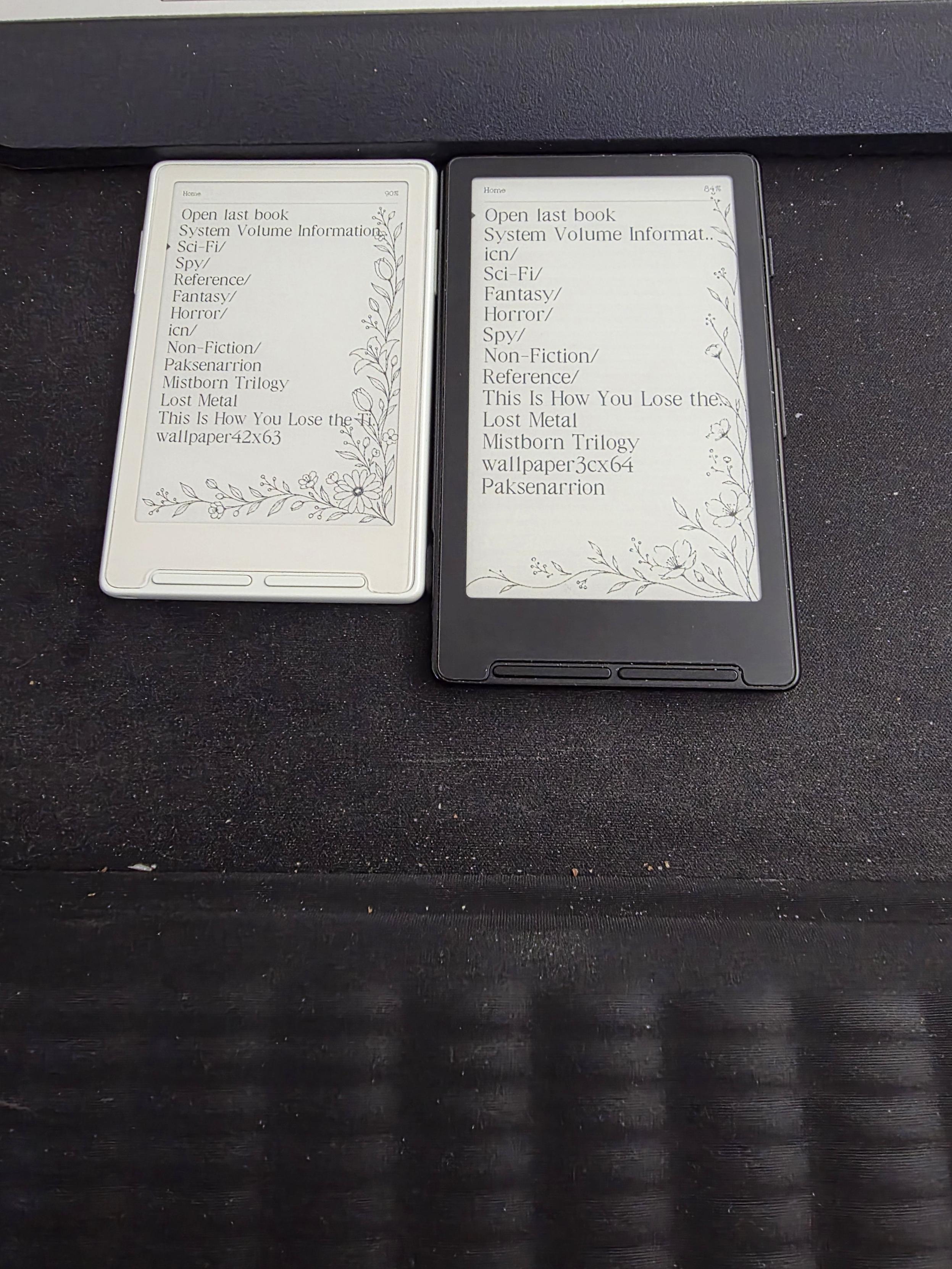
For everyone who asked me for a #uxn firmware for the XTE INK 3, @crc ported the Varvara emulator!
https://mastodon.bsd.cafe/@crc/117428431698391144
![[?]](https://cdn.masto.host/mastohackerstown/accounts/avatars/114/329/657/913/094/989/original/5933d0683395dfd8.jpg)
![[?]](https://0xde501a7a.net/media/01a0f7a2-5f29-7611-8581-72b65fa12c5d/image.png)
![[?]](https://media.ruhr.social/ruhr-social/accounts/avatars/109/380/782/126/907/561/original/a497370beee5986e.png)
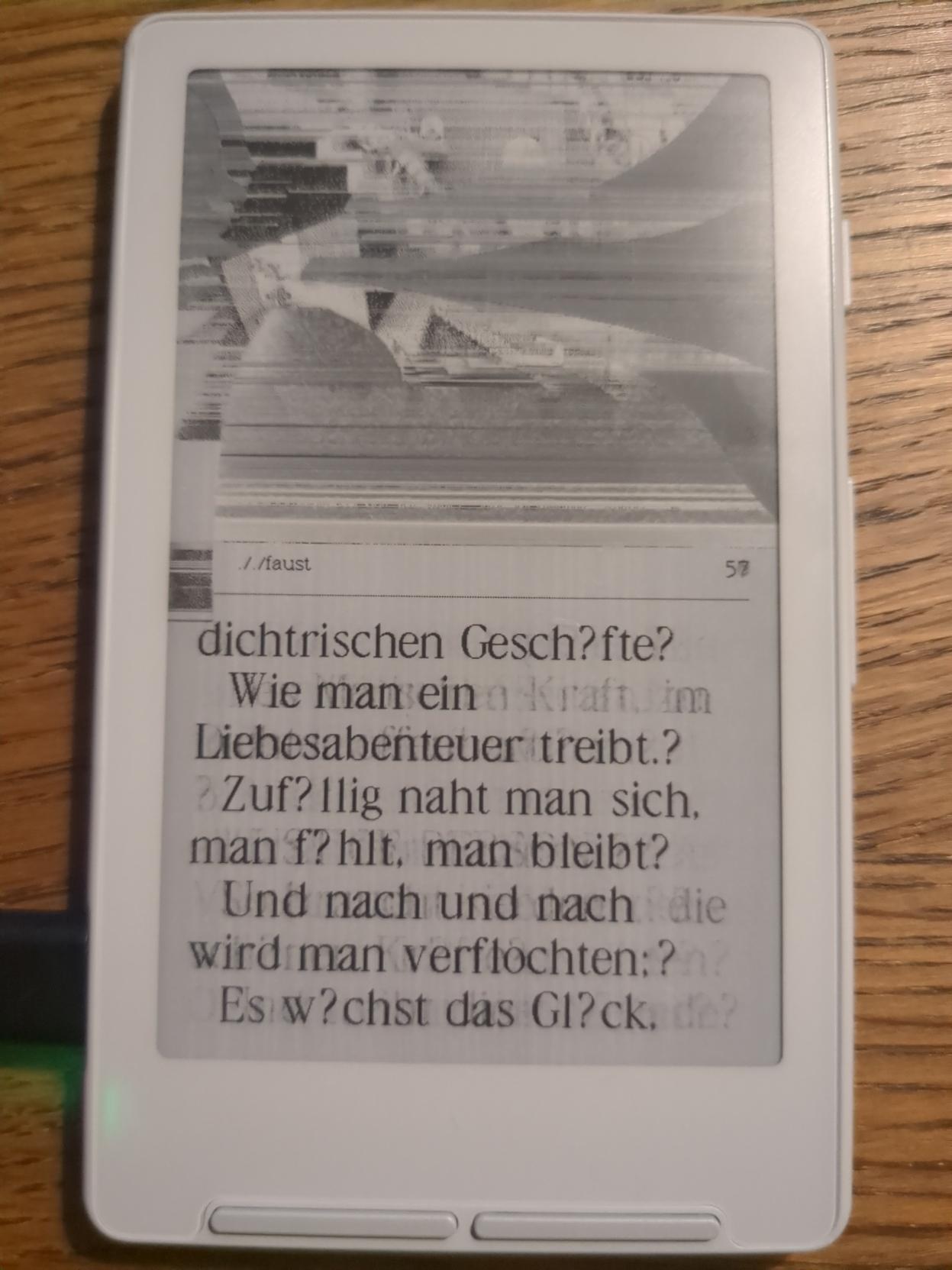
thanks to @neauoire and their uxn4 project i can keep using my broken xteink x4, with just a few lines of mods to the upstream firmware!
ghosting is much worse than with a pristine screen, of course, but making refreshes more frequent helps :)
#uxn #xteinkx4 #repairing
Alt...
photo of a white xteink x4 (small epaper device) showing a broken screen. the top half is random artifacts, the bottom half shows an excerpt of Göthe's Faust fitting on the usable part of the screen.
My first version of #uxn in #ilo is now in the fossil repository.
Commit: http://fossils.retroforth.org:8000/ilo/info/1338ca2eb422efb7
Source: https://konilo.org/uxn.sitelen-ilo.html or as plain text: https://konilo.org/uxn.pali
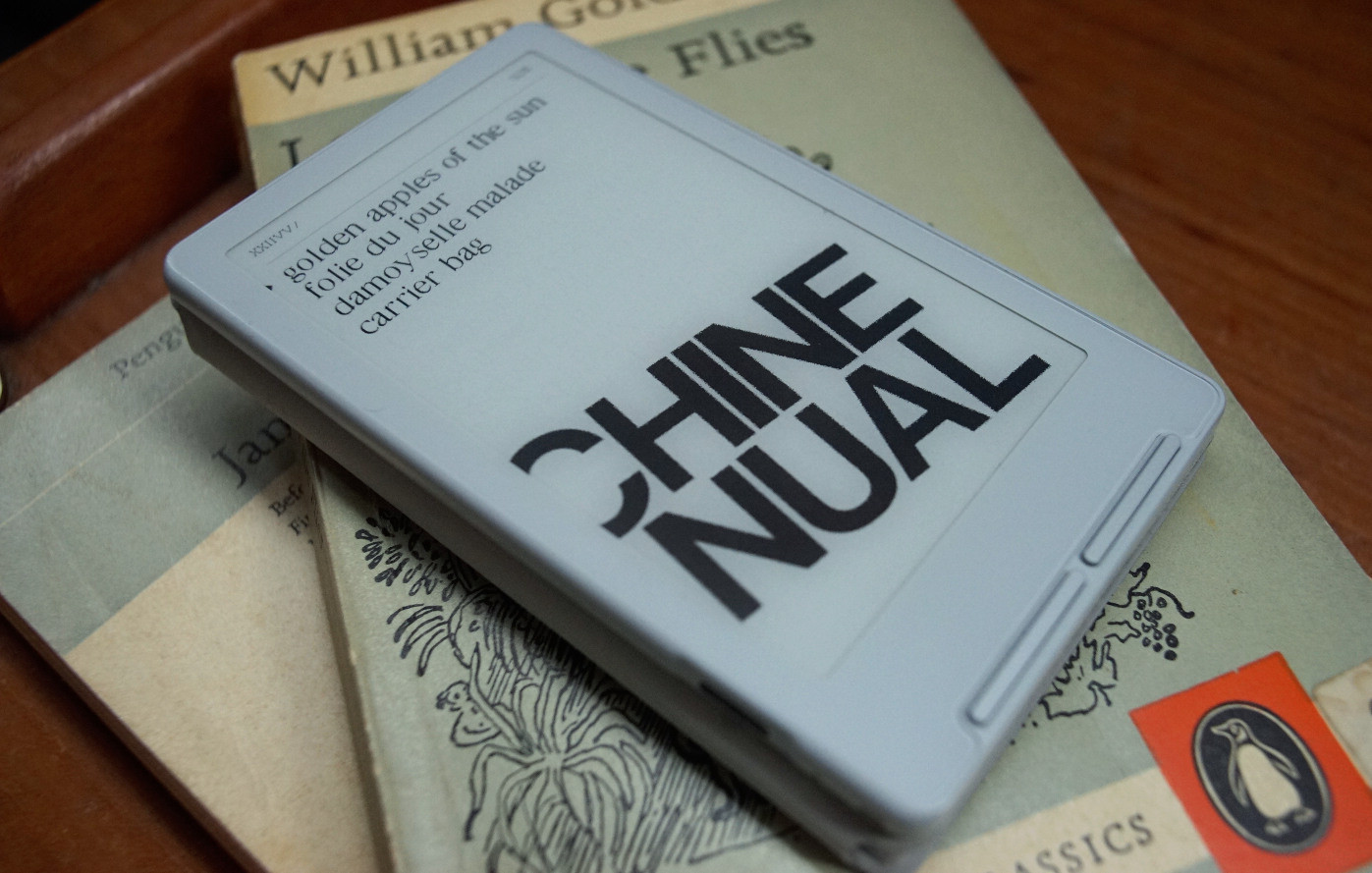
Released a firmware for the XTE INK 4, it displays text and draws pictures, and wait for it, it remembers your page. That's it, there's no other features.
http://wiki.xxiivv.com/site/xte_ink
#uxn
Alt...
The XTE INK 4 with a wallpaper, a few files, the battery status.
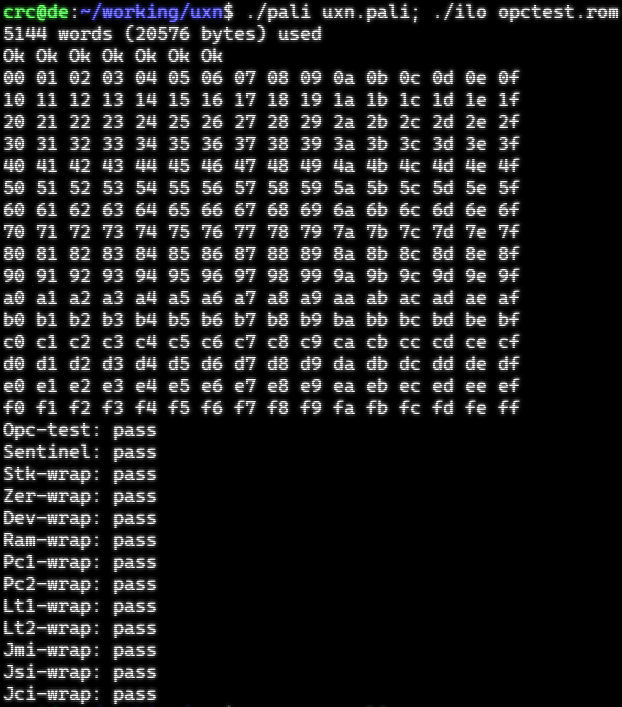
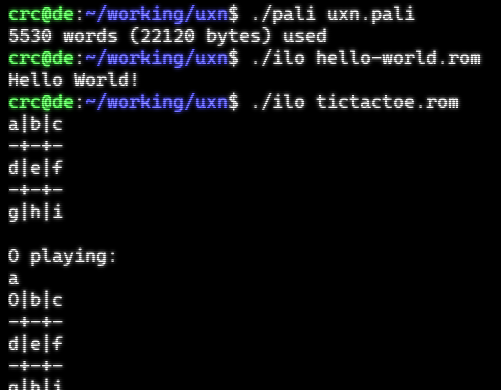
https://asciinema.org/a/1267653 shows my #uxn in #ilo assembly running the drifloon assembler, building another copy (properly byte identical) of drifloon, then assembling opctest & tictactoe, and running both.
The uxn implementation is down to 2853 cells, of which 2k are used for the stacks & internal memory buffer for block i/o, so just over 800 cells of actual machine code. It can be built to either write stderr into the blocks or to just discard the stderr text (which is what I have set as the default).
I'll do a little more work on this tomorrow to tighten up a few things, but it's complete. Later this year I will be working on a #nga port, and will work on expanding the device coverage, but I'm pretty happy with it at this point.
Uxn has just drawn its first pixels on the xte ink.
As an evening side-quest, I've been writing a new firmware for the xte entirely from scratch in #uxn, this form factor is insanely cool but unfortunately, the company who makes this ships awful AWFUL disgusting software, making the device rather useless.
I think this is, as far as I can tell, the only firmware for it that's entirely written by a human. I've still got a ways to go, but I should soon have a new little uxn computer that fits in my pocket.
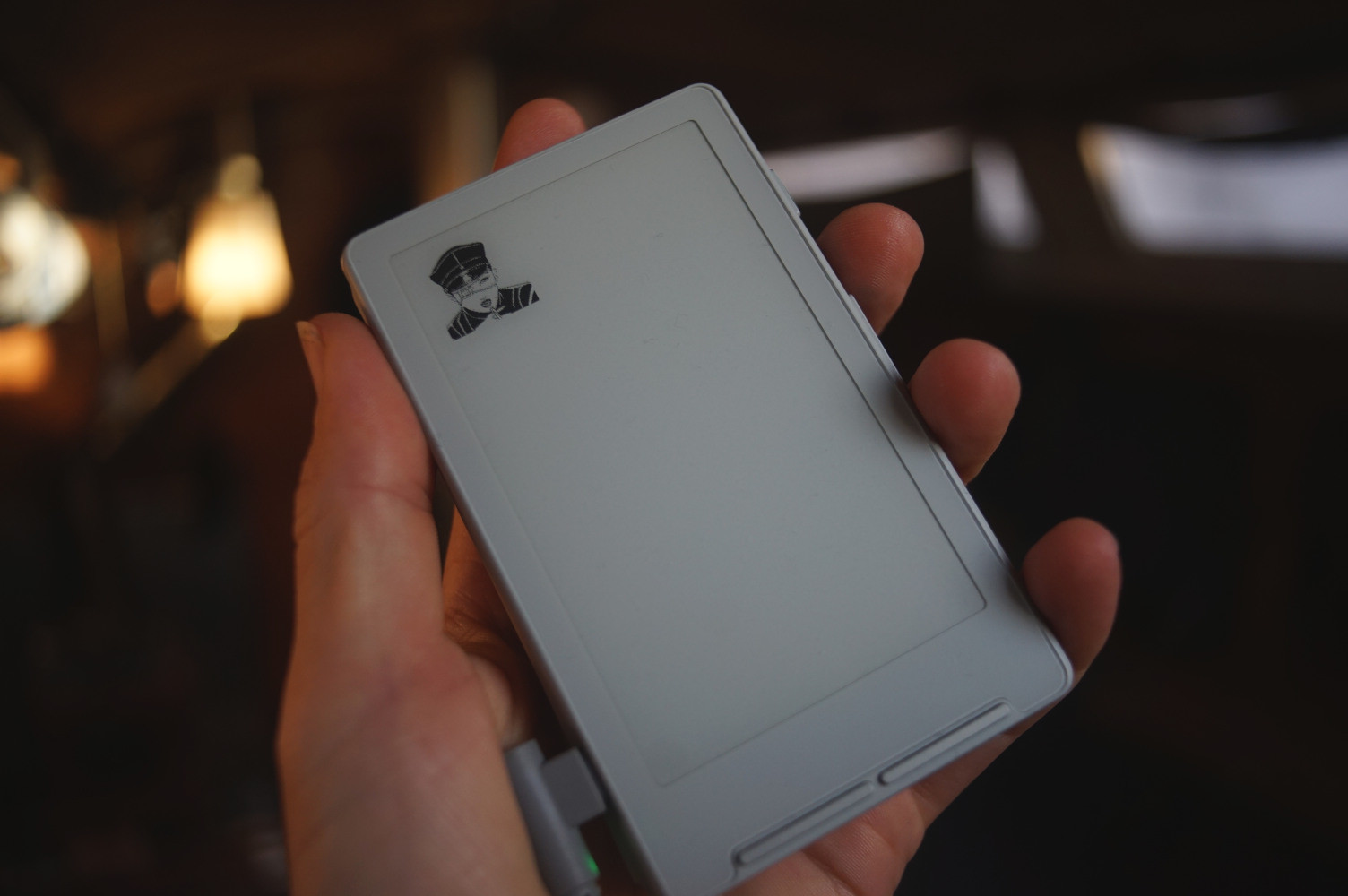
Alt...
Dafu drawns on the xte ink 4 device, a gift from Taylor.Town, thanks Taylor!
![[?]](https://assets.merveilles.town/accounts/avatars/000/122/456/original/6f0a4a67b68fceb1.png)
Real talk folks, is it ADHD when you are organizing your room, find a decrepit Nook that you previously hacked in the past to run #uxn Oquonie and decide impromptu to make some paspartú and frame it? 
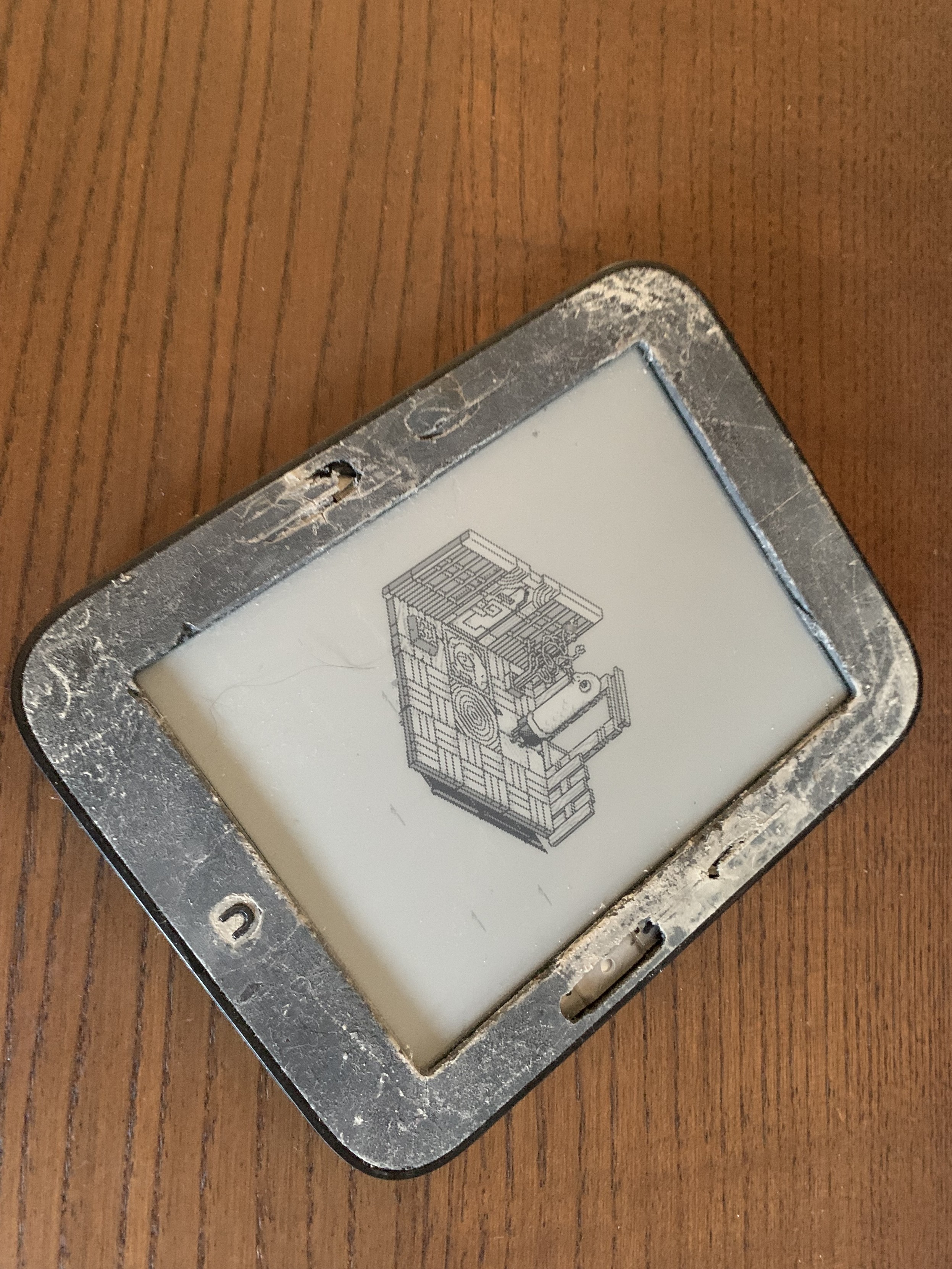
Alt...
An old ebook reader, the rubber all gone to hell and without any functional buttons.
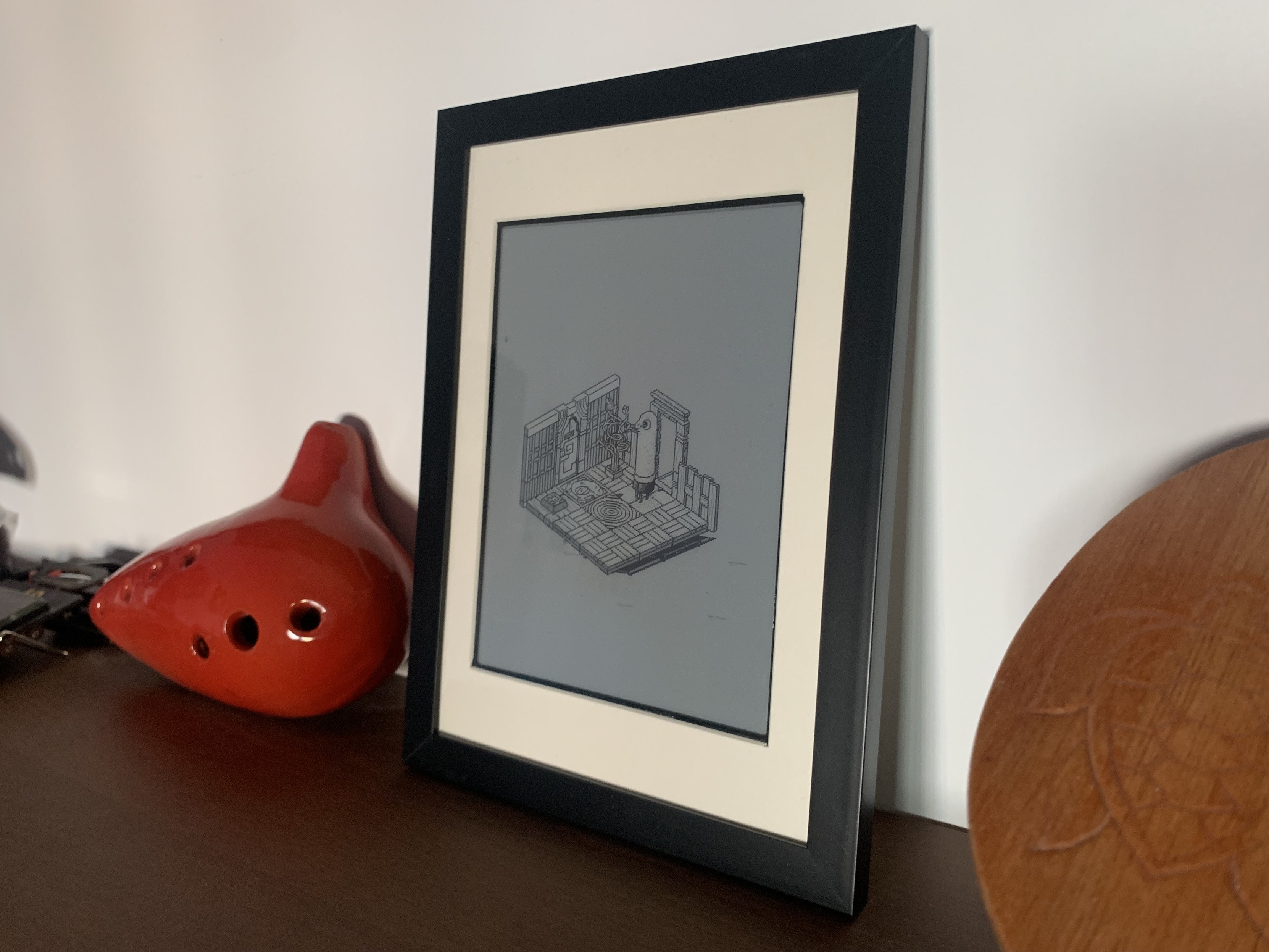
Alt...
A picture frame with the ebook in a happy new housing
![[?]](https://assets.merveilles.town/accounts/avatars/000/021/410/original/4b368180529394af.jpg)
One of the first game we ever published for #Uxn was Donsol, five years ago, to celebrate, we've made a whole new version of the game with new monster sprites, better resolution and animations.
We had originally made it with the Playdate in mind, but they didn't want it so we're making available to play it directly in the itchio page, or via your favourite Uxn emulator!
https://hundredrabbits.itch.io/donsol
We hope that you enjoy it.
Have a good autumn. :)
Rek & Dev
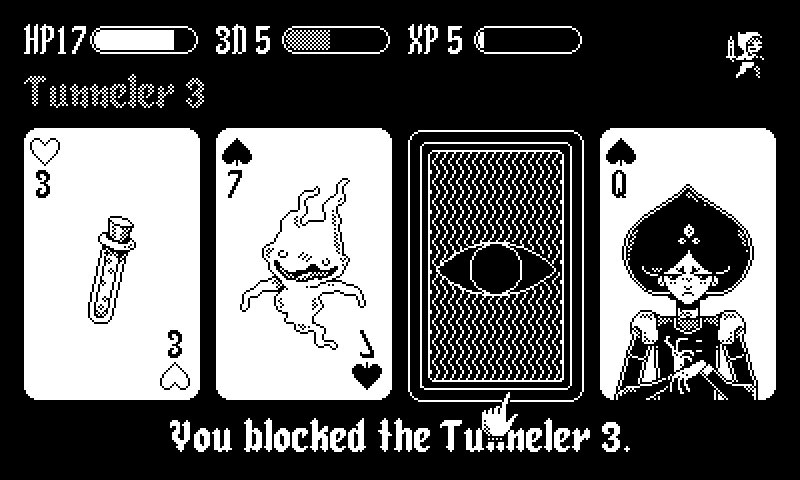
Alt...
Monster and potion cards drawn in pixel.
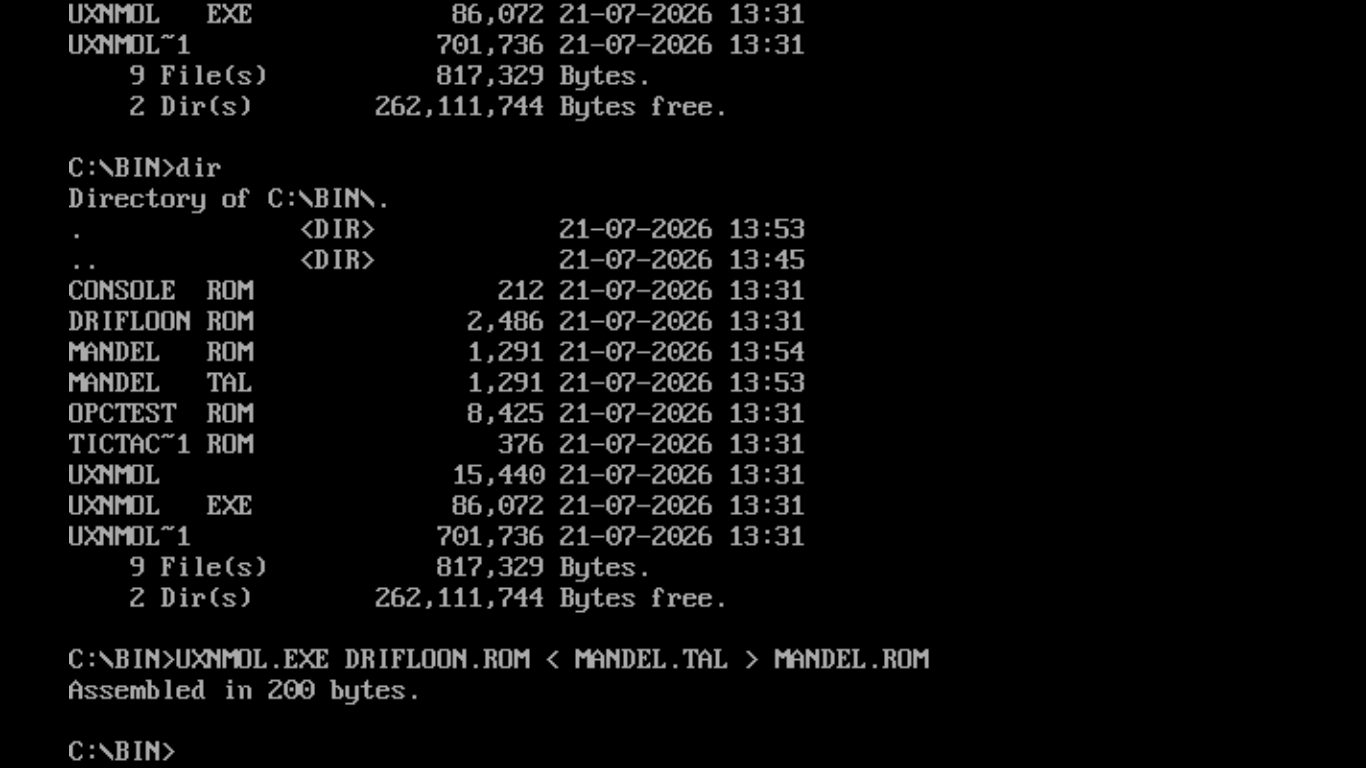
I know I shouldn't be surprised that it just works as is, but still cool, I can build compile uxn binaries directly inside dos.
wcl -bt=dos -ml -fe=bin/uxnmol.exe src/uxnmol.c
http://wiki.xxiivv.com/etc/uxnmol.c.txt
#uxn
Alt...
Compiling a uxn binary with drifblim.
Alt...
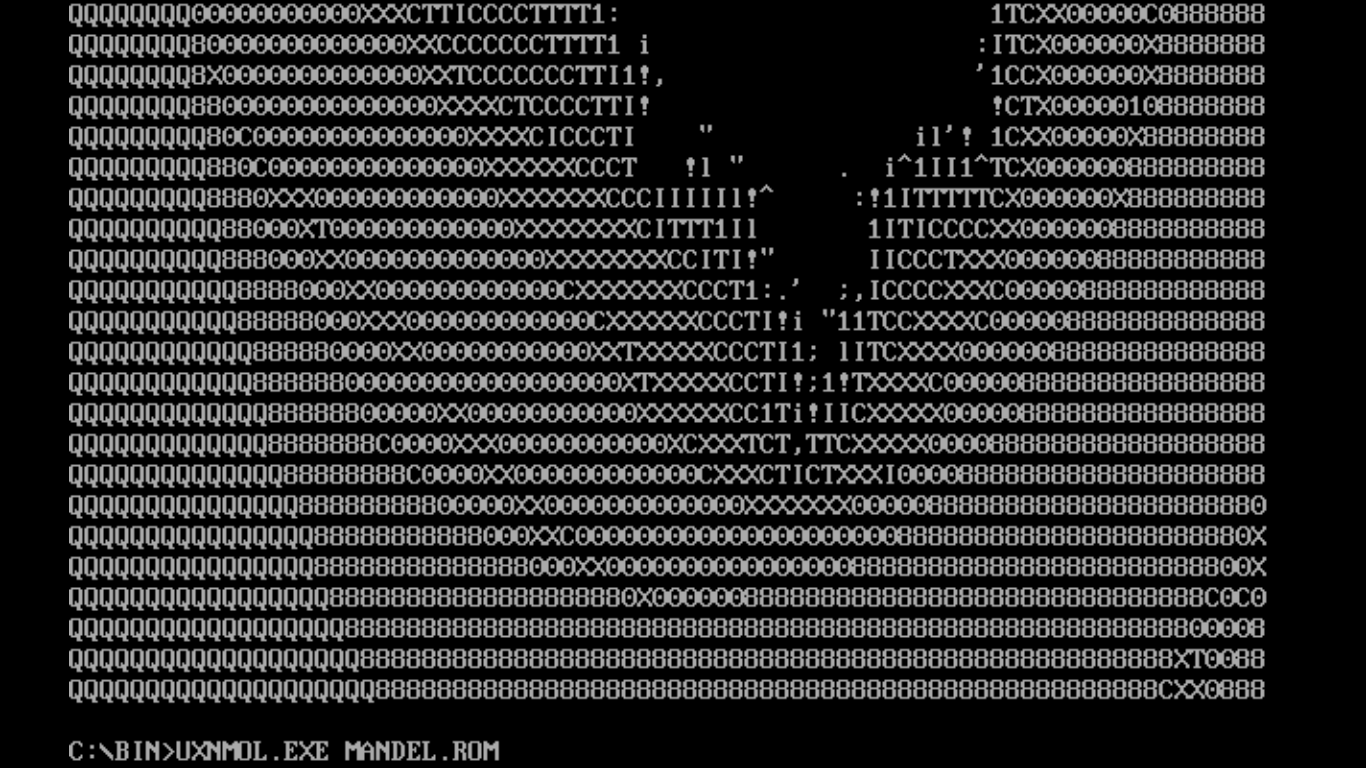
Running mandelbrot
Some days we have no power, others no reception, once in a while we have neither. Today was such a day, the oppressing low skies suffocating the signal and covering our solar panels didn't allow for much virtual fussing.
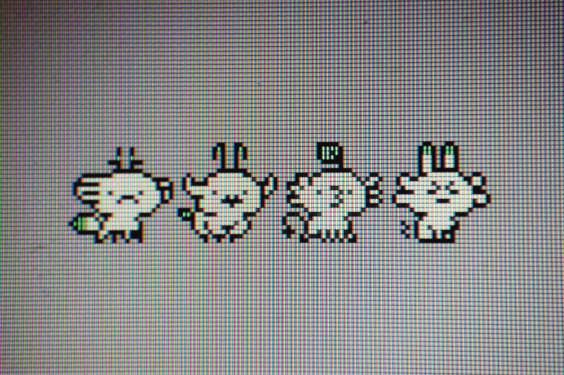
But while penciling out storyboards for our #Catjam entry, Rek pointed out that it might be nice to have a Yufo cameo aboard the train. Genius idea! Let's look at the actual state of that ol' thing.
Written in a haste during the Virtual Pet Jam a few years ago, its codebase was horrendous; Uxn was quite young at the time, the linter in its infancy too. It ran just fine but needed a bit of love if the codebase was ever going to be something worthy of being looked at by anyone.
So, I spent the little power I had left in my laptop rewriting it all in a more standard Uxntal style, with the typical video game OOP patterns that makes the more recent roms somewhat robust. It runs faster, looks and feel nicer too. I've published a new build with metadata and all the other niceties of modern #Uxn projects.
If anyone ever asks who that weird antlered creature on the train is, at least we can be proud to point to Yufo.
https://rabbits.srht.site/decadv/
#occ2026
![[?]](https://assets.merveilles.town/accounts/avatars/108/071/092/925/189/944/original/b093f1249a04f5c2.png)
Someone just demonstrated that the entire Uxn toolchain can be reconstructed from nothing but a POSIX shell, xxd and sed. It's down to taking 34 minutes to build the Uxntal assembler.
bootstrap: https://joe.cz/uxn/uxn1b-drifloon.txt
repo: https://gitlab.com/racketeer/uxnsh
#uxn
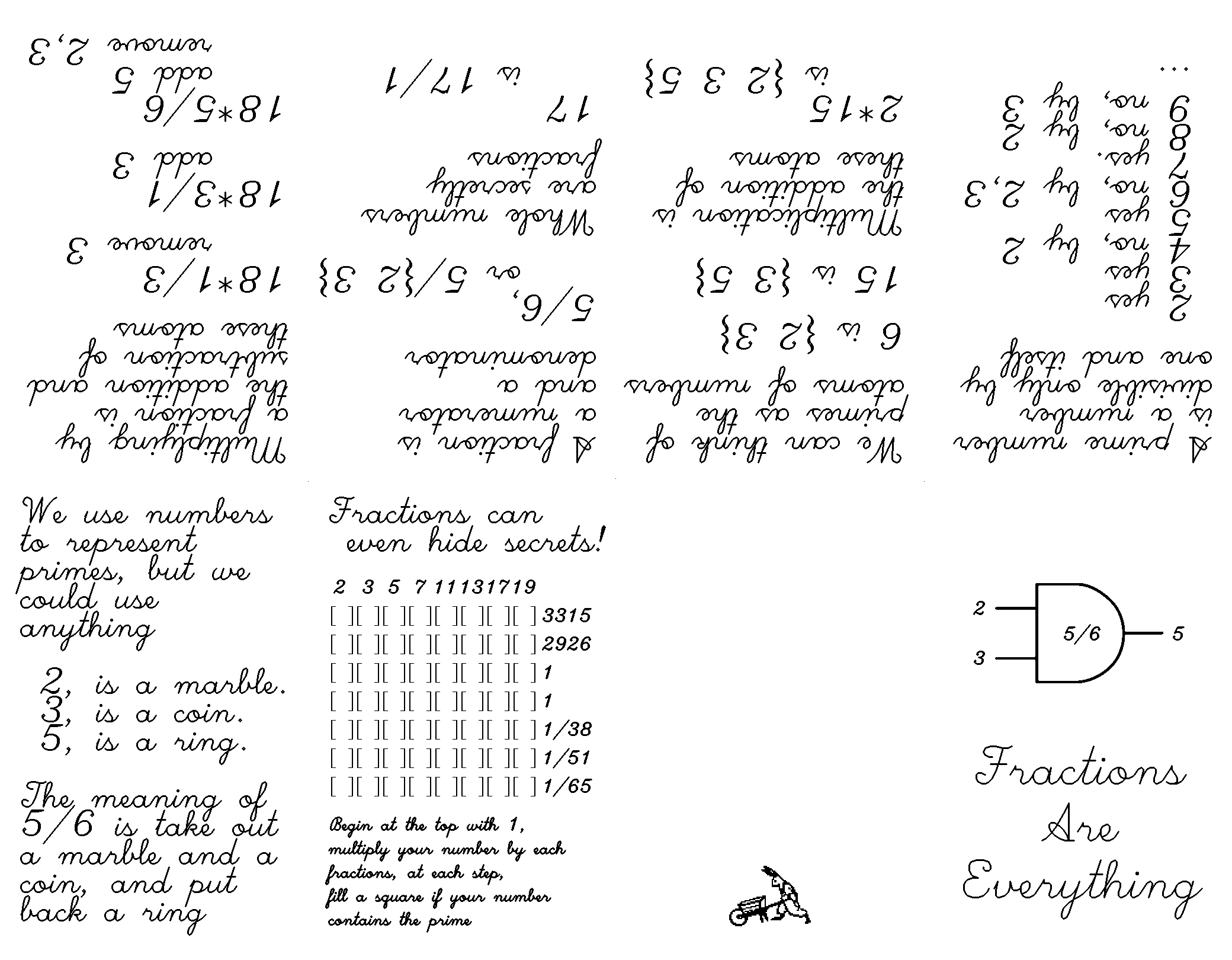
I made a zine, it's called Fractions Are Everything, it invites the reader into looking at fractions a little differently.
The typesetting is done entirely in #Uxn.
https://wiki.xxiivv.com/site/pocket_fractions
Alt...
8 pager, the cover is a AND gate with the primes 2 and 3, on one side, and 5 on the other.